“I guess you must be serious, if you brought your husband with you.”
I was 8 months in to trying to figure out the cause of chronic pain that was getting progressively worse, and was being pretty much brushed off. This was the first time my husband went with me to an appointment, mostly just to drive me because I was in so much pain. Later we would find a tumor the size of a baseball in my abdomen ruining one of my kidneys.
MrsPie , Drazen Zigic Report
 I was having an endometrial biopsy, first one. The old man doctor became irate with me because I let out a cry of pain. (I was in absolute agony). He looked at me with absolute disgust and said if I couldn’t control myself, I could get up and leave. I suffered in silence, shaking uncontrollably. He never said another word to me, but his nurse came in and hugged me. I will never know why, but he was soon after relieved of his job and I cheered that day.
That man HURT ME. Badly.
Bennington_Booyah , syda_productions Report
 “No, that medication does not cause weight gain. It’s your depression that’s causing you to eat more.” Said to me by *two doctors*.
Flash forward a year – my cat is sick. They give her an appetite stimulant.
**Appetite. Stimulant.**
Same med as the one “not” causing my excessive eating and weight gain.
anon , sweet_tomato Report
The stories on this list highlight a problem that many women face during their doctor’s visits. According to pain psychologist Dr. Samantha Meints, women are “viewed as hysterical,” which is why most of their health concerns are pathologized in a psychiatric way.
“Some of this is just due to social and cultural values,” Dr. Meints said in an interview with Harvard Health. “It’s a value for men to remain stoic in the face of pain or stress, while women are often more social and seek more support. The way they do that may be to share their difficult experiences, including pain.”
 He told me I was pregnant infront my immigrant mother when I was only 13.
I WAS NOT. He didnt even test me or anything. I went in complaining of lower abdominal pain, and then it turned out I had blood in my bladder from an infection.
PenIndependent5114 , Wavebreak Media Report
 “The reason you can’t push your baby out (after four hours of pushing) is because you chose an epidural”. Turns out he wouldn’t come out because he had a double knot in his cord and every time he breeched he was starved of oxygen. Was too late for a C-section and luckily the next doctor was competent and got him out safely in one push/contraction. I would have punched her in the face if I wasn’t preoccupied birthing a child. Also, the epidural was the best choice according to second doctor, as they had to cut me up to get babe out safely.
anon , jordi.magrans Report
 Regarding my terrible cramps and mental health issues that came on only when I have (or am about to have) my period: “it might get better if you have children”.
As if that completely baseless and unscientific wives-tale is justification for bringing a child into this world to *maybe* fix my PMDD??
I’ve had both male and female Drs suggest this to me. Unbelievable.
MagicPocket , magnific Report
There are also differences in pain thresholds between men and women. According to clinical psychologist Dr. Robert Jamison, women are perceived to have a higher pain tolerance, which may lead to the frequent dismissal of their conditions.
“There’s always this sense that women can go through childbirth, so they can withstand much worse pain than men,” he said.
 Not necessarily what you were going for here, but one time I went to urgent care for a UTI and the hottest doctor I have ever seen in my life walked in and said, “Yeah, your urine is pretty dirty.”.
appalachianpelican , warnakacreations Report
 It was a psychiatrist who thought the band tshirt I was wearing was demonic and the reason for my anxiety. He prescribed me converting to his religion. When I gave him my email, and it was from my university he said “I thought only smart people went there”.
trashboat43 , Gabriela Brasiliano Report
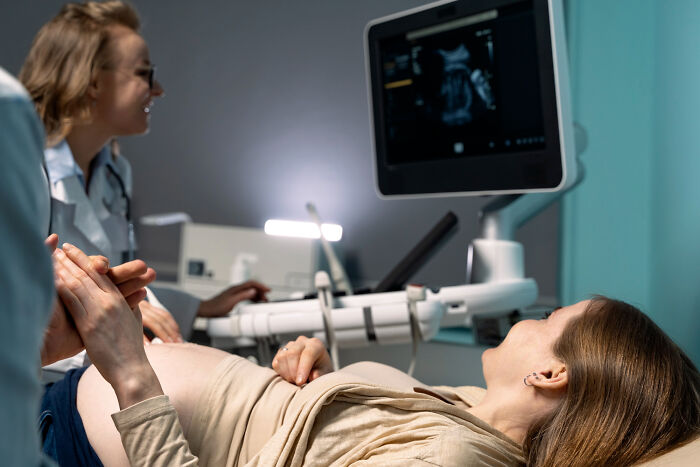 Oh my goodness. The worst was after I’d had a couple of miscarriages and was pregnant again, seeing a specialist and found out at my six week ultrasound that pregnancy wasn’t viable either, but the baby had a heartbeat, but it was slowing so they were sure I would lose it too.
The specialist doc I was seeing got us in her office and she started laying out the plan for trying again “after this one’s over.”
The complete and total lack of empathy for me as I was processing the loss of a third pregnancy was devastating. I was livid and speechless at the same time.
I never went back to see her again.
20+ years later I can still get upset about it.
I work in the medical field now and have always taken the time to let someone process the news when it’s bad. It’s just not that hard.
4jules4je7 , magnific Report
Gender bias is one of the many ugly realities we deal with, and very unfortunately, it also happens in the medical field. Experts refer to this as “medical gaslighting,” and according to a 2024 study, it is more prevalent among women.
The study revealed that 45% of women who were going through genital pain were told they “just needed to relax more.” 39% were made to feel “crazy.”
 I told the doctor I was having pancreas pain as I’ve had pancreatitis a few times already and knew the symptoms and what it feels like. He said “listen dollface, there’s no way you can feel your pancreas you probably have a stomach ache.” I was indeed having a flare up.
wcamfambam , magnific Report
 Not a doctor but a psychiatrist. I was about 12 years old and I was seeing him for medication to treat severe anxiety. I was barely able to eat so I was at least 20 pounds underweight when I started going. We found a medication that worked and I finally started getting my weight back up. I was still skinny but finally in a healthy range
During one of my appointments, he told me that I needed to watch what I ate because I was starting to get fat. My mom was *livid.* We left the appointment early and never went back
I actually ran into him at the grocery store about 8 years ago. He recognized me and at least had the decency to look ashamed.
h_amphibius , magnific Report
 Just got done nursing my first child and was ready to back on my ADHD medication. I was seeing a new primary care doctor since my old one retired. She asked me why I needed this medication and I told her my diagnosis should be in my medical chart. That apparently was not enough since she wanted details, when I explained my challenges she then said “how does your husband deal with you?”.
spaceghost365 , magnific Report
 She said my feet hurt because I needed better shoes. A little over a year later I had surgery to break and reset a bone that had been broken years before and wasn’t treated so it healed wrong. If she had simply done an x-ray she would’ve seen that my first metatarsal was wrong.
Bad-Moon-Rising , RDNE Stock project Report
 When she told me the fix to my weight loss problems was ‘walking 10k steps a day’ and I showed her that I get 5 days a week of 13k+ she said “Is that your husband’s activity tracker?”.
alphaturducken , Andres Ayrton Report
 A doctor told me that my pain in my lower abdomen was “probably just ovulation”, I knew he was wrong, went for a second opinion and was sent for an emergent CT. Ended up being appendicitis and was on the verge of rupture by the time the surgeon had me on the table.
Imagine assuming you know what ovulation pain feels like over the word of a woman who had been ovulating regularly for over a decade already at the time.
YesHunty , Cedric Fauntleroy Report
 He jokingly-but-not-*really*-jokingly complained that I hadn’t shaved my legs before the appointment. He was a general practitioner, it was my first ever appointment with him, and the appointment was for a basic physical. I was 14.
RudeRaisin5103 , George Dagerotip Report
 I suffer from cyclical vomiting syndrome. When my illness was at its worst I was in and out of the ER and was down to 94 pounds. For reference I’m 5”3 and my normal weight is around 115-120.
I went to a new GP to get bloodwork and was explaining my illness and she looks at me and says “well, so many women want to be skinny and pretty like you”
Like ma’am, I can’t even lift my own arm I’m so weak. Needless to say I never went back to her.
anonya1 , Getty Images Report
 Telling my mom’s story:
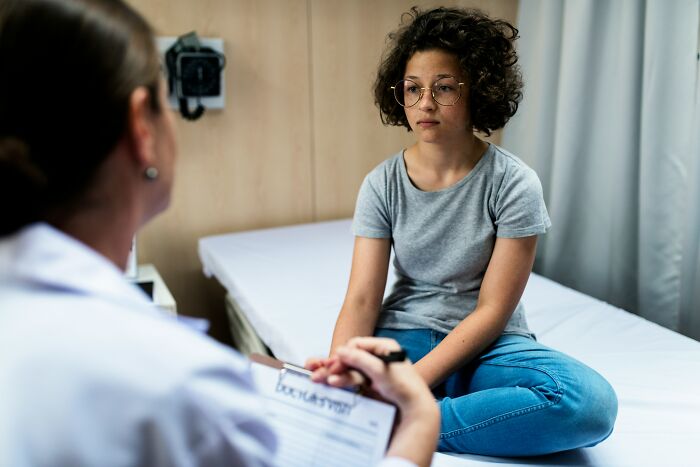
In the late 90’s she had extreme fatigue, unexpected weight gain, and a few other symptoms. She had to drink caffeine nearly constantly just to function. She could sleep for 12+ hours if she didn’t have an alarm. She went to the doctor who told her, basically, that her sedentary lifestyle was the problem.
She was busy raising 5 kids (age 9+) as a single mother working graveyard shifts at the airport to make ends meet. Meals were served, laundry was done, us kids were making it to school on time, the house was cleaned – she was not sedentary, but he wouldn’t listen. Doc basically said “You’re fat. Lose weight.”
Years later she went to a different doctor. They did a quick blood check and what do you know it – she has Hypothyroidism.
koolman2 , Curated Lifestyle Report
 Not me, but my wife and I was in the room.
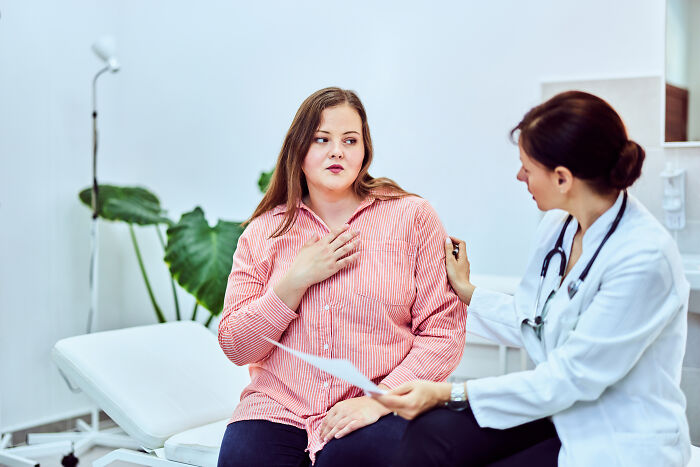
She was seeking treatment for a neck injury that was causing debilitating headaches. The doctor told my wife point blank “I won’t treat you until you lose 40% of your body weight.” She was heavy at the time, but her weight was not a factor in this injury.
We got a second opinion rapidly.
TheRealSzymaa , bnenin Report
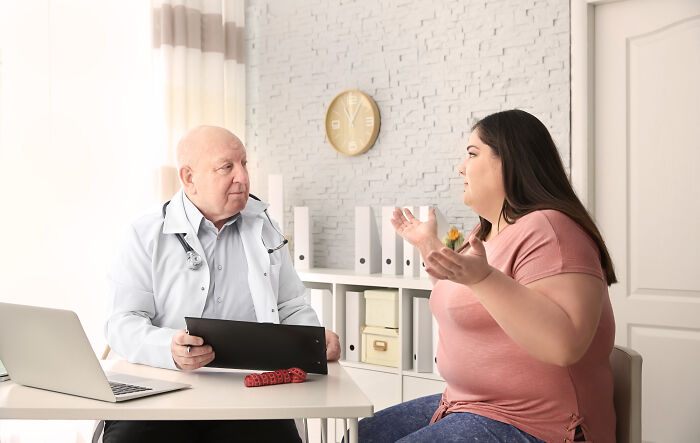 1991. Twenty year old me was at my follow up obgyn visit after having a miscarriage. Dr looks up at me from down there and says “ you’d be a pretty girl if you’d lose some weight “.
justjenn90 , africaimages Report
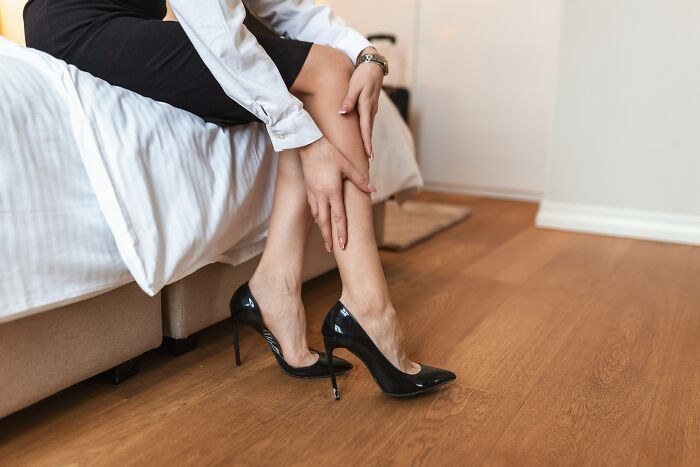 Not a specific event, but for over a decade I’ve been told that my insanely itchy legs are psychosomatic. I’ve seen various doctors and had tests done and since nothing is coming back positive for anything, people assume I’m making it up. Sure, because I WANT to be digging holes in my skin and hurting myself because the constant itching keeps me up all night.
Finally saw a different GI doc the other week due to gallbladder concerns, and when I mentioned the itchy skin, he casually goes ‘Oh, that could be a symptom of (various intestinal issues we’re investigating). Not surprising at all, maybe some of these treatments will help.’
My response was, quote, ‘Are you kidding me? You’ve seen this?’ and we talked about it a bit more. I wanted to cry. Someone finally believes me!!
Edit: okay, wasn’t expecting anyone to also have the same thing!! So, I have gallbladder issues in that it’s basically unalive, but I’m not in pain, and I just found out last month because I had a severe chest pain attack that landed me in the ER. I’m not getting it removed yet but it doesn’t seem to function anymore, I don’t know if it’s the exact cause or not. The GI specialist I saw put me on a med that helps with bile salt absorption, because a lot my stomach problems could be due to malabsorpion. And seriously, I’m not even the full two weeks into the med cycle and my near-daily bathroom runs after every meal are GONE. I also don’t have issues with dairy, so I wonder if I’m not actually lactose sensitive but it was all gut biome stuff. I’m waiting to hear back from the GI on a long term solution but colestipol has saved me and I hope it’s a step in the right diagnostic direction!
ceredonia , Getty Images Report
 I have frequent headaches and migraines. The doctor asked me if I work in front of a computer…I said yes….”well there you go that’s why you have headaches! Stop staring at the screen!!!” Like I have a choice? How am I supposed to work!!
At OBGYN I was diagnosed with PCOS/PMOS and the doctor told me I need to lose weight and eat basically like a rabbit. I was 125lbs 😩.
msh44 , Getty Images Report
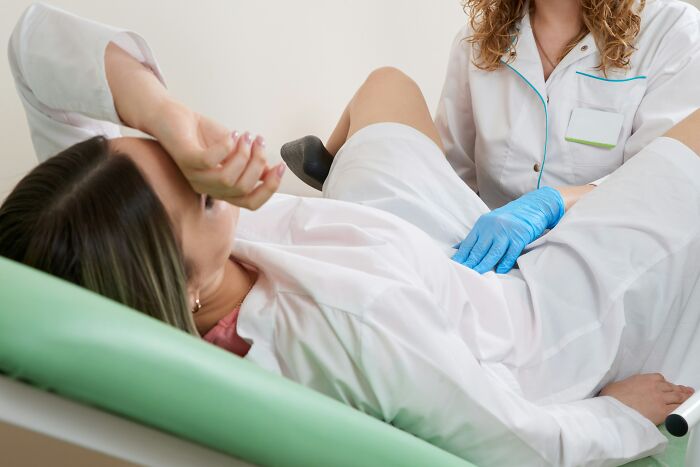 Female doctor scraping my uterine lining for a biopsy that offers no sedatives or pain relief. I was gagging from the pain and the intense feeling of my insides being scraped away made me nauseous. She told me to take deep breaths. When she was done, she said “wow, that was hell for you!”
????
Any woman who’s undergone a procedure whether it be an IUD removal or also an endometrial biopsy will understand this pain.
rachelssea , Getty Images Report
 I told him I had reoccurring throbbing pain near my groin for years and that sometimes it seemed to be triggered by certain foods. He said “well, stop eating those foods”.
He made no further attempts to figure out what was causing my pain and I continue to suffer today.
Edit: I want to thank everyone for your concern! I have seen many doctors since then and had ultrasounds. Nothing was wrong according to them. No further attempts were made to solve the problem.
I even went to the ER and they told me they would operate on me to see if it was my appendix but that even if it wasn’t, they would remove it anyway.
So, I’ve just learned to live with the pain.
Sujnirah , RDNE Stock project Report
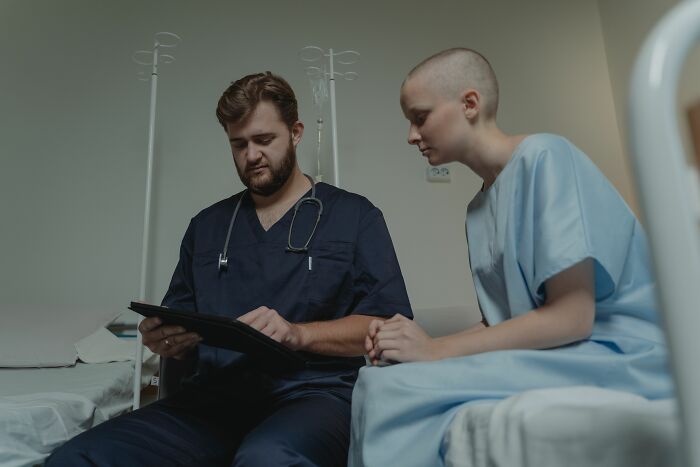 Diagnosed with cervical cancer. First meeting with oncologist who wanted to do an internal exam with the speculum. I mentioned I had anxiety and it was painful for me (I mean, it’s uncomfortable for all of us but the cancer made it especially worse for me). Without warning, he pretty aggressively grabbed my legs and pushed them to the side, saying “well, you better suck it up and get used to it, because you’ll be having a lot more”.
flowersnflamingos , Tima Miroshnichenko Report
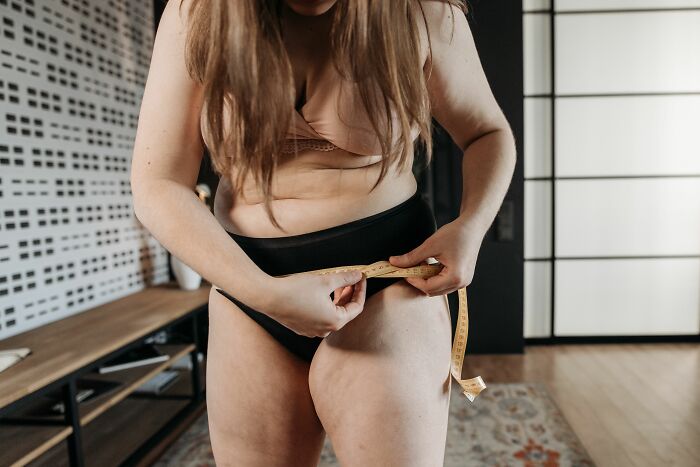 Struggled my whole life with body / eating disorder issues. Turned to binge eating / laxatives in college and had my nutrition professor notice the signs and convince me to seek out my doctor at home. Was slightly overweight. Went in for the appointment and doctor (a man) looked at me and said “oh. You’re fine. When your mom said it was an eating disorder thing we thought you were going to come in looking like skin and bones”. Went on to struggle for 5 more years.
Inevitable_Luck_6478 , Pavel Danilyuk Report
 #1 female Dr. refused to prescribe me HRT for perimenopausal symptoms that made me feel like a dumb angry zombie. Told me, “Just power through like a real woman. I did.” I told her to get lost before I walked out.
#2 saw male specialist for weird nerve pain in my hand. Completely ignores what I came in for and proceeds to wax poetic about his hot wheels collection.
nushooz512 , Getty Images Report
 What are you crying for? You wanted this.
Said to me by the anesthesiologist as I was being prepped for the d&c I needed because I’d had a miscarriage and not passed the remains. I absolutely did not want any of that.
MrsSantini , Claudia Wolff Report
“You just need a man to take care of you.” – Psychiatrist
I was 41 and had been living on my own for 10 years.
runs-with-scissors Report
Went to get an STI check because I was starting a new relationship, and had asked my partner to do the same. The doctor was astonished that I was doing this proactively when I didn’t have any symptoms. He sighed and said “I guess this is just what ‘modern women’ are like”.
pookiepoogie1234 Report
My gynecologist was up literally inside me and started giving me weight loss tips and “suggestions.” I reminded her, furious, that I had gone into eating disorder recovery a little over a year ago. She said “being a little overweight is just as dangerous or more as being a little underweight.”
I was maybe a size 8 at that time? I had gained a decent amount of weight, sure, up from being a size 0/2 and way, way too thin for my frame.
I obviously never went back, wrote scathing reviews, and moved on, but her saying those things to me while I was so incredibly vulnerable both literally physically in that moment, and mentally/ emotionally while I was still figuring out how to navigate recovery- it really upset me. I also had a ton of trauma around gyno stuff as I’d been dealing with cervical cancer/ hpv things for over a decade at that point and was already incredibly anxious just being there.
It was horrible. She is horrible.
songofthelark117 Report
ER nurse in my case. 1996. I was 22 years old, visiting my brother who lived in another state. Intense right quadrant pain sent me to the ER, and they needed an ultrasound right away so I had to be “filled up” and not allowed to drink the water. Received catheter on the spot (my first), and writhed in pain during insertion . ER nurse chided me, saying unless I’d birthed a child, I didn’t know pain. It wasn’t necessary a bad thing to say, but it was very unkind, and I was a frightened young adult. Turned out I had a large dermoid ovarian cyst, which I had surgically removed when I returned to my home state.
RowWell-41 Report
I have strabismus (cross eye) and he told me, well, you’ll scare off all the boys looking like that.
nicereputation457 Report
Had severe acne and was going through the process of getting on accutane.
Because I had a history of depression I was required to talk to a therapist.
During my intake the topic turned to my bf at the time and I told the therapist that he was very jealous and controlling. She told me “well once you clear up that acne then he will really have something to be jealous about” bro.
anon Report
Me – in approx 2002 suffering from an ED and a crippling anxiety disorder seeing my (male) GP at 24 because my heart palpitations were keeping me from sleeping and I was legit scared o was going to lose my life. My hair was falling out everywhere. I was 5’9” and somewhere between 110-115 when my normal weight was still a very lean 135.
“Wow. You look fantastic. Still single? You’re in NYC now, right? My brother is a photographer there and does very well for himself.”
He gave me his brother’s number and no referral for any of the issues I can in for, other than the advice to “take a few days off and get a massage to relax a bit.”.
orangedrinkmcdonalds Report
It was a female gynecologist, which makes it worse.
I was trying to explain to her how bad my period pains were, and how I’m bipolar. I wanted to go on birth control to try and regulate things.
She told me, “Well, what would your husband think? Don’t you want to have a baby?”
To her, I was just a baby maker and had no opinions. My body belonged to my supposed husband.
UnSleepingMoss Report
Went into labor and delivery at 37 weeks for decreased fetal movement. This is specifically what you are told to do by any OB. The intern on shift that night said “maybe I needed some medication” because I was anxious.
2 weeks later he walked into my room to deliver my baby. I had him removed from my team.
MyNeighborTurnipHead Report
Had an endoscopy come back clean. Doc said: well maybe the pain is caused by emotions, as I see you are taking an anti-depressant.
LightLeader1234 Report
I was having outbursts of anxiety and depression. Doctor told me that I should have two babies (not just one, because then it would be depressed like me) to resolve it.
I was Vitamin B12 and D deficient. Vitamins solved the issue. I had to figure that out myself.
g33ktastic Report
Updated my after visit summary note with my male gyno. I had never had an issue until this.
“Was surprised and confused by her weight and proceeded to cry hysterically.”
Not how I remember it.
tabigail Report
My foot started hurting when I got pregnant. I was told it’s pregnancy and what did I expect. Legs hurt while pregnant.
I got diagnosed with stage 3 melanoma 7 months pregnant on my foot.
Lifexxxx Report
I kept fainting from low blood sugar and the doctor told me I had a case of the “faints”. Passed out later at a concert and almost had to go to the hospital.
Alicedawg666 Report
Doctor asked my weight for dosage calculation and he looked at me and said “are you sure? You look like a much bigger girl”.
sand-castle-virtues Report
Welp. It happened recently. I was getting my IUD removed and I am in what they would call a “geriatric” stage in life but still able to get pregnant. The doctor said to me that I am a bit late. Not impossible but it might be harder. That the ideal age to have a child is 16. Yes, Sixteen. The doctor was a woman, too.
Sinsilencio Report
Doc said there was nothing wrong with my back, I was just sad cause I was fat. I was only about 6 mos postpartum, had a very manual labor military job. Turned it there were 2 discs exploded in my lower back. Awesome work.
anon Report
I don’t know about worse, but a lifetime of being brushed off because of my weight has me scared of thinking I’ll never get meaningful help. For reference, I had been morbidly obese since I was THREE. I reached my goal weight at 28 (I’m 32F now).
Even now, at my goal weight, written in my record by my weight management doctor, stating I am at clinical goal weight I still have doctors telling me I need to lose weight. They then immediately follow up with suggesting I see a weight management doctor.
After stating that I already do and tell them that this is my goal weight per my doctor’s own analysis and that she’s been working with me for 8 years they still suggest I should ‘keep going’ and ‘it’s good for my health to lose more’.
This was stated at my last physical actually, when all I needed was an ENT refferal…..
Blair_Bubbles Report
I’m 8 weeks pregnant. Out of nowhere, I start having severe anxiety attacks, every 15 minutes. I’ve never had them before. I am having trouble breathing, my chest is tight, I’m crying uncontrollably. I then lose the ability to speak. I head to the ER. The male doctor looks at the notes taken at admission that my husband gave – exactly what I typed above. The doctor, in a real agitated manner, asked me, “was this a planned pregnancy?” I shook my head no. He let out a sigh, “here’s my advice…don’t get pregnant”. And gave me a shot of Ativan. I went home and an hour later, I had a miscarriage. Come to find out that the anxiety attacks were caused by the severe, sudden drop in hormones, from my body going through a miscarriage. What a jerk.
Margo_Tenenbaum Report
Went into premature labor at 16, so yeah I was a kid. Got pregnant my first time! Anyway, he put a speculum inside me to see if my water had broken. I was crying and tense, because it is uncomfortable as many of you know. A midwife held my hand, when I was starting to get a bit more upset he said and I quote “you weren’t crying when he shoved it up inside of you, were ya” referring to how I got pregnant. I was stunned. Even as an immature teen, i knew there was no way that was okay. I told my mam, who was in the waiting area, she ran around the hospital looking for him. I told a lovely delivery nurse who was amazing!! I guess he got fired because he never appeared at the new maternity hospital that opened ( all maternity hospitals shut down and went to one).
ExtensionAd2128 Report
He told me I was to young for a hysterectomy and might decide I want more kids. I’m 48. I have 4 kids (16,16,25, 28) and 4 grandkids (7,6,2,2). I also have severe PCOS. I’m in the process of getting a second opinion.
CalligrapherNo423 Report
That it was all in my head. Turned out to be MS. I got an apology and it looked like he felt really bad about it, but it pissed me off so bad.
formercolloquy Report
Not said but on my first gyn appt at 16 the (female?!!) doctor put the salad tongs in me, opened them, and left the room. I started yelling after 1/2 hour and she rushed in and just clamped them shut real quick and left without removing them. Like less than 30 seconds. It pinched me real bad and i kept screaming until they came in and FINISHEd the whole thing. Without apologies.
The patriarchy would fall right down if women really weren’t as evil and patriarchal as men.
I hate doctors.
GentlewomenNeverTell Report
“Your pain isn’t bad enough for it to be anything worth investigating.” As I’m crying on the exam table. Turned out to be endometriosis after I saw a doctor that wasn’t evil.
ProbablyNotASnail Report
When I told my GP I had been short of breath for 4+ months, started out hearing crackling sounds when I laid down at night, which progressed to where I coughed up a clear bubbly phlegm any time I tried to lay down and had to start sleeping upright.
“**Well you did gain 10 pounds since I saw you last year! You need to work on losing weight.**”
Two weeks later I got admitted to the ICU with congestive heart failure on my 24th birthday. That ten pounds was built up fluid on my chest because my heart wasn’t able to pump properly so more and more fluid just kept building up. I very nearly lost my life and still 4 years later struggle DAILY with everyday tasks because my heart is bad. I’ll have to have a heart transplant at some point in my life without a doubt. Got an ICD in my chest that’ll need replaced every 7-10 years. I’m going to be living with this for the rest of my life. And my life expectancy has decreased significantly.
I try to have a little grace and say maybe my GP missed it because who expects a perfectly healthy 23 year old to get heart failure? But like. Honestly. When you google “crackling sounds when I breathe” like the second thing it gives you is heart failure. The first is pneumonia. My GP told me to eat less.
Also the same guy who refused to send me for a scan when I had a kidney stone that wouldn’t pass because he thought I “might want kids someday and the scans could hurt my fertility”.
livinginomelas Report
I had an early miscarriage (8wks) and the OB said it wasn’t anything to be upset about because most women wouldn’t have even known they were pregnant yet. He was such a jerk.
almostundone Report
Asked for information about birth control. Told me he doesn’t believe in birth control and that I should measure my temperature every morning. If my temperature is higher, then I should know I’m ovulating…Great, thanks Doc….
Leather_Storage33 Report
I went to the ER because I was bleeding heavily.. I’m talkin going through a tampon and pad every half hour.. I went alone thinking I’d be fine. The doctor refused to listen to me and said that at my age (I was about 23 or 24 at the time), I should know what a heavy cycle is. He discharged me and I continued to bleed. I went to another ER and come to find out that I was actively miscarrying.
Easy-Guidance-3355 Report
You have low positive hep c
After I had an abortion it turned out the dr he was infecting the girls with hep c during the procedure, I was 16.
Psychobish1994 Report
I was told to ‘stop whining’ while I was giving birth for the first time with zero pain meds, she also didn’t numb me while she stitched me up AND gave me a husband stitch. That’s Catholic hospitals for you though.
plaidprettypatty Report
She laughed in my face when I asked if I could be having a recurrence of the cervical cancer I once had. Spoiler alert: it was back. I had to leave her care to find out.
kittencuddles08 Report
Wasn’t so much what he *said,* but when he did some testing on me and it was negative, i asked him if i could possibly have a particular disorder I’d recently learned about. he literally just laughed in my face, then moved on like I’d said nothing, and gave me a lecture about not using screens or eating anything for at least 4 hours before bed, even if that meant i couldn’t do my homework (i was in high school at the time), and sent me on my way.
anyway, I’m now diagnosed with that thing i thought i had and doing much better thanks to treatment, but i had to drop out of school and lose the first half of my 20s to struggling to even work part time jobs before i got there.
honorable mention to the (FEMALE!!) OBGYN who told me i wasn’t actually experiencing cramps when not menstruating, and that the pain was in fact my IBS, and I just couldn’t tell the difference bc they’re both in my belly.
aftergaylaughter Report
My male ob told me my weight gain during pregnancy wasn’t all baby. And even when I measured 46 he wouldn’t induce. I ended up having a 12 lb 9 oz baby and lost 33 pounds in the hospital. When I next saw him I told him it was all baby.
alibaba88888 Report
Have you asked your husbands permission to get an IUD? It was a female doctor too.
Ok-Row-6088 Report
“Why is it so important to you to get a PCOS diagnosis? You aren’t trying to have kids, and there’s no treatment anyway.”
SPOILER ALERT there is treatment, it doesn’t only impact your fertility, and it was ruining my life.
meg_crucial Report
“ oh you’re here for pimples! No, you’re here for bronchitis. Tell you what I’ll give you small antibiotic after you finish it’ll make your skin look beautiful.”.
Professional-Hornet2 Report
Years ago an older male gynecologist suggested I should start having babies because his wife is spending too much on his credit cards. He said the laughingly.
Downtown_Dish6866 Report
My female gyno got mad at me for nearly vomiting, crying out in pain and feeling too faint to leave on my own after IUD insertion. She humphed that she would have to use one of her other rooms while I recovered.
saharasirocco Report
A Private Blog Network (PBN) is a collection of websites that are controlled by a single individual or organization and used primarily to build backlinks to a “money site” in order to influence its ranking in search engines such as Google. The core idea behind a PBN is based on the importance of backlinks in Google’s ranking algorithm. Since Google views backlinks as signals of authority and trust, some website owners attempt to artificially create these signals through a controlled network of sites.
In a typical PBN setup, the owner acquires expired or aged domains that already have existing authority, backlinks, and history. These domains are rebuilt with new content and hosted separately, often using different IP addresses, hosting providers, themes, and ownership details to make them appear unrelated. Within the content published on these sites, links are strategically placed that point to the main website the owner wants to rank higher. By doing this, the owner attempts to pass link equity (also known as “link juice”) from the PBN sites to the target website.
The purpose of a PBN is to give the impression that the target website is naturally earning links from multiple independent sources. If done effectively, this can temporarily improve keyword rankings, increase organic visibility, and drive more traffic from search results.