Growing up, most of us probably assumed that getting older meant dealing with a few new aches, pains, and doctor’s appointments along the way. Not gonna lie, we were right, but medicine can reveal a very different picture when you look at how younger generations compare with those who came before them.
Doctors and nurses who have spent decades treating patients have watched those changes unfold firsthand. When one Reddit user asked healthcare workers what conditions they were seeing more often in Gen Z than in previous generations, thousands of people joined the conversation, including professionals sharing observations from years on the job.
The conversation bursted with 7.7k upvotes and 4k answers, ranging from familiar health concerns to conditions that might make you wonder why some problems are appearing more often or at younger ages. We’re taking a closer look at what these medical professionals noticed, and what research can tell us about the trends behind their observations.
Anxiety disorders and IBS, not even close. The gut-brain connection stuff is real and these kids are dealing with a level of constant stress nobody prepared them for. Also seeing way more autoimmune stuff popping up earlier than it used to.
 My wife is a nurse. She’s 36.
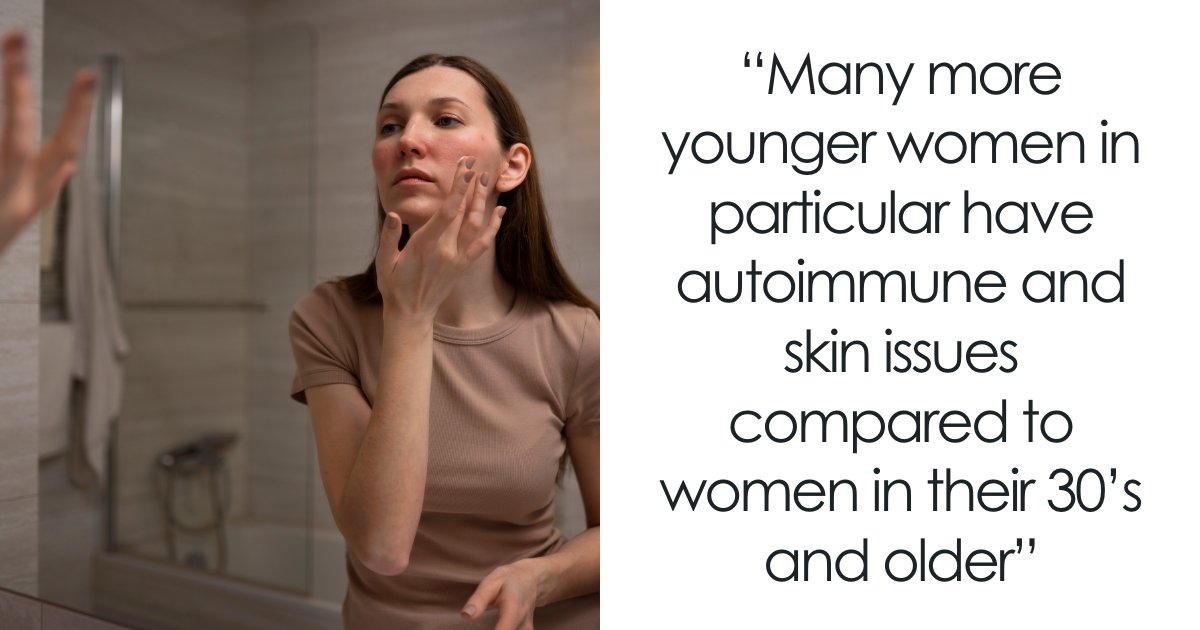
She has said a few times that she’s amazed at how many more younger women in particular have autoimmune and skin issues compared to women in their 30’s and older.
Most people do not think of young adulthood as a time for chronic health problems. However, this has changed. In the U.S., 59.5% of adults ages 18 to 34 reported at least one of 12 chronic conditions in 2023, compared to 52.5% in 2013. Much of this rise is due to obesity and depression.
The trend is even more noticeable when people have more than one condition. The percentage of young adults with at least two chronic conditions went up from 21.8% in 2013 to 27.1% in 2023. This supports what doctors have noticed: more health problems are showing up earlier in adulthood. It also leads to the question of which conditions are most common.
 A relative told me that their eye doctor (cornea specialist) mentioned that they see a lot more dry eye issues in younger people. Primarily because so much screen time causes them to stare more and not blink as often as they should. Not as serious as other things mentioned in the comments but I find it interesting. So please do your eyes a favor and blink more often while you’re on your computers, tablets, and phones. Yes, you reading this right now, blink!
 I only work on the ambulance but I’m getting younger patients with obesity, diabetes, pregnancy, behavioral problems. Last summer I had a 12-year-old that had already been to rehab and was now on the ambulance with her mother for pregnancy complications. I also find us responding more and more to the schools for fights. This past spring it was a 6th grader that knocked out her principal with a metal folding chair À la WWE.
Mental health stands out clearly in this data. In 2022, 26.4% of adults ages 18 to 34 reported having experienced depression, compared to 22.0% of those ages 35 to 49 and 15.3% of adults 65 and older. Frequent mental distress showed a similar trend, affecting 23.2% of the youngest adults.
These numbers match a longer trend in chronic conditions. Depression among U.S. adults ages 18 to 34 increased from 16.4% in 2013 to 25.0% in 2023. While this does not explain the reason for the rise, it helps show why mental health is such a focus when doctors compare younger people to earlier generations.
 My mother has worked in the ER since the 80s. She is the first person you meet and does the initial triaging. She said in the pre-2000s she never saw a young person with a kidney stone, it was a problem mainly 40+ suffered from. These days it’s not uncommon to see young people get them.
Her theory is that it’s energy drinks, but she doesn’t really know. Something has changed though, causing younger people to get kidney stones than just a few decades ago at least. We are Swedish.
Mental health is just one piece of the puzzle, since sleep is a central part of daily life. In 2024, 30.5% of U.S. adults got less than seven hours of sleep on average. Among adults ages 18 to 34, 18.3% had trouble falling asleep, but this problem was less common in older adults, dropping to 12.8% for those 65 and older.
Sleep problems are also closely tied to the chronic conditions discussed earlier. Poor sleep is linked to issues like obesity and depression, so it is more than just feeling tired. Sleep connects the mental health challenges doctors notice with the daily habits that affect younger adults’ well-being.
Did you know that before electric lighting transformed the night, people did not always treat sleep as one uninterrupted block? Historian A. Roger Ekirch documented references to a “first sleep” followed by a period of wakefulness and a “second sleep,” with people using that middle-of-the-night interval to pray, read, talk, or tend to household tasks.
 My sister’s an ER nurse and she says the UTIs in girls in their early 20s are out of control now. like not the normal ones, the kind that go to your kidneys because they held it for 9 hours at work or waited three days to get seen. she had a 23 year old last month who nearly went septic over something that used to be a quick round of antibiotics. it’s the ignoring your body thing, everyone’s too busy or too broke to deal with it until it’s an emergency.
 Vape obsession. It leads to zero appetite. Usually hand in hand with anxiety. I’m seeing this as extremely thin young men with no appetite and complaining of “ difficulty swallowing” / eosinophilic esophagitis. Additionally, colon cancer. Prolly combo of fast food, preservatives, low fiber, chemicals and pesticides in our food, all affecting the gut microbiome.
 Smartphones giving 20 year olds the necks of 60 year olds.
Sleep isn’t the only daily habit that has changed a lot. Many younger adults now spend a lot of time sitting and looking at screens, which can affect their health. Sitting for long periods is linked to a higher risk of neck pain, especially when using phones and computers for extended times.
Using mobile phones is most strongly linked to neck pain, with computer use coming next. The risk goes up the more time people spend sitting. However, screens are not the only reason for neck pain. Posture, physical activity, work habits, and other factors also play a role in how much strain people put on their necks.
 MCAS, POTS and the flavours of EDS that don’t show up on genetic testing.
Reasonably sure that we’re putting complex medical labels on the wrong pathlogies.
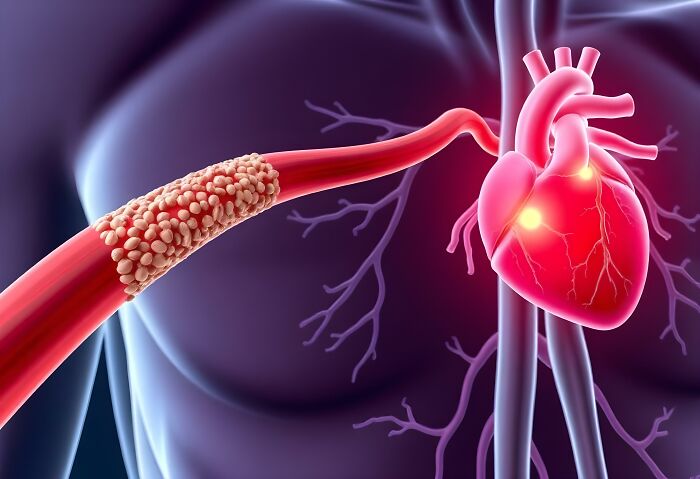 My 75-year-old husband recently had a quadruple bypass surgery (four new arteries placed during open heart surgery). It’s a big deal and a very severe surgery.
While sitting up in the ICU with him one night, the RN and I got to talking. She told me that they’re seeing an abundance of 40-somethings come in needing the same surgery.
In other words, young folks have already clogged up their arteries by age 40+. .
Another group of complaints often begins with something deceptively ordinary: stomach pain, bloating, constipation, or unpredictable bowel habits. Among adults ages 18–34, 6.9% meet the criteria for irritable bowel syndrome, compared with 2.3% of adults 65 and older.
Digestive problems can also appear relatively early in adulthood. Irritable bowel syndrome peaks around ages 18–34, while functional dyspepsia affects 9.5% of adults ages 18–35, compared with 3.9% of people over 65. Together, these figures show how common persistent digestive symptoms can be among younger adults.
Now that we’ve looked at the numbers, let’s go back to the original question: what does a doctor notice after years of seeing patients? Over time, doctors gain knowledge from seeing many cases, spotting patterns, and using their judgment. Evidence-based medicine values this experience and brings it together with the latest research.
A doctor might honestly see some complaints becoming more common among their patients, but this alone does not prove a trend in the whole population. Research helps check if these patterns show up in larger groups, while a doctor’s experience can help researchers decide which questions to study.
Do you think doctors are really seeing different health problems in Gen Z, or could other factors explain the change? Which observation stood out to you the most? Share your thoughts in the comments!
 Heavily medicated ADHD, anxiety, depression.
Tachycardia. Chest pain.
Polypharmacy.
Women utilizing hormonal birth control who’ve never had a pelvic exam until they develop a history and symptoms consistent with STI.
Ignorance and indifference to their own medical history. If you have a history of allergy to a previously prescribed medication, it is essential that you know the name of that medication, unless you enjoy experiencing potentially life-threatening symptoms. It is not adequate to tell us that you “nearly died” but have no idea as to what medication led to that scenario.
Inability to self-assess severity of symptoms. Inability to treat symptoms with readily available, inexpensive over-the-counter medications. Inability to experience minor symptoms for even one day prior to seeking medical care, with which they are then disappointed because no instant cure for viral symptoms yet exists.
If you are unable to swallow pills, are over the age of 12 and under the age of 75 and have no diagnosed medical condition which would make this issue obvious, please tell us BEFORE we send a script for tablets or capsules to your pharmacy. Please do not assume that all tablets are safe to crush, or that all capsules are safe to open. They aren’t.
 Nurse in a PACU in the NHS, mainly seeing a lot of gynae issues especially around endometriosis. But for the men outside the normal broken bones etc I’m not seeing a lot of gen z men.
I am seeing a lot more bowel/GI Cancer issues and Strokes aswell, the age groups seemingly getting younger.
 Mast cell syndrome/thoracic outlet syndrome/celiac disease. A good amount of people I’ve seen w/ these conditions haven’t had formal workup or confirmatory diagnoses. In the past, would be called hypochondria or fibromyalgia.
 I’ve been practicing for 3 years (resident neurologist). Last week I had in my clinic 3 women, 2 26yo and a 31yo, for back pain. All 3 had herniated discs and one of them had degenerative changes in her vertebrae which are normal for post menopause women. The 31yo had a cervical hernia from a few years ago, though it was thankfully not causing issues. My older colleagues have all noticed a trend of young people getting spinal disorders more and more often. It used to be that there would be maybe 10 patients under and around 30 the clinic would treat a year. Now there’s 2-3 every month.
The consensus is more and more people spend their days barely moving. Or on the other end, there’s people who go way too hard at the gym. Lifting weights with poor form or lifting over what they should be.
 Anxiety, a lack of strong emotional connection with parents, a lack of sense of self, an impatience with the future, an inability to be here now, holy cow, would ppl please just take a breath?
Not a criticism of the patients… a criticism of their parents, leaders, and governments.
 One thing I’ve noticed is how much more common anxiety and stress problems seem to be in young people compared with when I first started working. I remember seeing a patient who were physically healthy but were dealing with panic attach, insomnia, constant fatigue, stomach problem,, and a lot had seemed to be connected to chronic stress. Another thing is how often ADHD and autism are being diagnosed in people who went years without anyone recognising it. Am not sure if actual prevalence has changed as dramatically as the numbers suggest, because awareness and access to diagnosis are much better now, but the different in what we see clinically is noticeable
Sleeping problems is another thing, young people has reversed sleep schedules, spend hours on their phone and computer at night, and come in exhausted despite being otherwise healthy. The interesting thing I found is that some of these patients don’t necessarily look unhealthy from outside. They can be young and physical fit but still have significant anxiety, poor sleep, chronic fatigue or other problems that I didn’t associate as much with that age group earlier in my career.
Cervical spine degeneration in teenagers, but honestly the biggest jump is severe gastritis. The number of 20-year-olds showing up with destroyed stomach linings from living on high-dose caffeine, vapes, and chronic anxiety is wild compared to twenty years ago.
My wife is a hospitalist. She’s seeing a big increase in AFib in younger patients. All the energy drinks will catch up with you.
Extreme, paralyzing decision fatigue and generalized anxiety about literally everything.
Broken teeth from piercings, tongue cheek, lip, they all will eventually work their way lose. We do at least 10 crowns and half a dozen for canals a month from this happening. I honestly can’t recall the last time s Boomer or GenX came in for that issue if ever.
I’m a nurse and I do home infusions. I have many young people (18-36) with ulcerative colitis or Crohn’s disease.
PakarPBN
A Private Blog Network (PBN) is a collection of websites that are controlled by a single individual or organization and used primarily to build backlinks to a “money site” in order to influence its ranking in search engines such as Google. The core idea behind a PBN is based on the importance of backlinks in Google’s ranking algorithm. Since Google views backlinks as signals of authority and trust, some website owners attempt to artificially create these signals through a controlled network of sites.
In a typical PBN setup, the owner acquires expired or aged domains that already have existing authority, backlinks, and history. These domains are rebuilt with new content and hosted separately, often using different IP addresses, hosting providers, themes, and ownership details to make them appear unrelated. Within the content published on these sites, links are strategically placed that point to the main website the owner wants to rank higher. By doing this, the owner attempts to pass link equity (also known as “link juice”) from the PBN sites to the target website.
The purpose of a PBN is to give the impression that the target website is naturally earning links from multiple independent sources. If done effectively, this can temporarily improve keyword rankings, increase organic visibility, and drive more traffic from search results.
Streaming Film
Nonton Film gratis
Jasa Backlink
Download Anime Batch

Leave a Reply