In a perfect world, we would all be able to put our lives on pause during the holiday season. You wouldn’t have to work or worry about issues in your personal life. No one would become ill, and unexpected issues would hold off until after New Year’s Day.
But unfortunately, life doesn’t care if it’s about to be Christmas or your birthday or your anniversary. One woman’s life was recently turned upside down when her husband admitted that he had been having an affair. And to make matters worse, he revealed that he may have gotten their son’s ex-girlfriend pregnant. Below, you’ll find all the details that the mother shared on Reddit, as well as some of the replies invested readers left.
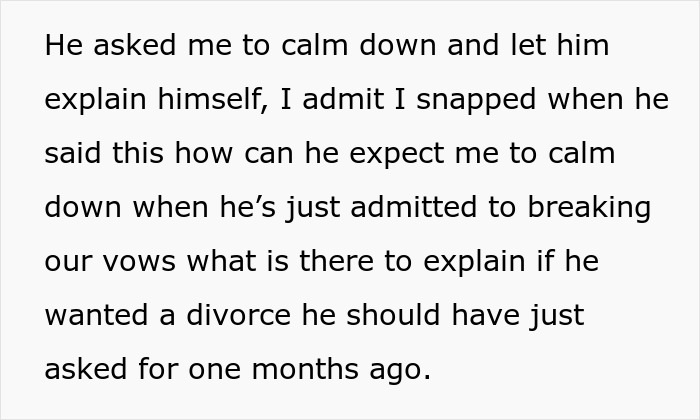
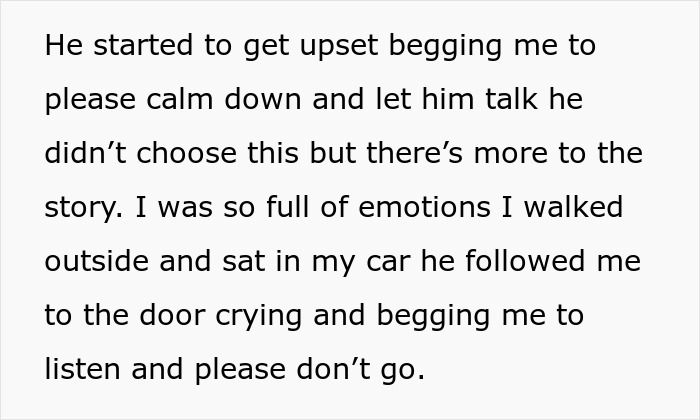
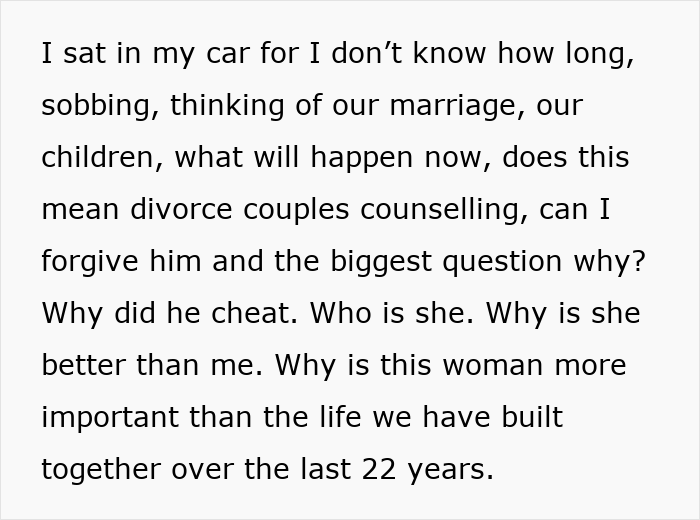
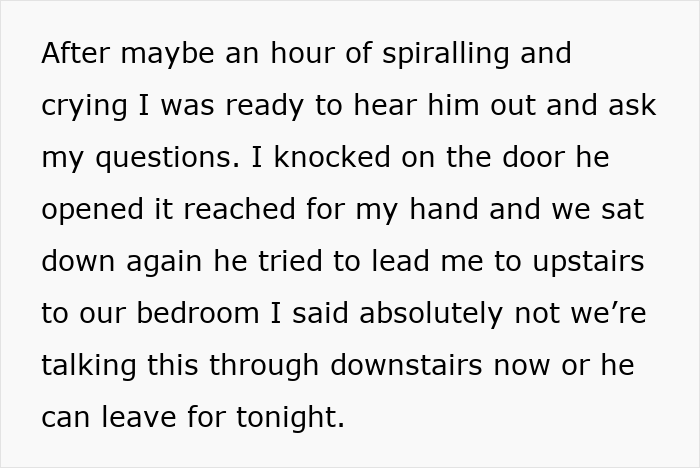
This woman’s husband revealed that he had been having an affair for months
Man in beige trench coat and glasses sitting on couch, looking distressed and unsure about affair partner’s baby situation.
Image credits: Andrea Piacquadio / Pexels (not the actual photo)
Now, she’s wondering what the best move is for her family and marriage
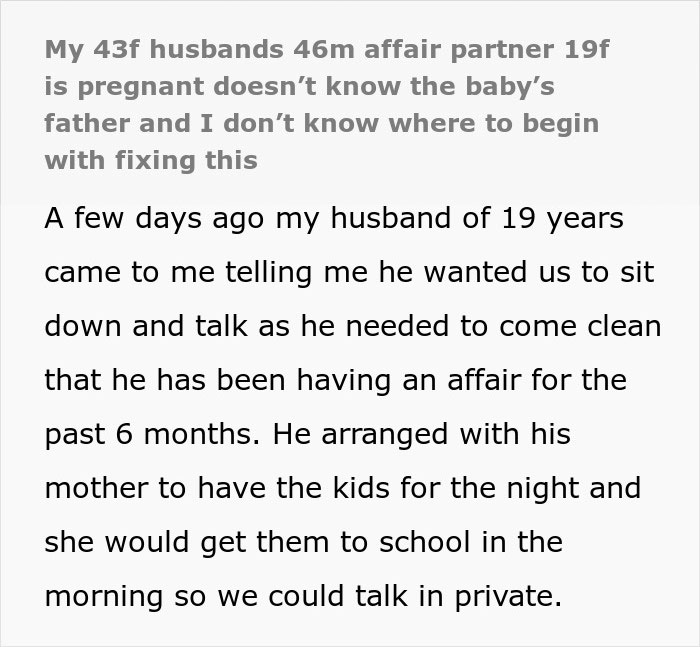
Man unsure if affair partner’s baby is his child or grandchild as she’s his son’s recent ex in a text post.
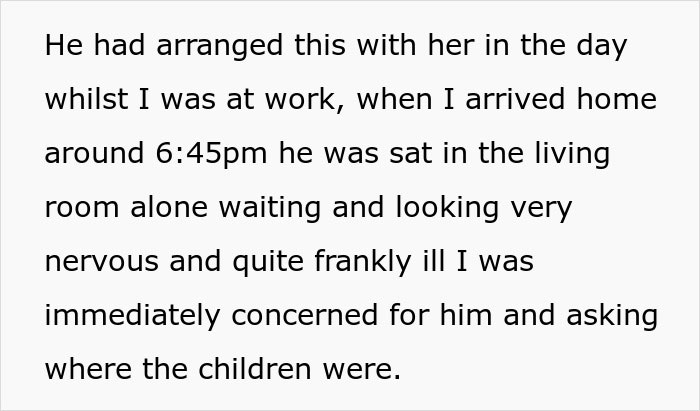
Text excerpt showing a man sitting nervously at home, unsure if affair partner’s baby is his child or grandchild.
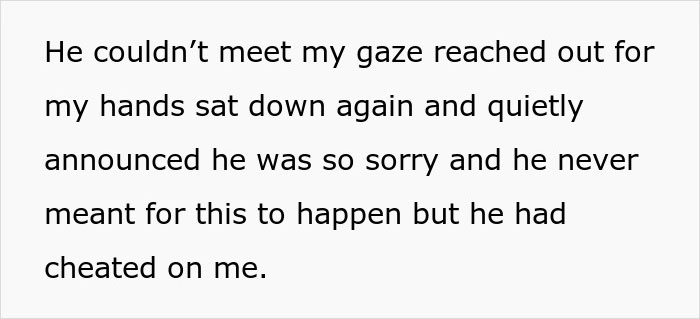
Text passage describing a man feeling regretful about cheating and apologizing in a quiet, emotional moment.
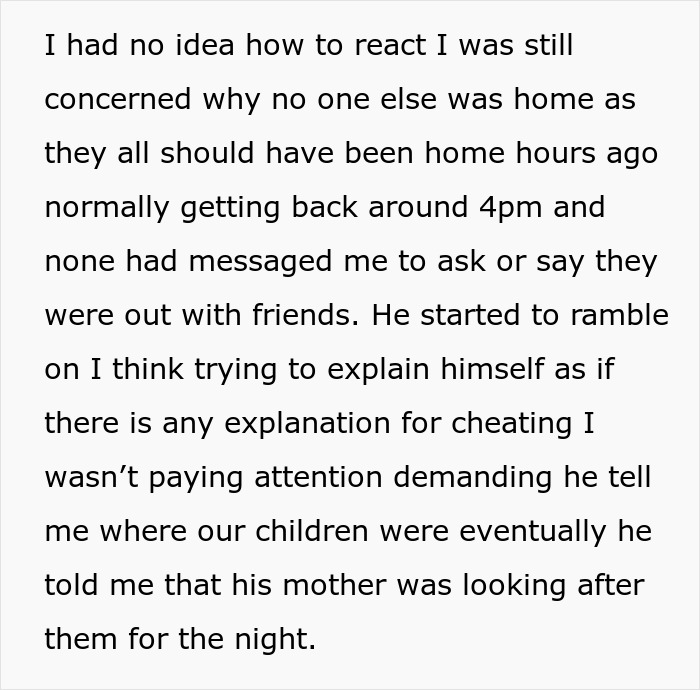
Man unsure if affair partner’s baby is his child or grandchild in complex family relationship dilemma.
Woman with smudged makeup looking out a window, reflecting on uncertain affair partner’s baby and complex family ties.
Image credits: RDNE Stock project / Pexels (not the actual photo)
Text excerpt about a man unsure if affair partner’s baby is his child or grandchild involving his son’s recent ex.
ADVERTISEMENT
Man confused if affair partner’s baby is his child or grandchild as she’s his son’s recent ex-partner.
Alt text: Man unsure if affair partner’s baby is his child or grandchild, conflicted over son’s recent ex and family turmoil
Text excerpt showing a man unsure if affair partner’s baby is his child or grandchild, discussing a serious conversation.
Man unsure if affair partner’s baby is his child or grandchild, involving his son’s recent ex and secret messages.
Woman with a shocked expression, reacting to the complicated situation involving affair partner’s baby and family relations.
Image credits: Anna Tarazevich / Pexels (not the actual photo)
Text excerpt about a man unsure if his affair partner’s baby is his child or grandchild involving his son’s recent ex.
Man unsure if affair partner’s baby is his child or grandchild as she is his son’s recent ex.
Man unsure if affair partner’s baby is his child or grandchild after she dated his son’s recent ex.
Hand holding a positive pregnancy test, relating to uncertainty about affair partner’s baby and family relationships.
Image credits: RDNE Stock project / Pexels (not the actual photo)
Text excerpt discussing a man unsure if affair partner’s baby is his or his son’s, highlighting paternity confusion.
Text excerpt from a story about a man unsure if his affair partner’s baby is his child or grandchild due to family complications.
Text excerpt about a man unsure if affair partner’s baby is his child or grandchild, facing emotional distress.
Text excerpt discussing a man unsure if affair partner’s baby is his child or grandchild connected to son’s recent ex.
Young woman with crossed arms and a serious expression in a kitchen, reflecting uncertainty about family relationships.
Image credits: SHVETS production / Pexels (not the actual photo)
Text excerpt discussing a man unsure if affair partner’s baby is his child or grandchild amid family complications.
Text showing a woman expressing animosity toward her husband, highlighting family tension and relationship issues.
Man unsure if affair partner’s baby is his child or grandchild struggles with family and relationship doubts.
Text discussing confusion and concern over paternity involving a man unsure if affair partner’s baby is his child or grandchild.
Image credits: One-Dragonfly-5474
Man sitting on couch looking unsure while woman in background appears upset, reflecting affair partner baby paternity doubts.
Image credits: Alex Green / Pexels (not the actual photo)
About 20% of men will cheat on their spouse at some point
Nobody ever expects their marriage to end in infidelity. When you tie the knot and say your vows, you commit to spending the rest of your life with the person you love. Unless, that is, they decide to throw it all away for someone else. Unfortunately, cheating is one of the most common reasons why marriages fall apart.
And according to psychologist Briony Leo, “Research tells us that, on average, around 20 percent of men are unfaithful to their spouse, as compared to 13 percent of women.” However, she notes that these numbers only include self-reports, so it’s possible that even more people are cheating and just keeping it to themselves.
Research from the Institute for Family Studies also found that men become even more likely to cheat in their fifties, sixties, and seventies. However, not every marriage is incapable of surviving infidelity. In fact, 53% of relationships where at least one spouse has cheated are still intact.
That doesn’t mean that it’s easy to work through those issues. And of course, things can become much more complicated when there’s a baby involved. But it’s not unheard of for affairs to lead to new life.
One study published in Current Biology estimates that, over the past 500 years, about 1% of the European population was born as a result of an extramarital affair. Meanwhile, in Australia, research has found that about 10% of children may have been conceived during an affair.
Once a person has learned that their spouse got another woman pregnant, it can be extremely difficult to give the marriage another try. Richard Nicastro, PhD, notes on his site that infidelity trauma can lead to a wide range of emotions, including rage, disbelief, confusion, insecurity, anxiety, and deep sadness.
Young woman with curly hair and red lipstick looking uncertain, reflecting on affair partner’s baby and complex family ties.
Image credits: Polina Zimmerman / Pexels (not the actual photo)
It’s natural to feel disgust for your partner after finding out that they’ve cheated
Navigating all of these feelings while trying to make decisions about the future of your marriage can be overwhelming. And as the author of this story noted, it’s common for those who have been cheated on to feel disgust towards their partner.
“This kind of disgust doesn’t just make us turn away—it upends our sense of reality, forcing us to question the truths we once took for granted,” Dr. Nicastro explains. “This is the cruel nature of betrayal. It doesn’t just break your heart—it can prompt the same survival instinct that disgust was designed for, turning someone you once longed for into someone you can’t stand to be near.”
It’s natural for the mother in this story to want to keep things cordial and as “normal” as possible for her children, at least until the holidays are over. But as many commenters pointed out, she owes her son the truth.
PsychCentral warns that keeping secrets from kids can cause suspicion and resentment. It might also create a false sense of reality, which will be shattered when the truth inevitably comes out.
Just because it’s not easy to be honest with your children doesn’t mean that it’s not worth it. Especially when they’re old enough to notice changes in their parents’ behavior, kids will start creating their own stories if they’re not given the full picture.
We would love to hear your thoughts on this situation in the comments below, pandas. How would you react if you were in this mother’s shoes? Then, if you’re interested in checking out another Bored Panda article discussing similar family drama, look no further than right here.
Later, the author responded to several commenters and provided some more context
Screenshot of online discussion about a man unsure if affair partner’s baby is his child or grandchild from his son’s recent ex.
Screenshot of an online discussion about a man unsure if affair partner’s baby is his child or grandchild.
Man unsure if affair partner’s baby is his child or grandchild, involving his son’s recent ex-partner.
Advice on dealing with uncertainty about affair partner’s baby and complicated family relationships involving son’s ex.
Text conversation about strained family relationships and seeking therapy after affair raises doubts over baby’s paternity.
Text post discussing a man unsure if affair partner’s baby is his child or grandchild, advising to stay out of it.
Text excerpt discussing a man unsure if affair partner’s baby is his child or grandchild while addressing family challenges.
Man unsure if affair partner’s baby is his child or grandchild discussing complex family relationship and paternity doubts.
Readers shared sympathy for the mother, and many encouraged her to be honest with her son and file for divorce
Text showing advice about affair partner’s baby and complicated family relationships involving son’s recent ex.
Text post from a Reddit user discussing a man unsure if affair partner’s baby is his child or grandchild.
Screenshot of a social media comment advising to get a lawyer and therapist about an affair partner’s baby uncertainty.
Comment discussing a man unsure if affair partner’s baby is his child or grandchild due to complicated family ties.
Comment expressing disgust and advice about a man unsure if affair partner’s baby is his child or grandchild.
Comment discussing a man unsure if affair partner’s baby is his child or his son’s, advising legal and family protection.
Man confused if affair partner’s baby is his child or grandchild, as she’s his son’s recent ex.
Comment suggesting to divorce a man, be honest with kids about reasons, and kick him out, related to affair partner’s baby confusion.
Text comment about a man unsure if affair partner’s baby is his child or grandchild involving his son’s recent ex.
Man confused about affair partner’s baby being his child or grandchild as she’s his son’s recent ex.
Screenshot of a Reddit comment sharing advice on paternity tests and dealing with an uncertain baby father situation.
Man conflicted about affair partner’s baby being his child or grandchild, as she dated his son recently.
Text excerpt from advice column discussing a man unsure if affair partner’s baby is his child or grandchild.
Text excerpt discussing divorce attorney advice and family planning during holiday visits amid relationship uncertainty and custody concerns.
Comment discussing man unsure if affair partner’s baby is his child or grandchild amid son’s recent breakup.
Text conversation expressing sympathy and advice to prepare legally about affair partner’s baby and family betrayal issues.
Comment advising a woman to see a therapist about a man unsure if affair partner’s baby is his child or grandchild.
Man unsure if affair partner’s baby is his child or grandchild as she’s his son’s recent ex causing family turmoil.
Man unsure if affair partner’s baby is his child or grandchild, causing family confusion and emotional turmoil.
Reddit comment advising to kick out a husband amid affair doubts involving son’s recent ex and potential baby confusion.
Comment discussing a man unsure if affair partner’s baby is his child or grandchild, and mentioning paternity test advice.
Text of advice message on making legal and family decisions regarding unsure paternity in an affair partner situation.
Screenshot of a Reddit comment discussing a man unsure if affair partner’s baby is his child or grandchild.
Text post from a user advising urgent action about a man unsure if affair partner’s baby is his child or grandchild.
Technology is evolving faster than ever. From AI-driven tools to automation, cloud platforms, and advanced analytics are moving at the speed of light. For businesses, this rapid change presents a choice: adapt and thrive, or risk falling behind.
At SiteHatchery, we help businesses stay ahead of the curve by creating websites and digital solutions that leverage the latest technology. A modern, scalable website isn’t just a marketing tool, it’s a business engine that can adapt as technology evolves.
Why Rapid Technology Changes Matter to Your Business
The pace of innovation today means that tools and strategies that worked a year ago may no longer be enough. Businesses that fail to adopt new digital capabilities risk losing customers to competitors who embrace innovation. With SiteHatchery’s services, your business can:
Automate processes: Online forms, scheduling, and e-commerce functionality reduce manual work and improve efficiency.
Optimize for AI-driven search and analytics: Ensure your website ranks higher and converts better as search engines get smarter.
Scale with modern platforms: Whether you need a CMS upgrade, responsive design, or custom integrations, your website grows with your business.
Stay secure and fast: Cutting-edge technology ensures your website runs smoothly, protecting your brand and your customers.
The Acceleration of Technology
In the past decade, technological advancements have occurred 10 to 50 times faster than in the 1990s and 2000s, with AI development accelerating 100 times faster Medium. This unprecedented pace means that tools and platforms that were cutting-edge just a year ago may already be outdated.
The Impact on Small Businesses
While large corporations often have the resources to stay ahead of the curve, small businesses must be agile to adapt. According to a report by the U.S. Chamber of Commerce, 77% of small businesses that use AI report that limits on the technology would negatively impact their growth, operations, and bottom line U.S. Chamber of Commerce. This highlights the importance of embracing technological advancements to remain competitive.
SiteHatchery: Your Partner in Digital Adaptation
In a world where technology is advancing at lightning speed, your website is your frontline. SiteHatchery doesn’t just build beautiful websites, we create digital platforms designed for agility and growth. Whether you’re in Chico, Sacramento, or anywhere across California, our team ensures your online presence keeps pace with the latest trends and tools.
By investing in a SiteHatchery website, you’re not just keeping up, you’re positioning your business to thrive in a rapidly changing tech revolution.
Kalau pun kamu menemukan daftar situs atau review di internet yang menyebut “slot online terpercaya” atau “gacor hari ini”, perlu diingat hal berikut:
📌 Fakta Hukum dan Risiko
Perjudian online itu ilegal di Indonesia, termasuk slot online dengan deposit dan penarikan uang sungguhan.
Situs-situs yang mengaku “terpercaya” sering beroperasi di luar yurisdiksi resmi atau tanpa izin yang diakui di Indonesia.
Banyak situs yang tampak profesional sebenarnya tidak memiliki lisensi resmi, berpotensi menipu, mencuri data, atau tidak membayar kemenangan.
📌 Jika kamu tetap ingin memahami istilah “slot online terpercaya”
Dalam komunitas daring, orang sering mengacu pada beberapa hal ketika mengatakan situs “terpercaya”:
✔️ Situs yang terlihat profesional dengan domain sendiri (bukan blog gratis). ✔️ Memiliki layanan pelanggan 24 jam dan live chat. ✔️ Proses deposit/withdrawal yang cepat dan jelas (meskipun tetap ilegal kalau digunakan untuk judi online di Indonesia). ✔️ Reputasi baik di forum atau review pemain (walau sumber semacam itu sering subjektif dan tidak terverifikasi).
⚠️ Daftar Nama yang Sering Disebut Online
Beberapa nama yang muncul di artikel atau komunitas meskipun tidak ada jaminan legal atau aman secara hukum:
Disebut sebagai populer di komunitas: “Slot88”, “RRQ88”, “VIP77” (ini berdasarkan review luar, bukan rekomendasi resmi).
Ada juga nama-nama lain yang muncul dalam posting forum, seperti “Jablay123”, “MAXWIN77”, “Happyjudi”, “qqslot777” (tapi ini hanya klaim pemain, bukan bukti legal).
🤔 Saran Bijak
⭐ Tidak disarankan bermain di situs judi online dengan uang asli — karena selain ilegal, risikonya sangat tinggi: kamu bisa kehilangan uang, data pribadi dicuri, atau terkena blokir/masalah hukum. ⭐ Jika ingin menikmati mesin slot hanya untuk hiburan tanpa uang asli, banyak game slot gratis di platform game (Android/iOS) yang aman dan legal. Agen234
In the final hours before allegedly taking the lives of his parents, Rob Reiner’s son Nick spent behaving in ways that guests at an A-list Hollywood party now describe as unsettling and deeply alarming.
Less than a day before Rob Reiner, 78, and his wife Michele Singer Reiner, 70, were found fatally stabbed inside their Brentwood home, their 32-year-old son attended Conan O’Brien’s Christmas party alongside them.
Highlights
Nick Reiner reportedly asked celebrities if they were famous during Conan O’Brien’s holiday party.
Sources say his parents asked Conan if they could bring Nick along.
Hours later, Rob Reiner and Michele Singer Reiner were found fatally wounded in their home.
What he said to celebrities that night, and how he behaved, has since taken on disturbing new weight after he was charged with two counts of first-degree homicide, particularly as details about why he was at the party in the first place have surfaced
He faces the possibility of capital punishment if convicted.
New details have emerged about why Nick Reiner attended Conan O’Brien’s Christmas party with his parents
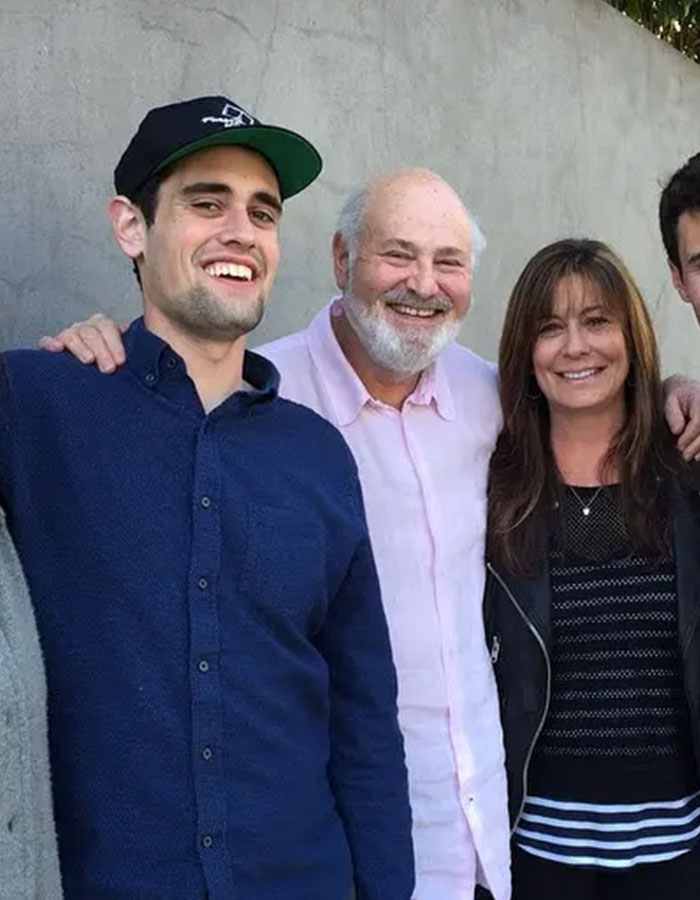
Rob Reiner’s son with two people at an outdoor event, capturing a moment that involves celebrities and a party setting.
Image credits: Getty/Michael Buckner
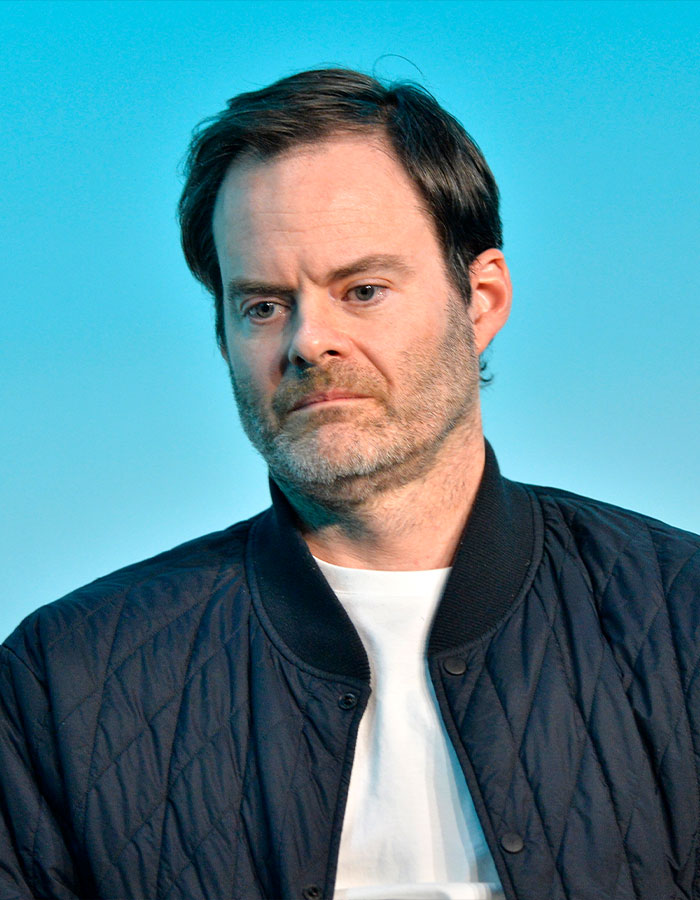
According to the Wall Street Journal, Nick approached actor Bill Hader during the gathering and asked him a series of blunt questions.
“What’s your name? What’s your last name? Are you famous?” Nick asked, the outlet reported.
Rob Reiner had personally introduced his son to Hader earlier in the evening. Witnesses said the exchange quickly became uncomfortable.
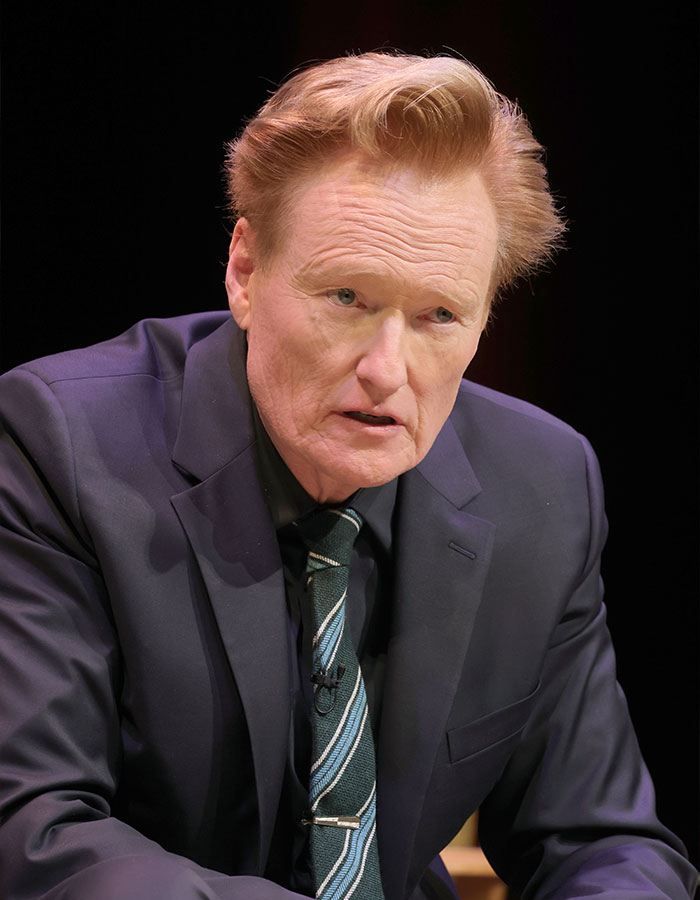
Conan O’Brien speaking in a dark suit and striped tie during a televised interview about celebrities and unusual questions.
Image credits: Getty/Michael Loccisano
Multiple guests said Nick repeatedly asked the same questions to other attendees throughout the night, fixating on status and fame. Sources told People Magazine that he was “freaking everyone out.”
One witness told NBC News that Nick interrupted Hader while the actor was in, what he described as, a private conversation. When Hader told him so, Nick reportedly stood in place, stared, and then stormed off, leaving nearby guests unnerved.
Man with a serious expression wearing a black quilted jacket and white shirt against a blue background at a celebrity event
Image credits: Getty/Jerod Harris
Another source told TMZ that Nick stood out sharply at the formal gathering because he was wearing a hoodie and looked disheveled – a stark contrast to the dress code of the star-studded event.
Page Six reported that Nick kept pestering partygoers with the same line of questioning until he was eventually asked to leave O’Brien’s home.
The couple wanted to keep an eye on their son as his behavior had become increasingly erratic
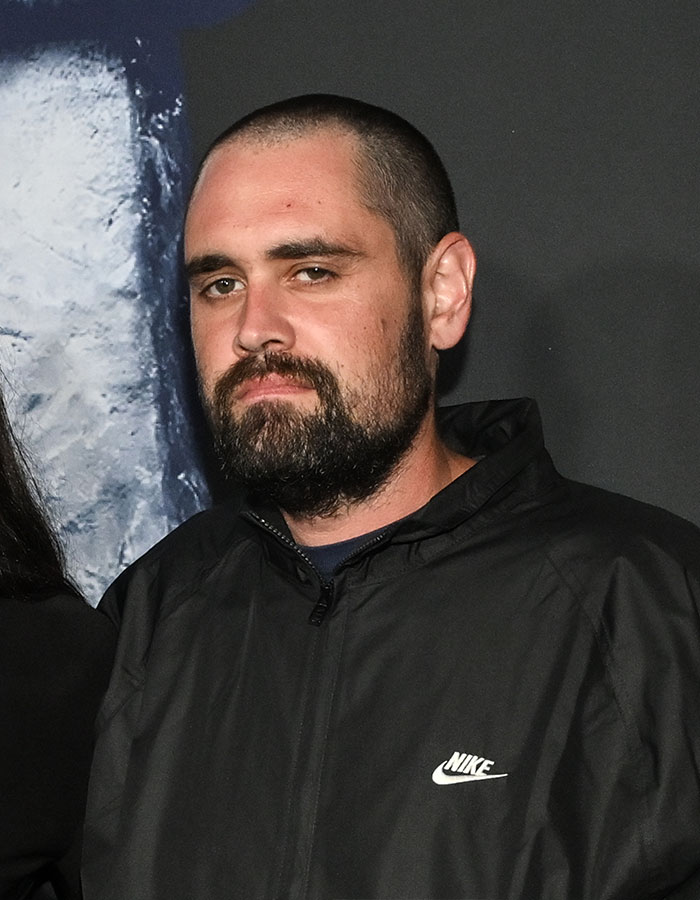
Man with beard and buzz cut wearing a black Nike jacket at an event related to Rob Reiner’s son and celebrities topic
Image credits: Getty/Michael Buckner
As the timeline of the tragedy became clearer, many started asking themselves why Nick was at the party in the first place.
Several outlets, including Rolling Stone, People, TMZ, and the Daily Mail, all converge on the same point:
Rob Reiner and Michele Singer Reiner specifically asked if they could bring Nick with them to the party because they were concerned about his mental state.
Insiders said they wanted to “keep an eye on him.”
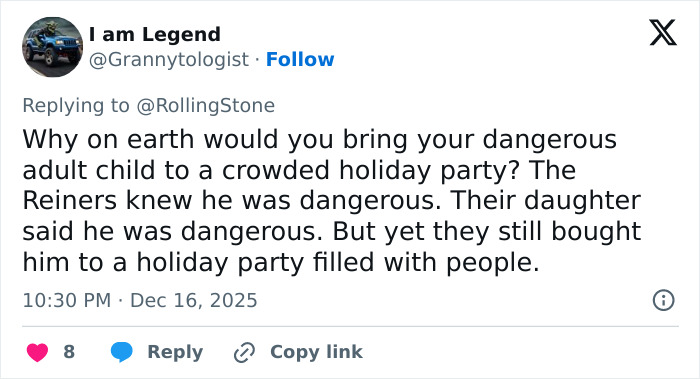
Tweet discussing Rob Reiner’s son at a crowded holiday party that freaked out celebrities at Conan O’Brien’s event.
Image credits: Grannytologist
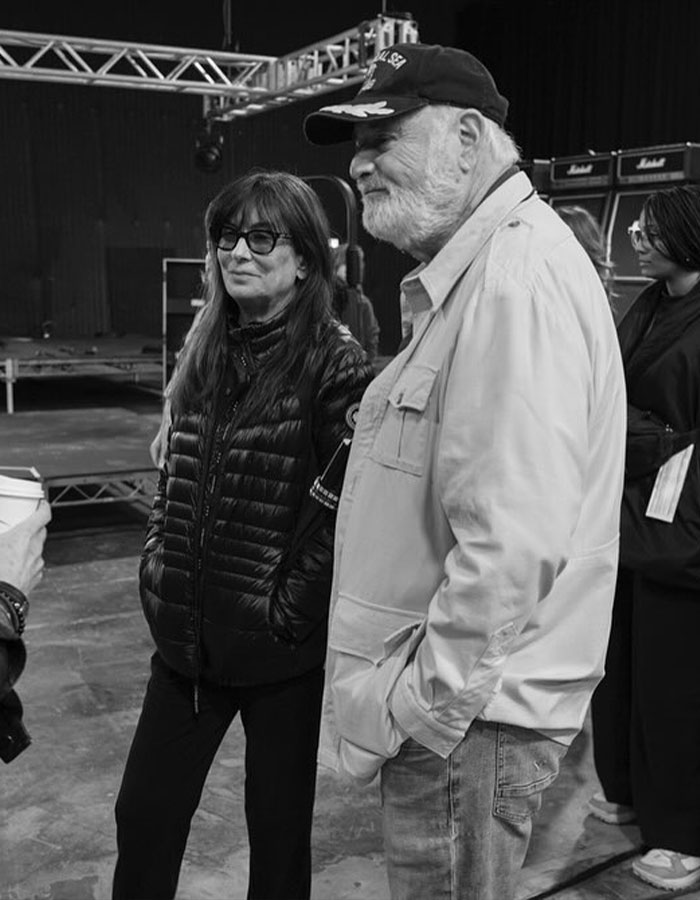
People at Conan O’Brien’s party, including a woman in glasses and a man in a cap, engaging in casual conversation.
Image credits: Instagram/michelereiner
As the evening progressed, witnesses say tensions between Nick and his parents escalated.
As Bored Pandareported, Rob and Michele Reiner became involved in a “very loud argument” with their son during the party. New details confirm the confrontation centered on Nick’s refusal to return to rehab.
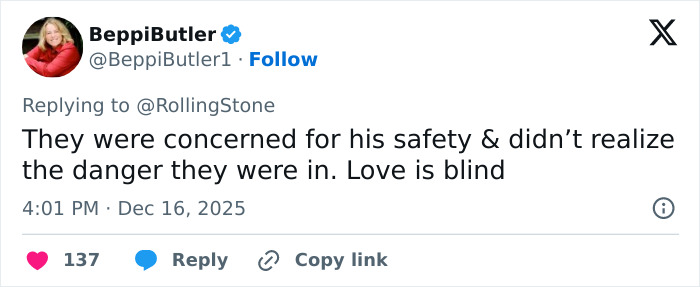
Screenshot of a tweet commenting on safety concerns at Conan O’Brien’s party involving Rob Reiner’s son and celebrities.
Image credits: BeppiButler1
ADVERTISEMENT
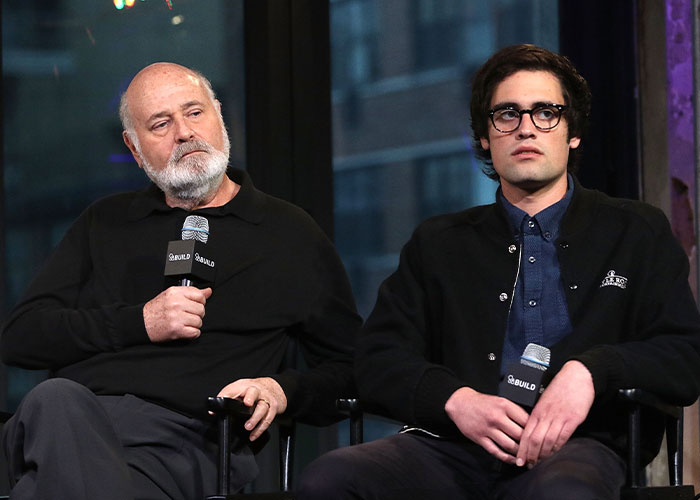
Rob Reiner and his son seated, holding microphones during a discussion about celebrities at Conan O’Brien’s party.
Image credits: Getty/Laura Cavanaugh
An old family friend told reporters that although Nick was supposedly sober at the time, it appeared “not so much off them” that night.
The argument ended with the Reiners leaving the party early.
Less than 24 hours later, the couple would be found lifeless.
Nick had reportedly resumed his substance use in the months leading up to the tragedy
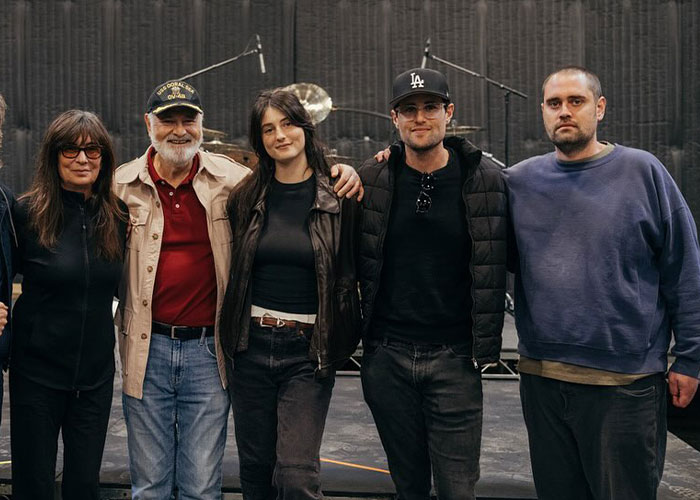
Group of people smiling at an outdoor event, related to Rob Reiner’s son and celebrities at Conan O’Brien’s party.
Image credits: Instagram/michelereiner
On Sunday afternoon, Rob and Michele Reiner were discovered fatally wounded inside their $13.5 million Brentwood mansion by their daughter, Romy Reiner, 28.
She immediately told investigators that her brother should be considered a suspect, describing him as “dangerous.”
Nick Reiner was arrested later that night at a Los Angeles subway station roughly 15 miles from his parents’ home. As Bored Panda reported Tuesday (December 16), he is set to be charged with homicide.
Group of casually dressed people posing together, highlighting Rob Reiner’s son interacting with celebrities at a party.
Image credits: Instagram/michelereiner
Nick is currently being held without bail at the Twin Towers Correctional Facility in Los Angeles, placed on constant watch.
Following his arrest, further details emerged about Nick’s long-standing struggles.
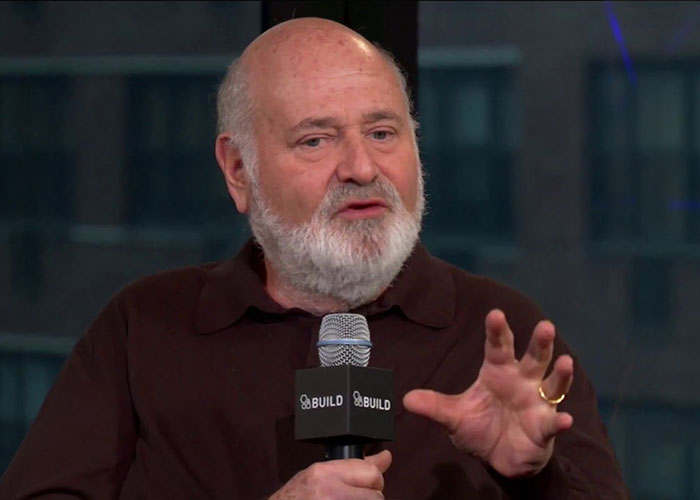
Rob Reiner speaking at a Build event, holding a microphone and gesturing during an interview session.
Image credits: BUILD Series
Sources told the Daily Mail that Nick had been living in his parents’ guesthouse for the past five years, where his behavior had grown increasingly volatile. One source described him as a “ticking time b*mb.”
“He would do m*th and not sleep for days, and then have outbursts, breaking things, punching walls,” the source said. “His dr*g use was getting worse and his parents wanted him out.”
Police officers detaining a person on the ground at night, related to what Rob Reiner’s son asked celebrities incident.
Image credits: LAPD Gang and Narcotics
Nick himself spoke publicly about his struggles in a 2016 interview with People Magazine, admitting he had entered rehab around age 15 and returned 17 more times over the next four years. He also described periods of homelessness across multiple states.
“I was homeless in Maine. I was homeless in New Jersey. I was homeless in Texas,” he said. “I spent nights on the street. I spent weeks on the street. It was not fun.”
Friends and family insiders say warning signs had been present for years
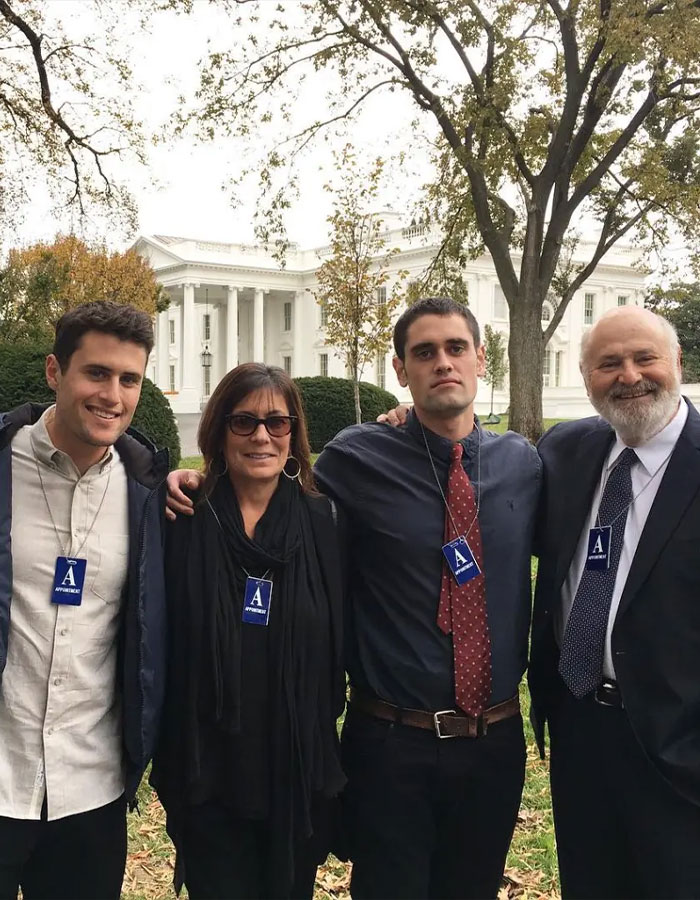
Four people posing outside near the White House, two wearing badges, related to Rob Reiner’s son asking celebrities at party.
Image credits: Instagram/michelereiner
Celebrity yoga instructor Alanna Zabel, who worked with the Reiner family for nearly a decade, said Nick displayed severe emotional outbursts from a young age.
“Nicky would barge in like the world was on fire, screaming, into our yoga sessions,” she recalled. “It was disruptive. I have never seen a child like it.”
Zabel said she held private sessions with Nick for a year in an attempt to help him regulate his emotions and confirmed that the family sought professional help early on.
“The fact that they were seeing a family therapist shows how much they cared,” she said. “They were trying to figure it out.”
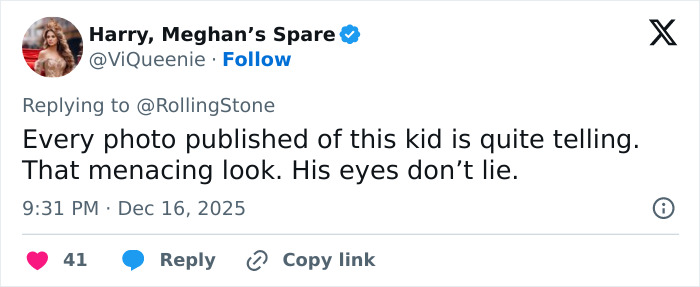
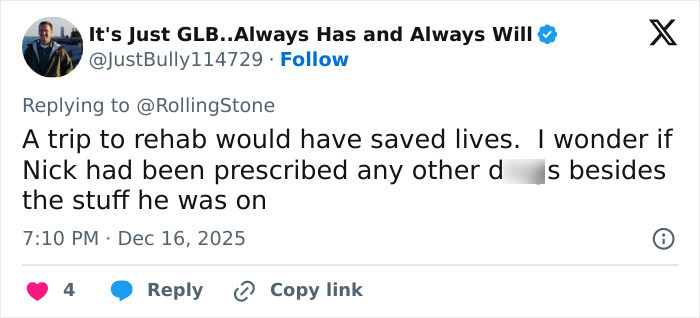
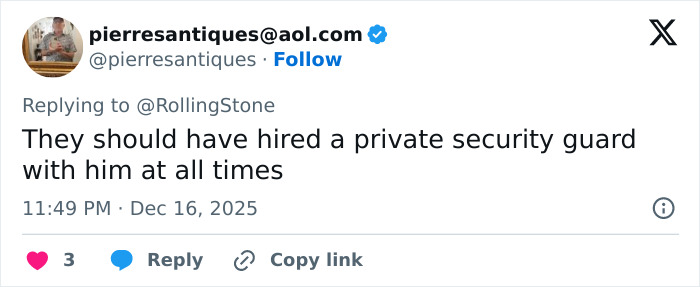
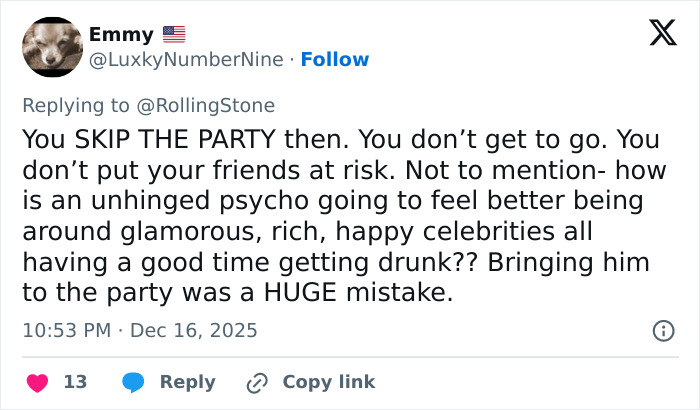
“The eyes don’t lie.” Netizens were put off by recent photos of Nick Reiner
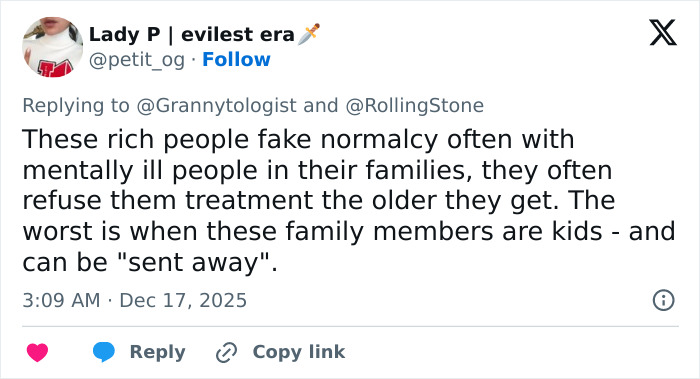
Tweet by Lady P discussing how rich families fake normalcy and refuse treatment for mentally ill kids, highlighting tough family dynamics.
Image credits: petit_og
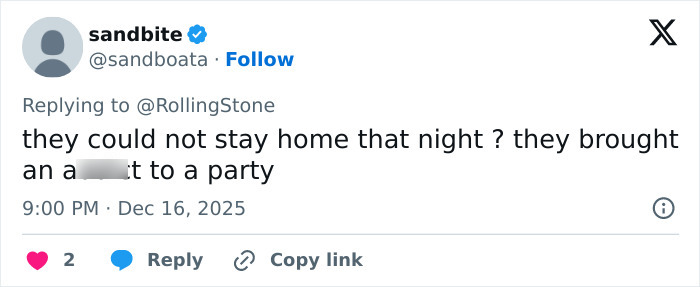
Screenshot of a tweet discussing Rob Reiner’s son asking celebrities at Conan O’Brien’s party that freaked everyone out.
Image credits: sandboata
Tweet from Harry, Meghan’s Spare about Rob Reiner’s son asking celebrities at Conan O’Brien’s party with a menacing look.
Image credits: ViQueenie
Tweet discussing rehab and prescription d***s related to Nick, replying to a Rolling Stone article about Rob Reiner’s son at Conan O’Brien’s party.
Image credits: JustBully114729
Tweet discussing Rob Reiner’s son interaction at Conan O’Brien’s party that freaked out celebrities.
Image credits: pierresantiques
Tweet criticizing bringing an unhinged person to a celebrity party, mentioning risk and impact on guests at Conan O’Brien’s event.
Image credits: LuxkyNumberNine
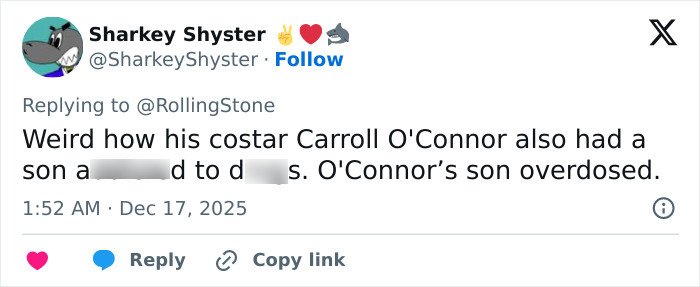
Screenshot of a tweet discussing Rob Reiner’s son and celebrities at Conan O’Brien’s party that freaked everyone out.
Image credits: SharkeyShyster
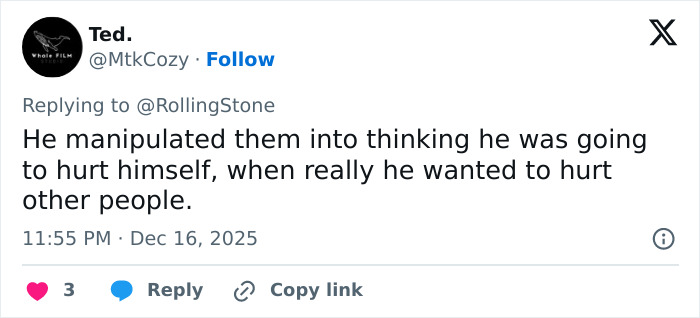
Twitter post discussing manipulation and intentions, related to what Rob Reiner’s son asked celebrities at Conan O’Brien’s party.
Image credits: MtkCozy
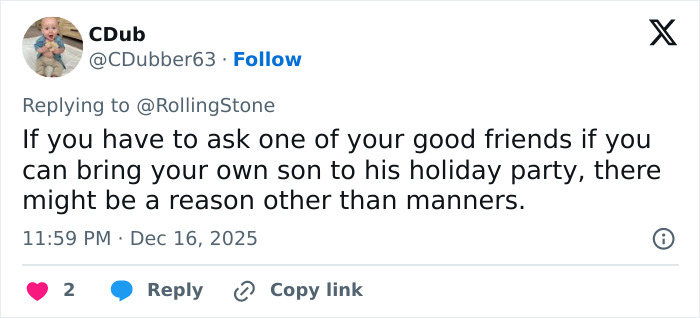
Screenshot of a tweet discussing bringing Rob Reiner’s son to a holiday party and the reaction of celebrities at Conan O’Brien’s event.
Image credits: CDubber63
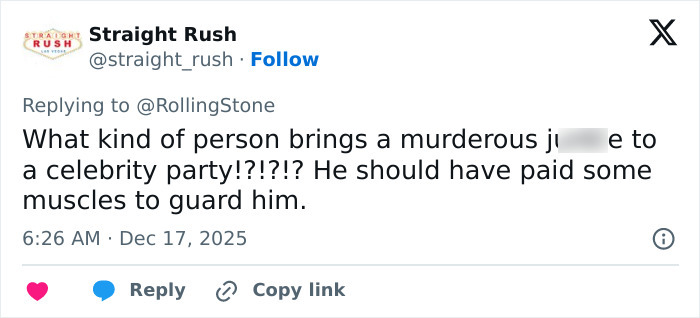
Screenshot of a tweet discussing a controversial question asked by Rob Reiner’s son at Conan O’Brien’s celebrity party.
Image credits: straight_rush
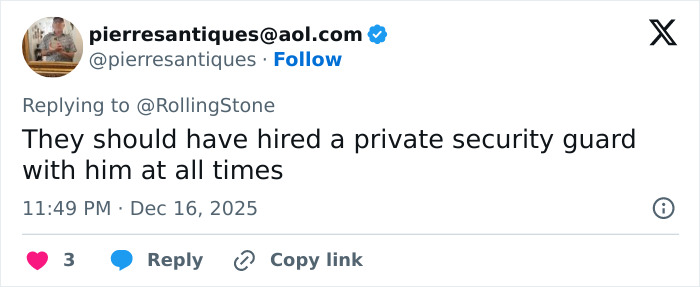
Tweet about Rob Reiner’s son asking celebrities at Conan O’Brien’s party, mentioning private security concerns.
Image credits: pierresantiques
Thanks! Check out the results:
Total votes ·
Newsletter
Subscribe to Access Exclusive Polls
By entering your email and clicking Subscribe, you’re agreeing to let us send you customized marketing messages about us and our advertising partners. You are also agreeing to our Privacy Policy.
Thank you! You’ve successfully subscribed to newsletters!
Usha Vance has addressed the speculation that her marriage to US Vice President JD Vance has entered rocky territory.
The couple met in 2010 while they were both students at Yale Law School. JD has previously revealed that they instantly clicked and that he told Usha he loved her on their first date. Four years later, they married in an interfaith Christian and Hindu ceremony.
Highlights
Usha Vance has addressed online speculation that her marriage to US Vice President JD Vance is strained.
The Second Lady pushed back against those “building stories” about her and her husband.
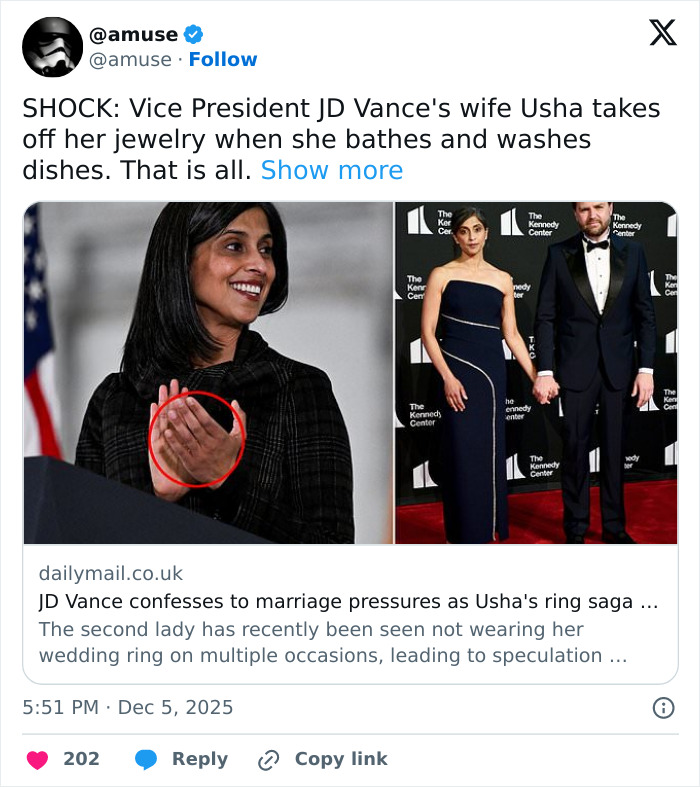
Usha was recently photographed without her wedding ring during public appearances with First Lady Melania Trump.
JD and the Second Lady share three children together: Ewan, Vivek, and Mirabel.
Usha Vance speaking at a podium with a microphone against an American flag background during a public event.
Second Lady Usha Vance is setting the record straight on her marriage to JD Vance
Image credits: Anna Moneymaker/Getty Images
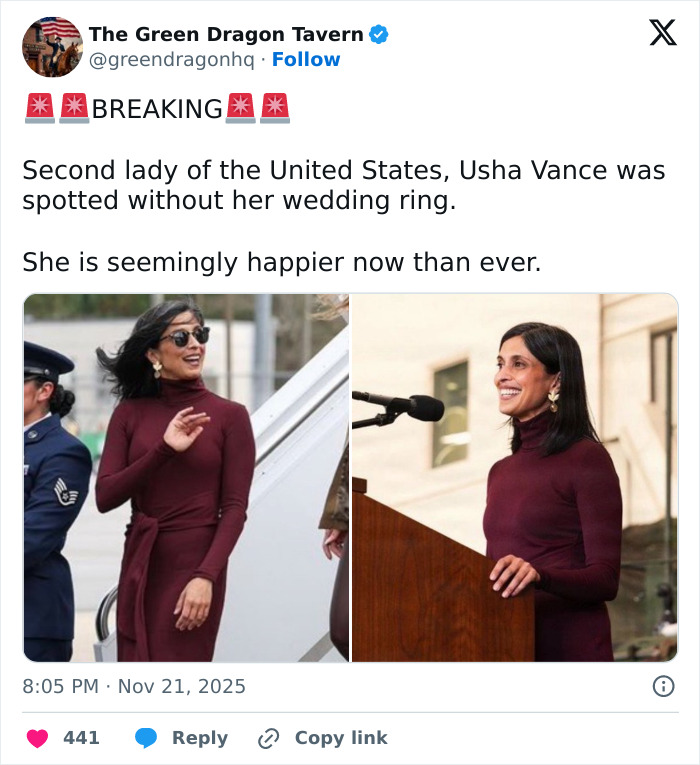
Recently, the mom of three was spotted without her wedding ring, leading to speculation that she and JD had separated.
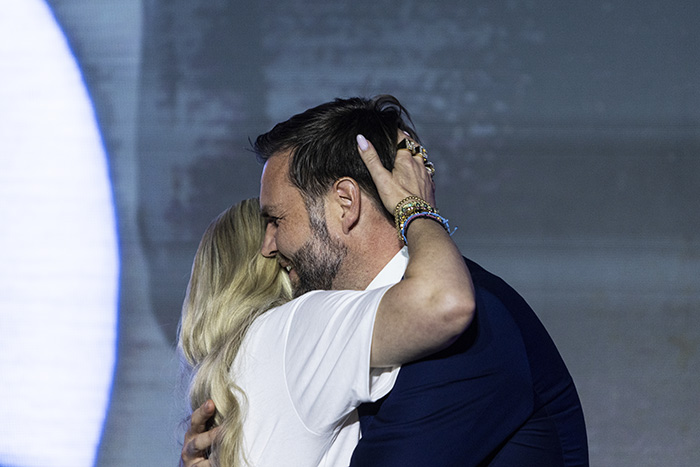
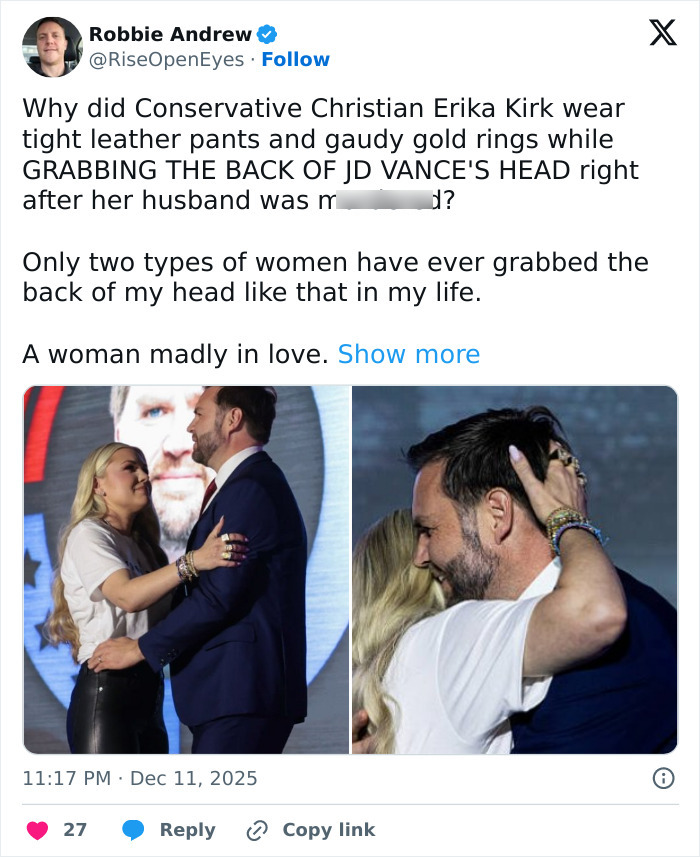
The cause of their breakup, some people claimed, was JD’s close relationship with Erika Kirk, who shared an affectionate embrace with the politician during a Turning Point event in October and said she saw “similarities” between JD and her late husband, Charlie Kirk.
Usha Vance smiling and speaking at a podium in a burgundy dress amid public speculation about their marriage.
Image credits: greendragonhq
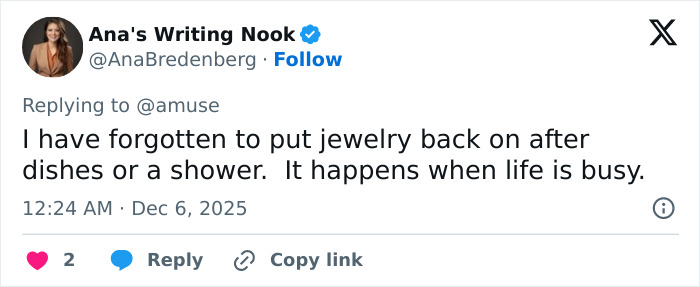
Screenshot of a tweet from Ana’s Writing Nook discussing daily life, reflecting public speculation on JD Vance’s wife Usha.
Image credits: AnaBredenberg
Speaking with NBC, the US Vice President said his relationship with Usha is “as strong as it’s ever been” and that the couple is “getting a kick” out of the breakup speculation.
A spokesperson for Usha similarly shut down the speculation by addressing her ringless appearance at Camp Lejeune, a military training facility in Jacksonville, last month.
The couple has been facing speculation of a marital crisis for months
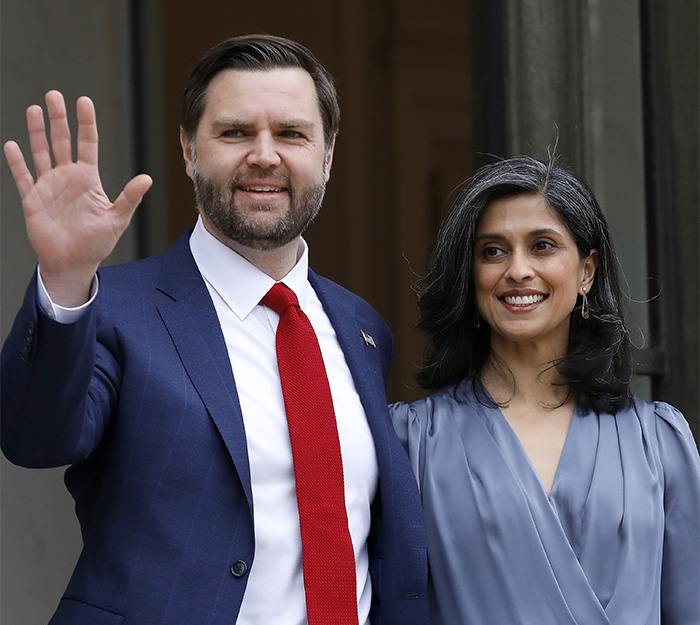
JD Vance and wife Usha smiling together outside a building amid public speculation about their marriage.
Image credits: Antoine Gyori – Corbis/Getty Images
ADVERTISEMENT
Earlier this month, Usha appeared without her ring again while accompanying Melania Trump at Joint Base Andrews in Maryland.
The spokesperson said that the 39-year-old is “a mother of three young children, who does a lot of dishes, gives lots of baths, and forgets her ring sometimes.”
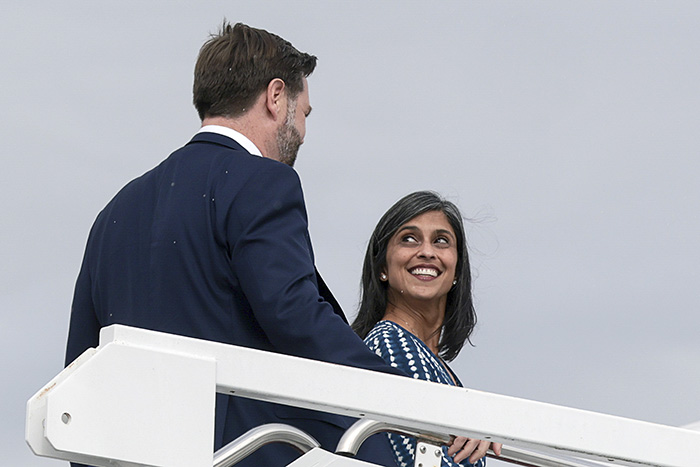
Usha Vance smiling at JD Vance while ascending stairs, highlighting public speculation about their marriage.
Image credits: Jonathan Ernst-Pool/Getty Images
Now, Usha herself has spoken about how she deals with strangers on the internet discussing her marriage.
“I find that one of the really curious things about this life is that people really like to read the tea leaves, and there’s a kind of an industry building stories about everything that they can imagine,” she told USA Today on Monday (December 15).
Both JD and Usha admitted that they find online theories of a crisis funny
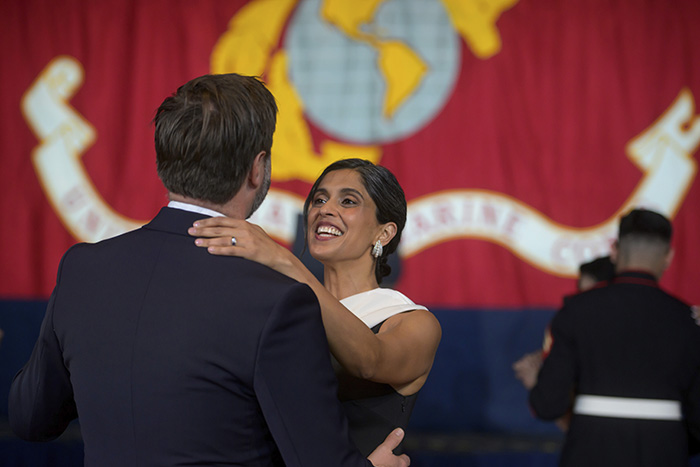
Usha Vance smiling and dancing with JD Vance at a formal event amid marriage and public speculation.
Image credits: Rod Lamkey-Pool/Getty Images
“I’d rather just sort of live in my marriage and in the real world and less in kind of the fever dreams that surround it,” she added.
Referring to the internet theory that she was experiencing a marital crisis, Usha said, “I mean, it is kind of a family joke, but also not something that I spend very much time thinking about.”
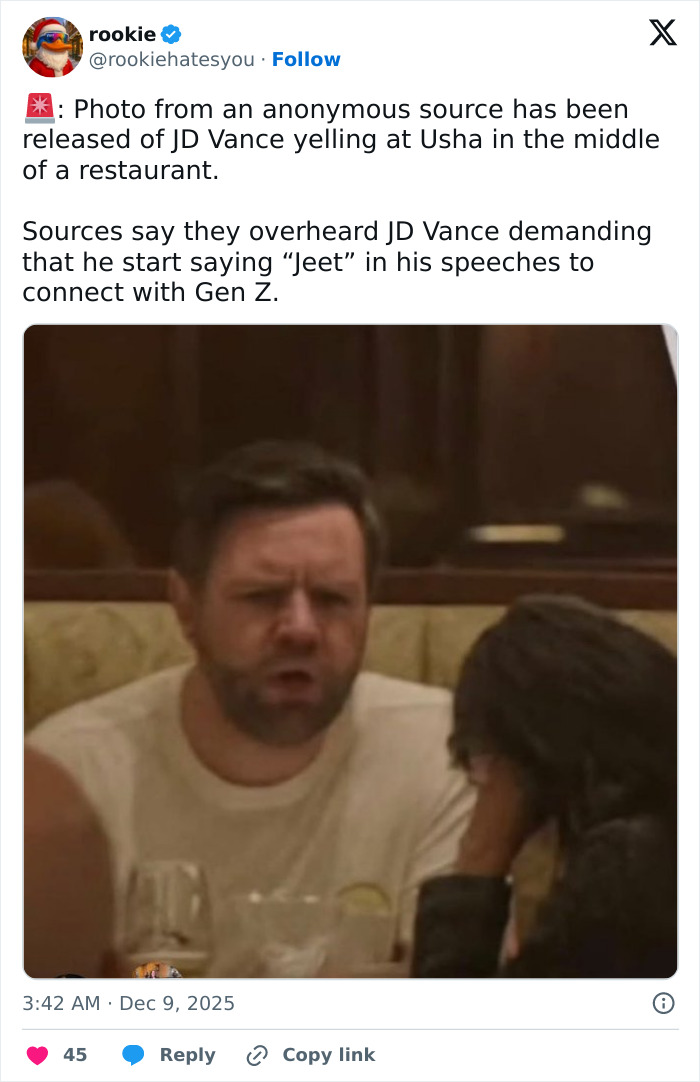
JD Vance and his wife Usha in a tense discussion at a restaurant amid public marriage speculation.
Though she and JD find it “funny” that strangers are talking about them, she said she doesn’t “find it fruitful” to keep track of online gossip.
The San Diego native also addressed her ringless appearances, explaining, “Sometimes I’m wearing it and sometimes I’ve just been to the gym and showered and I’m not wearing it.”
The Vice President and the Second Lady share three children
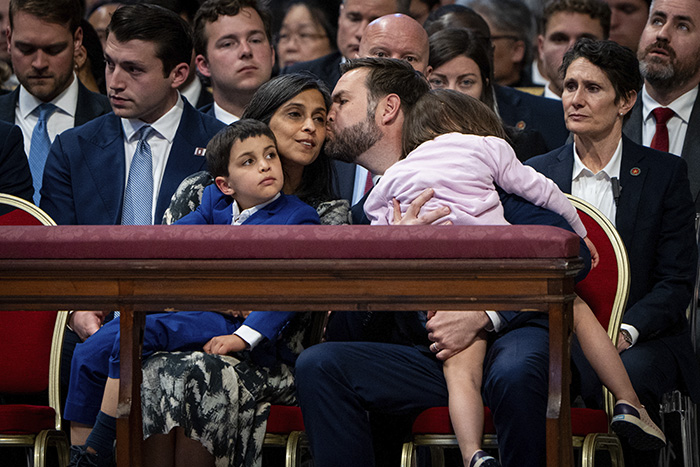
JD Vance’s wife Usha and family sitting closely amid public speculation about their marriage at a formal event.
Image credits: Stefano Costantino/Getty Images
Asked about her life before she was the Second Lady of the United States, Usha said there are some things she misses and others she’s “excited to have moved on from.”
Amid the speculation that the Vances were in crisis, JD reposted a viral image that showed him seemingly shouting at his wife while having dinner together.
People believed the couple had separated after Usha was seen without her wedding ring following JD’s hug with Erika Kirk
JD Vance’s wife Usha embraces him warmly amid public speculation about their marriage and relationship.
Image credits: Brad Vest/Getty Images
“Looks like things are not so good in Republicanistan,” read the caption of a user who shared the image on Facebook. “Usha is a liberal. Always has been. Apparently they were having an argument loud enough to quiet the restaurant. Why is he wearing a tee shirt?”
“I always wear an undershirt when I go out in public to have a fight loudly with my wife,” the 41-year-old politician quipped on X.
JD Vance and wife Usha embracing on stage amid public speculation about their marriage and relationship.
In October, JD spoke about his multi-faith household during a Turning Point event. He shared that the couple decided to raise their children as Christian and that Usha, who considers herself Hindu, accompanies him to church most Sundays.
“Do I hope, eventually, that she is somehow moved by the same thing that I was moved in by church? Yeah, honestly, I do wish that,” said the father, who described himself as an atheist before he converted to Catholicism in his 30s.
Usha Vance speaking at an event and posing on the red carpet with JD Vance amid marriage speculation.
JD added, “I believe in the Christian gospel and I hope eventually my wife comes to see it the same way. But if she doesn’t, then God says everybody has free will and so that doesn’t cause a problem for me.”
Before being the Second Lady, Usha worked for the law firm Munger, Tolles & Olson for almost six years, handling civil litigation and appeals. She resigned in July 2024 following the announcement of her husband becoming the Republican Party nominee for vice president.
“Not all women wear their wedding rings all the time,” one Facebook user commented
Facebook comment by Kathryn Carabello Hinrichs asking how she can stand him amid public speculation on their marriage.
Comment by LaLa Apple expressing skepticism about JD Vance’s political marriage amid public speculation.
ADVERTISEMENT
Comment by Gretchen Snyder reflecting on cultural identity struggles in marriage amid public speculation on JD Vance and Usha.
Comment by Mavis Hackett discussing women wearing wedding rings amid public speculation on JD Vance’s marriage.
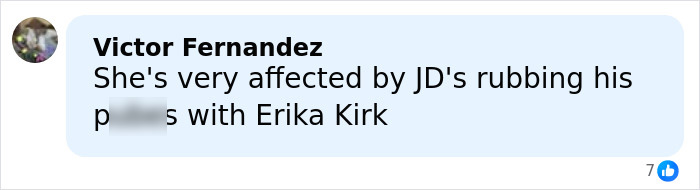
Comment by Victor Fernandez discussing Usha’s feelings amid public speculation on JD Vance’s marriage issues.
Comment from Deirdre Capell discussing JD Vance’s wife Usha and speculation about their marriage dynamics.
ADVERTISEMENT
Comment from Tammy Boardman Huling stating their marriage is fake with emphasis emoji in a social media post about JD Vance’s wife Usha.
Screenshot of a social media comment questioning How Can She Stand Him in relation to JD Vance’s wife Usha amid speculation.
Comment by John Bovee expressing opinion on JD Vance’s wife Usha’s perspective and their marriage amid public speculation.
Comment by Tyler Dylan Brown expressing frustration about JD and relationship stress amid public speculation on their marriage.
ADVERTISEMENT
Screenshot of a social media comment reacting to JD Vance’s wife Usha amid public speculation on their marriage.
Comment on a social media post reacting to JD Vance’s wife Usha breaking silence amid public speculation about their marriage.
Comment about Vance starting a fight and storming away, possibly related to JD Vance’s marriage speculation.
Alt text: Social media comment predicting marriage amid speculation about JD Vance and Usha’s relationship.
ADVERTISEMENT
Comment by Stacy L Ricketson expressing opinion on political disputes amid public speculation about JD Vance’s wife Usha and their marriage.
Thanks! Check out the results:
Total votes ·
Newsletter
Subscribe to Access Exclusive Polls
By entering your email and clicking Subscribe, you’re agreeing to let us send you customized marketing messages about us and our advertising partners. You are also agreeing to our Privacy Policy.
Thank you! You’ve successfully subscribed to newsletters!
Hi friends. I wanted to pop in to say hello, share a quick recap of the year, and wish everyone a wonderful Christmas.
Before I do, I need to acknowledge how incredibly sad and shaken we all are after the senseless shooting at Bondi Beach yesterday. I have no words. I know so many of us turned on the TV and watched the breaking news unfold, feeling shocked and heartbroken.
My phone started pinging over and over yesterday while I was folding the laundry. When I opened our family group chat, I couldn’t believe what I was reading. A shooting. Here. No way. This doesn’t happen in Australia. We have gun control.
We all started checking in to say we were safe, and then my heart dropped when I remembered Sam had left earlier, saying he was heading to the beach. As I tried to text him, my fingers wouldn’t work, and I fumbled around.
But he must have seen the messages coming through, too, because his reply popped up almost instantly. He was safe; he’d gone to another beach. Thank God. You know that instant calming relief you feel after panic? That’s what I felt.
And then, straight away, I thought about those who weren’t so lucky. Those victims who will never get to send their families that message, I’m safe. So sad. My thoughts are with the victims, their families, and everyone affected by this terror attack. I just hope there isn’t any retaliation and that everyone stays safe.
It’s hard to switch from something so awful, but as this will be my last post for the year, I wanted to recap 2025 and share some of the highs as well as the not-so-highs of the year. Thanks so much for being here today. I really appreciate you stopping by.
My 2025 Recap of the Year
Well, I have to say that 2025 has been my favourite year since 1984. That’s a long time between favourite years, isn’t it? I don’t want to make it sound like nothing good happened in between all of those years. Of course, amazing things did. But 2025 just feels extra special and will always be for me the year I started doing things outside my comfort zone and let myself experience the most amazing adventures. I liked it!
So instead of going into every little detail and putting you to sleep, here’s a quick recap of the highlights.
The Highs
Travel in 2025
Family Highlights
Cousin Connect gatherings throughout the year are always the highlight of every month.
We had some small birthday celebrations for me, my husband, and both of our sons. I’m a low-key party person when it comes to our family birthdays, but invite me to yours and Party Ruth will pop out, I promise.
Home Wins
I totally reorganised my office space and made it all cozy.
Friends
I’m so thankful for the wonderful friends in my life and the fun adventures we got to have during holiday breaks in 2025. Over many years of friendship, they’ve been there through the good, the bad, and the ugly, and I couldn’t ask for better people by my side.
The Not-So-Highs
Work
We can’t have everything, right? Even though 2025 has been my favourite year in almost every way, work has been incredibly challenging. In my 28 years as an educator, I’ve never faced a year like this, and it really tested me.
As much as I wish I could share more, I can’t. But if any educators are reading this, I would really like to know. Was it just me, or did you feel the same about this year? I was so tempted to walk away, and I have never even thought that before. Not ever. Sigh.
My Blog
This year, I stopped posting as frequently as I had in previous years. My husband’s work schedule changed, which meant we could spend more time together in the evenings. He’s always been so supportive of my blog. Haha, he never reads it, but he likes that I have a creative outlet.
So I still blogged, but dinners at home or occasionally out, along with time on the couch binge-watching all the shows, became too tempting. I decided to scale back and post three times a week.
But as the year went on and work really started to wear me down, my energy disappeared. Writing stopped feeling easy and started feeling hard. I began questioning everything and telling myself my blog was awful. Why was I even writing about my everyday life? Who would want to read this? Where did my energy for sharing about fashion, recipes and home organisation go?
That negative thinking took over, and after long days, I was simply too tired to think, let alone write. So I started to disappear from here a little. But it’s the last week of preschool, and from this Friday, I’ll be off work for five glorious weeks. I’m going to take a short break, pull my socks up, and find my mojo again.
Before I sign off, I wanted to end on a good note and share this photo. Here I am with a few of the lovely ladies I work with, and I’ve blocked out some of the faces because I didn’t ask permission to post. Not all of my work buddies are in this picture, but if it wasn’t for them, I don’t know how I would have got through this year. I love that even on the hardest days, we can still manage to share a good laugh.
So that’s it from me for this year. I hope you have a Merry Christmas, and may 2026 be good to us all. Sending warm hugs and much love.
The tomb of Tutankhamun (KV62) is one of the most significant archaeological discoveries in human history. Its discovery opened an extraordinary window into the life, death, and beliefs of Ancient Egypt. Here’s a detailed look at everything about the tomb — its discovery, structure, treasures, and legacy. ⸻ Where is the tomb located? The tomb of Tutankhamun is located in the Valley of the Kings in Luxor, on the west bank of the Nile, and it is officially numbered KV62 (King’s Valley tomb number 62). ⸻ Who was Tutankhamun? • Tutankhamun was a pharaoh of Egypt’s 18th Dynasty, ruling during the late 14th century BC (around 1332–1323 BC). • He became king at a very young age — probably around 8 or 9 years old — and died while still a teenager. • He is best known for restoring the worship of Amun, which had been replaced by his predecessor Akhenaten’s worship of Aten (the sun disk). ⸻ When and how was the tomb discovered? • The tomb was discovered by Howard Carter in November 1922, funded by Lord Carnarvon. • After years of searching in the Valley of the Kings, Carter’s team uncovered a staircase buried beneath the sand, which led to a sealed doorway. • Upon entering, Carter famously said: “I see wonderful things.” • What he saw was a nearly intact royal burial filled with gold, statues, chariots, and countless other treasures. ⸻ Layout and structure of the tomb KV62 is smaller than most royal tombs, suggesting Tutankhamun’s death was unexpected. Despite its size, it was packed with thousands of objects. The tomb includes: 1. Entrance staircase — leading down into the tomb. 2. Corridor — a short passage. 3. Antechamber — filled with furniture, chariots, and daily-use items. 4. Annex — a small side room full of disorganized objects. 5. Burial chamber — containing the sarcophagus, coffins, and wall paintings. 6. Treasury — a separate chamber filled with statues, canopic jars, and ritual objects. Because of the hurried burial, the rooms were tightly packed, almost as if everything had been placed in a rush. ⸻ What was found inside? Over 5,000 artifacts were found inside, ranging from jewelry and statues to food and clothes — everything a king might need in the afterlife. Some of the most famous treasures include: • The Golden Mask of Tutankhamun — the world-famous funerary mask made of solid gold and inlaid with semi-precious stones. It weighs about 10 kilograms (22 pounds) and is considered one of the greatest masterpieces of ancient art. • Three nested coffins — the innermost one made of pure gold, placed inside two gilded wooden ones, all enclosed within a stone sarcophagus. • Throne and furniture — beautifully decorated with gold leaf and inlays. • Chariots and weapons — symbolizing royal power and preparation for the afterlife journey. • Statues of gods and protective figures — placed to safeguard the king’s soul. • Jewelry and amulets — hundreds of items for protection and status. • Food, wine, and clothing — offerings for use in the next world. ⸻ Why was this discovery so important? 1. State of preservation – Unlike most tombs that were looted in ancient times, Tutankhamun’s tomb was almost untouched, providing an authentic view of royal burial practices. 2. Richness of contents – Thousands of beautifully crafted objects revealed the artistry and wealth of the New Kingdom. 3. Scientific value – The discovery offered deep insight into the religion, art, and daily life of the 18th Dynasty. 4. Cultural impact – The find fascinated the world and made Tutankhamun a global icon. ⸻ What we learned about the young king • Health and lineage: Modern CT scans and DNA tests revealed that Tutankhamun likely suffered from several health issues, including bone deformities and malaria. He may have been the product of inbreeding, which explains his frail health. • Religious restoration: His burial objects reflect a return to traditional beliefs centered around Amun and Osiris after Akhenaten’s religious revolution. • Royal status: Despite his short reign, the sheer amount of gold and luxury proves his importance as a pharaoh. ⸻ The legend of the “Curse of the Pharaohs” After the tomb was opened, several deaths — including Lord Carnarvon’s — sparked rumors of a mysterious curse. Newspapers claimed that anyone who disturbed the king’s rest would die. However: • Most scientists consider this a myth. • The so-called “curse” can be explained by coincidence or natural causes such as bacteria or mold in the tomb. ⸻ Where are the treasures now? • Most of the artifacts were transferred to the Egyptian Museum in Cairo, where they became the most visited collection in the world. • Today, many objects are being carefully restored and prepared for display in the Grand Egyptian Museum (GEM) near the Giza Pyramids — the largest archaeological museum in the world. ⸻ Visiting the tomb today • The original tomb KV62 is still open to visitors in the Valley of the Kings. • Due to humidity and preservation concerns, only a limited number of visitors are allowed each day. • An exact replica of the tomb has also been created for tourists to visit without damaging the original. ⸻ Quick Facts • Tomb name: KV62 • Discovered: November 1922 • Discovered by: Howard Carter (funded by Lord Carnarvon) • Location: Valley of the Kings, Luxor, Egypt • Number of objects: Over 5,000 • Famous artifact: The Golden Mask of Tutankhamun • Dynasty: 18th Dynasty (New Kingdom, c. 1332–1323 BC) ⸻ Conclusion The discovery of Tutankhamun’s tomb remains one of the greatest achievements in archaeology. It not only preserved the incredible craftsmanship and wealth of Ancient Egypt but also reignited the world’s fascination with the pharaohs. A young king who ruled for only a short time ended up achieving eternal fame — not for his reign, but for the wonders buried with him beneath the sands of Luxor.