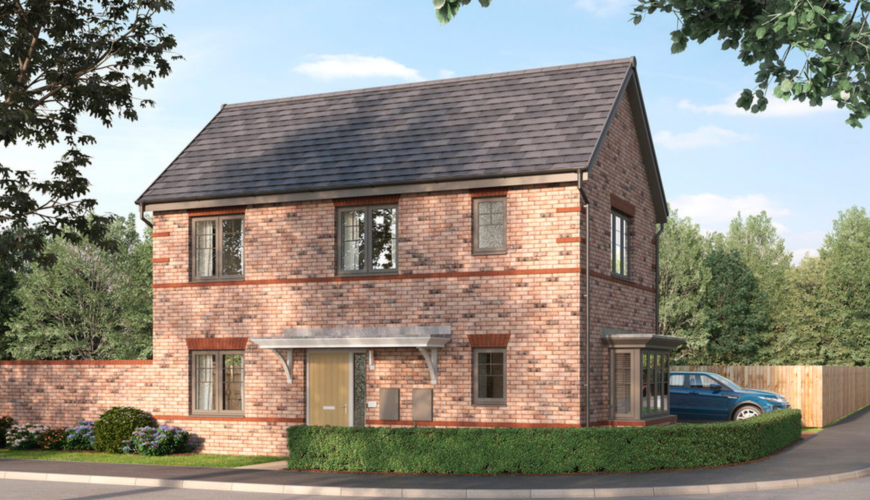
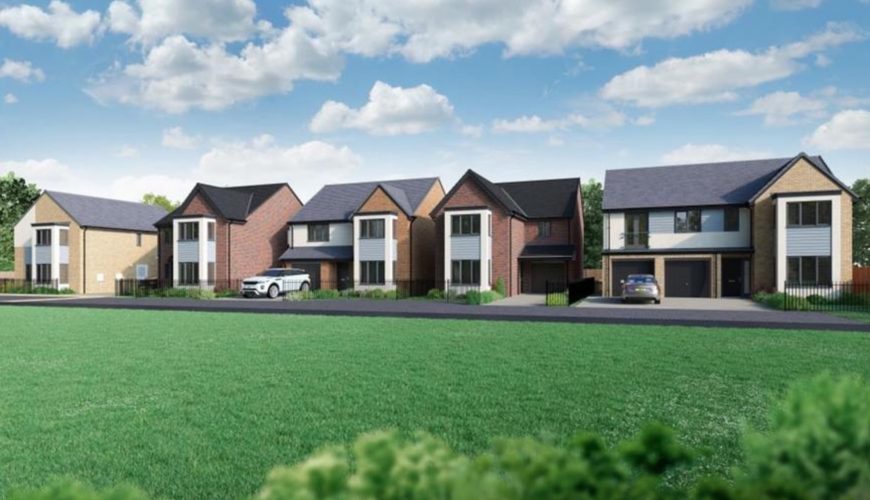
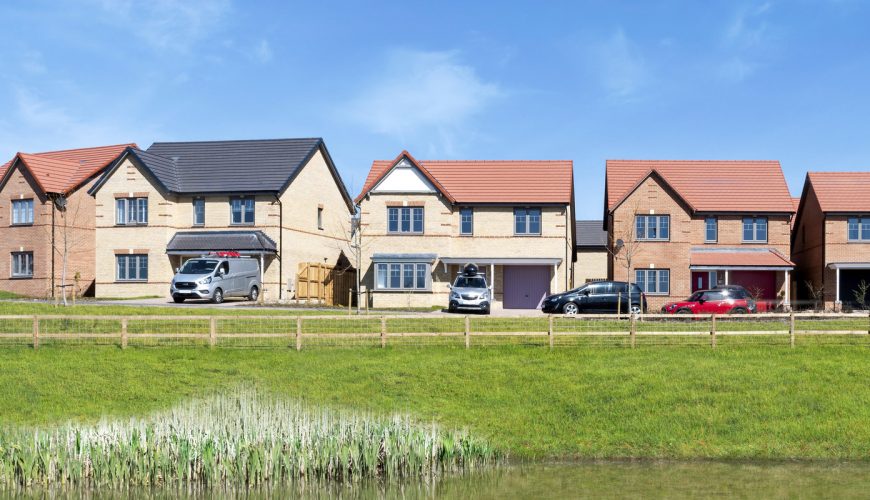
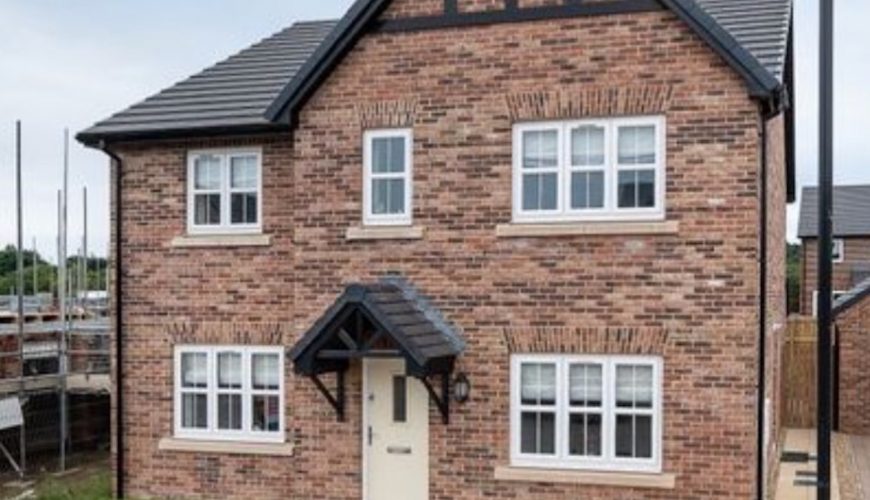
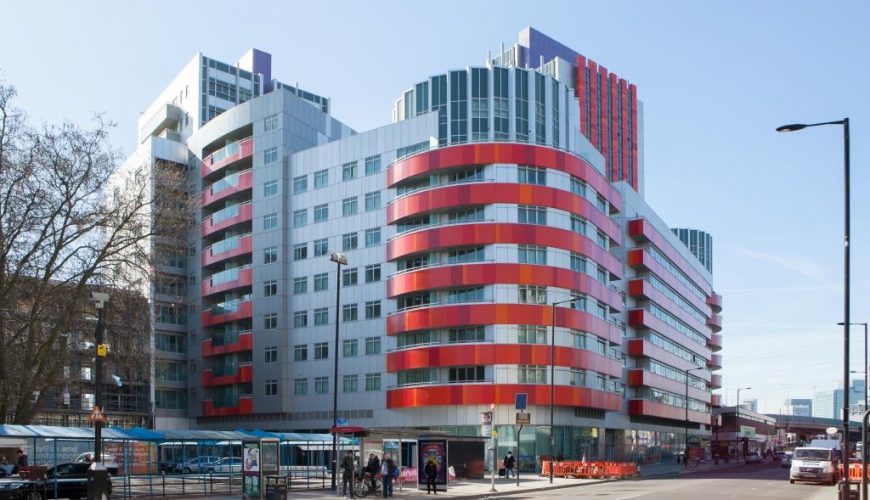
Where can you find the best new build homes for sale in North East England? Today, we’ll share data taken from our resident review platform to reveal the best developments in the region. Just read on to learn which builders rated the highest in terms of value, quality, design, location and management. But first, let’s find out why the North East is a great place to live.
New build homes for sale in North East England: Top 10 developments
Let’s find out which new build homes for sale in North East England our residents rate the highest. As you will see from the list below, the region has plenty of variety to offer. Whatever you’re looking for in terms of size, design, location or facilities, North East England will have options to suit.
*PLEASE NOTE these rankings take into account how many reviews a scheme has and how recently those reviews have been submitted, so they may not match the overall star ratings shown. Buildings with a larger number of more recent reviews are given a greater weighting to reflect current building performance.
In first place, Cygnet Park offers a range of two, three and four-bedroom homes in North Tyneside, each featuring bi-fold doors, exclusive kitchen designs and integrated appliances. Cygnet Park is located just six miles to the north of Newcastle’s city centre, while the town itself benefits from numerous local amenities, including shops, cafés, pubs and restaurants.
The area is very close to the A19 and A1, which provide excellent transport links. There is also a small Sainsbury’s and a Shell garage a five-minute walk from the development and a larger supermarket 10 minutes away. Walkers will also enjoy strolling around Gosforth Park and Weetslade, both just five minutes away.
Read reviews and details of Cygnet Park, NE12
Jumping up to 2nd place at the latest update, Potters Hill is a development of modern, energy-efficient three, four and five-bedroom homes. Located on the edge of Sunderland with easy access to major roads, local leisure amenities, and shops. These homes combine urban convenience with countryside surroundings.
Read reviews and details of Potters Hill, SR3
3rd-placed City Quadrant is a mixed-use development located at the western entrance to Newcastle City Centre, just a short walk from Central Station. The development also includes office space and some restaurants and retail space that residents can benefit from. The idyllic location means that residents here can also benefit from various local amenities.
Read reviews and details of City Quadrant, NE1
Sitting in 4th on our Top 10 list, Peerfields by Avant Homes offers a range of two, three and four-bedroom new homes for sale in County Durham. Located on the A167 and minutes from the A1M, Peerfields is ideal for commuters. Residents enjoy the easy links to Darlington and Durham and like living in a quiet and safe community with plenty of parking for homeowners and visitors alike.
Read reviews and details of Peerfields, DL17
In 5th, St John’s Manor is a collection of 3, 4 and 5 bedroom homes. Each home has a high specification throughout. The development itself is situated in the village of Callerton, only six miles from Newcastle upon Tyne. There are excellent transport links here, as it’s close to the A69 and the A1 motorway and only 4 miles from Newcastle International Airport.
Read reviews and details of St John’s Manor, NE5
Next up, Castle Croft is a development of 2, 3 and 4 bedroom new build homes located in the rural village of Startforth, just over the River Tees from Barnard Castle. The new build homes offer a variety of styles, meaning there’s a great home for everyone.
Read reviews and details of Castle Croft, DL12
In 7th, Millbrook offers a range of 3, 4 and 5 bedroom new homes for sale in Nunthorpe. Nunthorpe village, 6 miles from Middlesbrough, offers a selection of local amenities such as a post office, florist, chemist, and newsagent.
Read reviews and details of Millbrook, TS7
We’re back to Potters Mill where the Miller Homes offering is the eighth-highest rated development in our Top 10. It offers energy-efficient three, four and five-bedroom homes. With fast access to the A19 as well as shops, leisure amenities and nearby Herrington County Park, Potters Mill has lots to recommend it.
Our residents have commented on the modern and stylish finish, including anthracite windows and black roofs that are “sympathetic to the surroundings”. They also comment on the generous garden sizes, the accessible bus routes, and the walks along the old miners’ railway and the nearby forest.
Read reviews and details of Miller Homes at Potters Mill, SR3
Taking 9th place for new build homes for sale in North East England is Hanover Mill. Situated on Newcastle Quayside, Hanover Mill is a residential development with views of the River Tyne. The development is an approximately only a five-minute walk away from Newcastle Central Station and great access to the Universities, Newcastle College, and RVI Hospital.
Read reviews and details of Hanover Mill, NE1
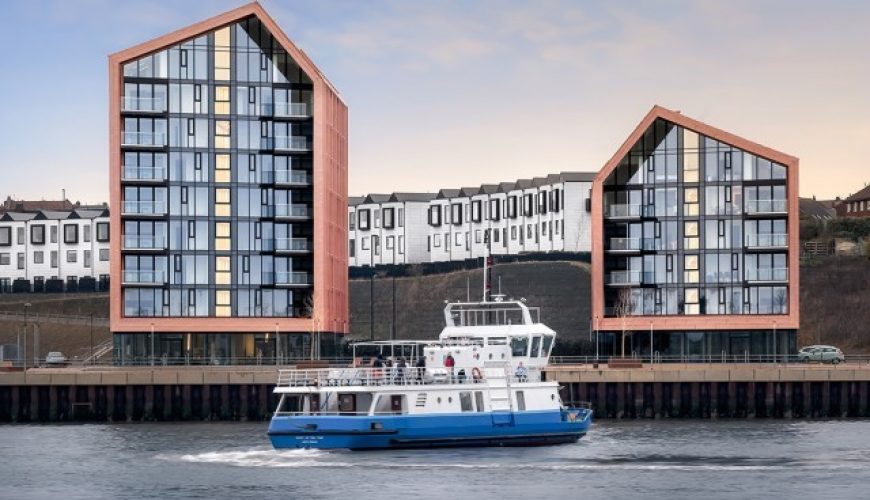
Smith’s Dock, by Urban Splash, sits in North Shields just outside of Newcastle upon Tyne and is voted into the final place in our top 10 by reviewers on HomeViews. This waterside development benefits from an industrial design, great views and various amenity spaces across the development. As well as this, the development is just a short distance from Newcastle upon Tyne city centre, making it an ideal location for commuting.
Read reviews and details of Smith’s Dock, NE29
Where is North East England?
North East England is a region of England covering 3,317 square miles. It contains four counties – County Durham, Tyne and Wear, Northumberland, and part of North Yorkshire. Scotland borders to the north, the North Sea to the east, Yorkshire to the south, and Cumbria to the west.
Living in North East England
Stretching from the border of Scotland to the North Pennines AONB and with a beautiful coastline forming its eastern border, North East England’s landscape is certainly varied. It’s home to around 2.7 million inhabitants, primarily settled in the urban centres of Tyneside, Wearside and Teesside. In particular, the cities of Newcastle upon Tyne, Durham and Sunderland act as the region’s major hubs.
The northernmost county, rugged Northumberland joins the Scottish border and shares much of its culture. Head into the National Park, which encompasses Hadrian’s Wall, Kielder Forest and the Cheviot Hills, to enjoy the area’s serene beauty and history.
Lying beneath Northumberland, Tyne and Wear is named after the rivers it surrounds. It features a lighthouse-studded coastline offering miles of waterside walks and bike rides, while Newcastle is known for its club and restaurant scene.
In County Durham, you’ll discover a cathedral city founded by a group of monks from Lindisfarne. The county also has impressive walking routes and open wild spaces, such as the North Pennines and Hamsterley Forest. A slice of North Yorkshire also falls within the boundaries of North East England.
Transport in North East England
Getting around is fairly easy too. The A1/A1 (M) runs from London right through the North East counties on its way to Edinburgh. A series of further A-roads link the four counties together, centring on Tyne & Wear. Here, you’ll also find a Metro service connecting Newcastle upon Tyne, Gateshead, North Tyneside, South Tyneside and the City of Sunderland.
Meanwhile, the east-to-west A66 provides a straightforward route to the Yorkshire Dales and the Lake District. Travelling abroad? Newcastle International Airport – the largest in the North East – offers flights to 80 destinations.
North East England property prices
So, how do prices in the North East compare with the rest of the country? Data from Rightmove for the 12 months to October 2024 revealed that the average cost for a home here was £190,000.
This is a full £55,000 cheaper than the average for the North West (£245,000). County Durham came out the cheapest location overall, while at £236,000 while Northumberland homes cost the most. However, prices are still well below the December 2023 England-wide average of £302,000.
Last year, most sales centred around terraced properties, averaging £145,000. Meanwhile, semi-detached homes went for around £182,000, with detached properties achieving £330,000.
North East England is a region of contrasts. Wild, rugged landscapes dominate the north of this corner of England, while the south is more widely populated, with major cities and arable land. In the north of the region, Northumberland sits on the border with Read more about North East England
HomeViews is the only independent review platform for residential developments in the UK. Prospective buyers and tenants use it to make an informed decision on where to live based on insights from carefully verified resident reviews. Part of Rightmove since February 2024, we’re working with developers, house builders, operators, housing associations and the Government to give residents a voice, recognise high performers and to help improve standards across the industry.
This diverse and rapidly developing corner of south-east London is something of a hidden gem. Deptford’s popularity is growing, and with a host of new build developments arriving in the area, this bustling and varied neighbourhood beside the Thames has a lot to offer. Verified Deptford residents have been reviewing some of the area’s new build developments on HomeViews, helping us to create this list of the best new build homes in Deptford.
*Note: Deptford has become so popular in recent months that we’ve added a whole new range of developments to the HomeViews listings for the area. Given the expanded choice, it only makes sense to expand the top-ranked list from 10 to 15. So check out this updated and expanded Deptford offering below.
Top 15 new build homes in Deptford
Up and coming Deptford really does represent a more affordable option in the capital, with many of the benefits of being close to the City and Central London. Take a look at our rankings of the best 15 new builds in Deptford below. The rankings are based on the ratings given by verified reviewers on HomeViews, and nothing else.
*PLEASE NOTE these rankings take into account how many reviews a scheme has and how recently those reviews have been submitted, so may not match the overall star ratings shown. Buildings with a larger number of more recent reviews are given a greater weighting to reflect current building performance.
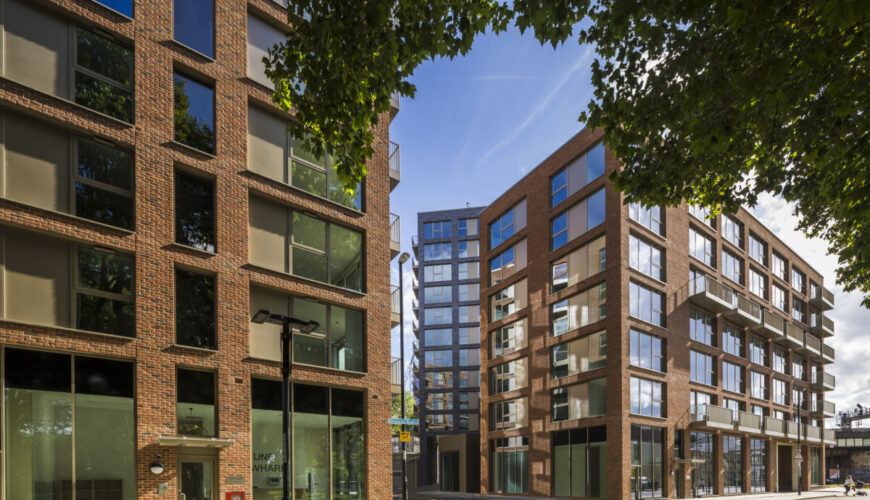
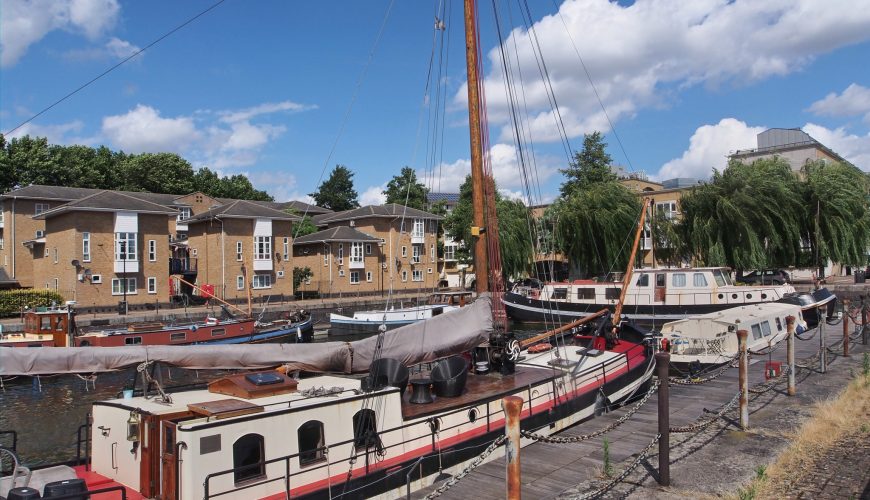
The top spot in Deptford belongs to Union Wharf, a development from London property developer Essential Living. It features 249 rental-only apartments on the banks of Deptford Creek. The development houses a collection of one, two and three-bedroom apartments and is close to the Cutty Sark DLR station for fast and frequent connections to Canary Wharf.
Read reviews and details of Union Wharf, SE8
2nd place is occupied by Vive Living, a rental-only development situated conveniently just half a mile from Deptford and New Cross stations. This buzzy development on Childers Street offers one, two and three-bedroom apartments, with residents benefitting from communal work spaces, a roof terrace, a café, a cinema room with regular resident-only screenings and bike storage with a repair workshop.
Read reviews and details of Vive Living Childers Street, SE8
In 3rd place we have Deptford Foundry, a mixed-use development by Anthology London. The development is set on the site of an old metal foundry, which was built in the 1800s, and offers more than 300 homes with a mix of private and social housing apartments. Deptford Foundry is in the middle of lively Deptford, close to Deptford and New Cross stations, offering easy access to Greenwich.
Read reviews and details of Deptford Foundry, SE14
Taking the next spot in 4th is Greenland Place by Barratt London, a mixed-use scheme in Rotherhithe. The development features 679 residential units including one, two and three-bedroom apartments, studios and three, four and five-bedroom houses across a number of different buildings. The development also has a business centre, a children’s nursery as well as various commercial units. Surrey Quays is the nearest station with connections to the London Overground.
Read reviews and details of Greenland Place, SE8
The last spot in the top 5 rankings goes to Greenwich Creekside, a residential development by Telford Homes. The development features a range of one, two and three-bedroom apartments only a short distance from Deptford Creek. Deptford station is just a nine-minute walk away, with connections to Thameslink and Southeastern services.
Read reviews and details of Greenwich Creekside, SE8
Still popular in 6th is Vida House, managed by Way of Life. This is a residential development just a stone’s throw from central London. The development is a short walk from Surrey Quays Overground station as well as Canada Water Underground station. Each of the 138 one and two-bedroom apartments on site have an open-plan layout. These come with a fully fitted kitchen with integrated dishwasher, washer/dryer and a fridge-freezer. Residents also have access to a secure car park and ample underground bike storage are, while there is a dedicated management team on-site with 24-hour CCTV security.
Read reviews and details of Vida House, SE8
7th place is taken by UNCLE New Cross, a rental-only development comprising one, two and three-bedroom apartments in south-east London. It’s conveniently located for Canary Wharf, the City and Greenwich, and its nearest transport links come courtesy of New Cross and New Cross Gate stations.
Read reviews and details of Uncle New Cross, SE14
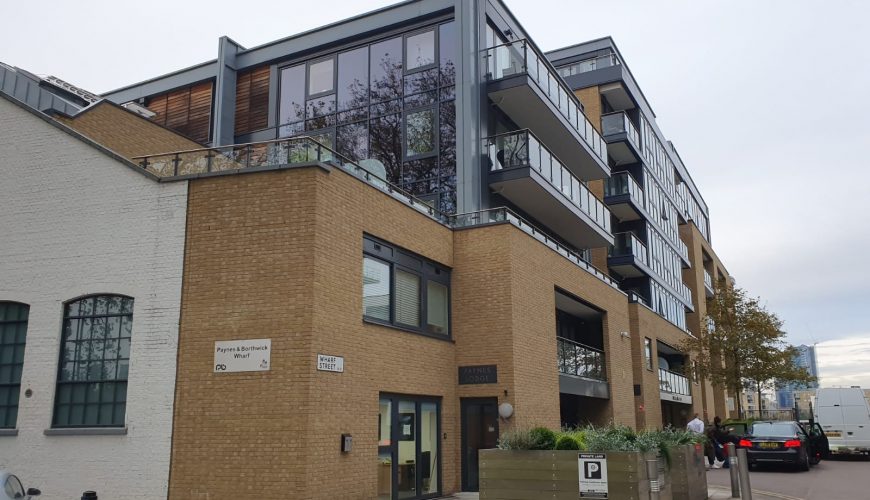
In 8th place is Paynes & Borthwick Wharf, a development by United House Developments situated alongside the River Thames. The development features 257 residential units with a mix of one, two and three-bedroom apartments alongside office space, retail units and various restaurants. Deptford station is only a 10-minute walk away, with links to Thameslink and Southeastern services.
Read reviews and details of Paynes & Borthwick Wharf, SE8
9th is Distillery Tower, a residential development from Galliard Homes, situated just metres from Deptford Bridge DLR station, which is handy for City and Canary Wharf professionals. Lively Deptford High Street and Greenwich are both nearby, putting popular London attractions like Blackheath and Greenwich Royal Park at residents’ fingertips.
Read reviews and details of Distillery Tower, SE8
Rounding off the top 10 new builds in Deptford, we have The Deptford Project, a mixed use development comprising eight storeys, 132 apartments and seven independent shops. The development has won numerous awards, including: winner of the ‘Best Heritage Led Project’ at the 2017 London Planning Awards and the Placemaking Award at the 2017 Property Week Awards. It is located in Lewisham, across the road from Deptford station with direct links into central London.
Read reviews and details of The Deptford Project, SE8
The first of the new additions, in 11th place, is Faircharm Dock. This popular new development offers one, two and three-bedroom apartments, totalling 127 units available on a rental-only basis. The building, based on Creative Road, is equidistant between Deptford train station and Greenwich station, both of which are serviced by National Rail and the DLR.
Read reviews and details of L&Q at Faircharm Dock Private Rental, SE8
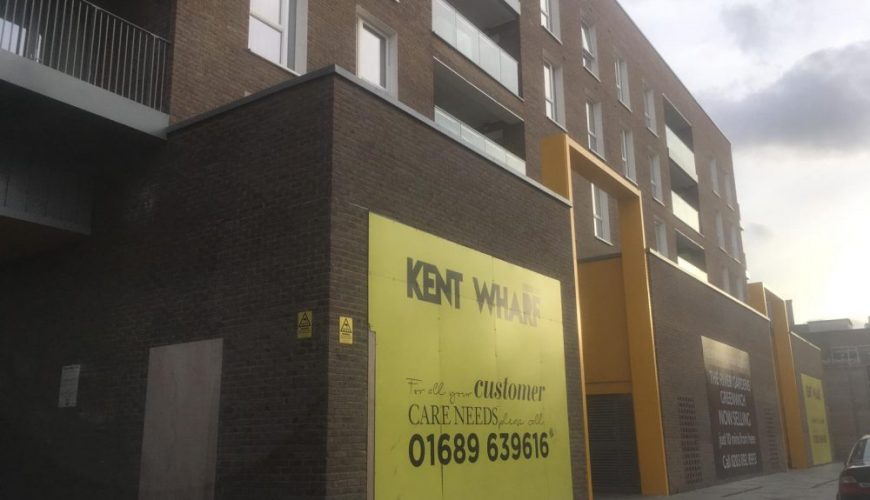
12th position goes to Kent Wharf, a mixed-use development by Bellway Homes. Situated just moments from Deptford Creek, the development is close to Deptford Railway Station, Greenwich DLR and Cutty Sark DLR. There are 143 one, two and three-bedroom apartments here, spread across three buildings and with many available on Help To Buy.
Read reviews and details of Kent Wharf, SE8
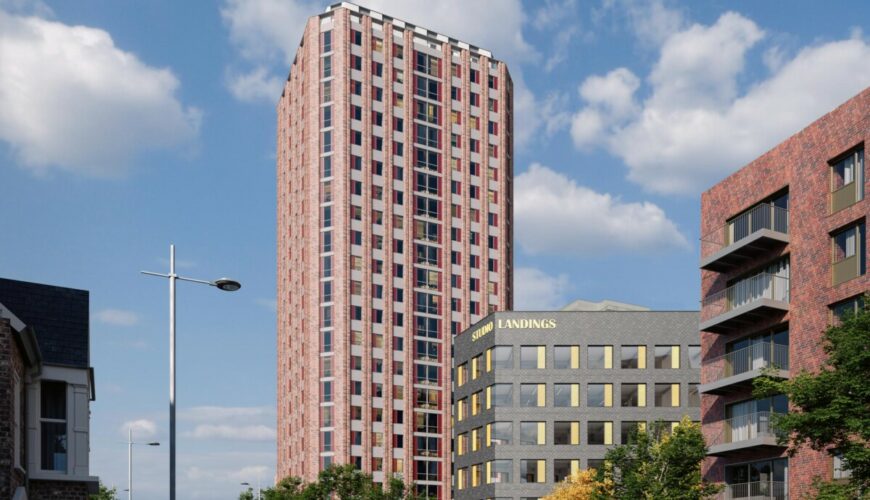
Deptford Landings, developed by Lendlease in SE8, is a large-scale residential project encompassing six neighbourhoods with a total of 1,132 homes spread across 11.6 acres. It includes a mix of 1-4-bedroom apartments and 3-bedroom townhouses, all designed to be sustainable and energy-efficient with private outdoor spaces. The development uniquely blends traditional and contemporary design, adding to the area’s cosmopolitan feel.
The development currently occupies 13th place in Deptford, but as the six neighbourhoods mature it continues to attract positive reviews and higher review scores.
Read reviews and details of Lendlease at Deptford Landings, SE8
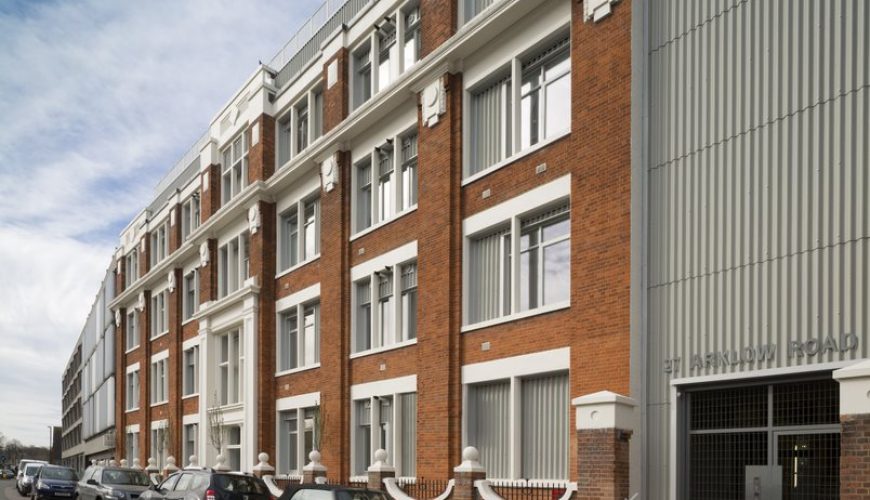
With only 2 left to go, Arklow Road is an apartment building redeveloped by Pocket Living. It was designed to create affordable homes for local first-time buyers and features 44 compact apartments. Designed by RCKA architects, the property is a ten-minute walk from New Cross and Deptford rail stations.
Read reviews and details of Arklow Road, SE14
We finish our exploration of the best new builds in Deptford with Neptune Wharf, a modern residential development offering 1, 2, and 3-bedroom apartments designed for young professionals and families. Set across six blocks, the homes feature contemporary designs with scenic views of Deptford Park and the Canary Wharf skyline. The development benefits from excellent transport links via Deptford Bridge and Deptford stations, and is close to the area’s thriving cultural scene, independent shops, and markets.
Read reviews and details of Neptune Wharf, SE8
Where is Deptford?
Deptford occupies an enviable position, beside the Thames and adjacent to highly sought-after Greenwich. New Cross sandwiches Deptford on the west, with Lewisham to the south. The area sits in Transport for London’s zone 2, less than four miles from London Bridge and with excellent mainline rail and DLR transport connections.
Living in Deptford
Deptford is one of a growing number of thriving London neighbourhoods being rediscovered, and gaining a new lease of life. The area combines the best of traditional London life with a diverse population and an increasing number of artists, creatives, students and first-time buyers. Deptford’s rising popularity is evidenced by the wealth of new developments in the area. Buyers and renters alike are increasingly looking to Deptford as an alternative to pricey Greenwich.
At the heart of Deptford is Deptford High Street. This classic stretch of bustling London life sees a lively street market meeting international restaurants and traditional pie and mash shops. Deptford Market Yard offers a selection of independent retailers and eateries. Additionally, the area’s many galleries, studios and the renowned Albany Theatre make Deptford a hub for creative types.
The area is home to several parks, including the 17-acre Deptford Park, with its children’s playground and picnic area. Across Deptford Creek, sprawling Greenwich Park is within easy reach. This famous London landmark provides an opportunity to get away from it all and take in stunning views across the city. Head in the direction of Greenwich and you can also enjoy walks or rides along the Thames.
Transport in Deptford
From Deptford you can enjoy easy access to Central London. London Bridge is just a six-minute train journey from Deptford mainline station, with trains every 10 minutes. Deptford Bridge station also provides access to the DLR, with the finance and business hub of Canary Wharf just 12 minutes away. Two major routes towards Central London, the A2 and the A200, run through Deptford. Meanwhile, the Blackwall Tunnel is also easily accessible.
Deptford property prices
Deptford represents a more affordable option than many of its neighbours. Properties in Deptford cost an average of £443,000 in the 12 months to November 2024, according to Rightmove. This is significantly below the London average of £787,000. It’s also £167,000 less than the average price in neighbouring Greenwich (£613,000).
Interested in the design process behind our highest-rated building? Head over to architect Assael’s project page for the Union Wharf development.
Do you like what you see in Deptford? To find out more about living in this thriving area, check out our dedicated guide by clicking the link below. There you’ll find plenty of information about life in Deptford. It also includes the best new build developments to buy and rent in the area.
If you haven’t yet heard of Deptford, chances are you will very soon. Artists, students, first-time buyers and lifelong Londoners; they gather in this exciting district, which has become as cool and sought-after as places like Peckham and Hackney. Read on to discover developments Read more about Deptford
HomeViews is the only independent review platform for residential developments in the UK. Prospective buyers and tenants use it to make an informed decision on where to live based on insights from carefully verified resident reviews. Part of Rightmove since February 2024, we’re working with developers, house builders, operators, housing associations and the Government to give residents a voice, recognise high performers and to help improve standards across the industry.
A capital city with only around half a million residents yet crammed with over 4,500 listed buildings, Edinburgh is a shining gem in Scotland’s crown. And with a strong economy, excellent transport links, and fantastic educational opportunities, it’s clear why it’s a popular place for renters and buyers alike. But which developments in the area are worth the price tag? We’ve asked current residents to share their honest opinion about apartments in Edinburgh. Which did they rate the highest? Read on to find out.
Where is Edinburgh?
Edinburgh is Scotland’s second most populated city. As the capital city, Edinburgh is also home to the Scottish Government, Parliament, and the high courts. Edinburgh lies at the heart of the Edinburgh and South East Scotland city region. This is made up of East Lothian, West Lothian, Midlothian, Edinburgh, Fife, Midlothian, and the Scottish Borders.
Allegedly built on seven hills, the modern city has a legendary link to Rome – and King Arthur. Its most prominent landmark is perhaps Edinburgh Castle on Castle Rock, while the Old Town sweeps down to Holyrood Palace, the official residence of the British monarchy. Princes Street and the New Town lie to the north.
Apartments in Edinburgh: Top 10 rated by residents
We can reveal the 10 top-rated apartments in Edinburgh. Click on the link below each development to read all the in-depth reviews left by actual residents.
*PLEASE NOTE these rankings take into account how many reviews a scheme has and how recently those reviews have been submitted, so may not match the overall star ratings shown. Buildings with a larger number of more recent reviews are given a greater weighting to reflect current building performance.
In first place, The McEwan by Moda is located in the heart of Fountainbridge, just a few minutes’ walk from Haymarket train station. It’s made up of 476 brand new, state-of-the-art ‘stylish’ and pet-friendly rental homes. High-speed WiFi, a well-equipped gym, cosy lounges and a games room, as well as an inviting co-working space are included in the rent.
Residents tell us that the 24h concierge team are ‘friendly and helpful’, with the Moda App providing an easy way to contact members of staff and stay updated with what’s happening in the development. The apartments also benefit from panoramic views over the city and Edinburgh Castle.
Read reviews and details of The McEwan, EH3
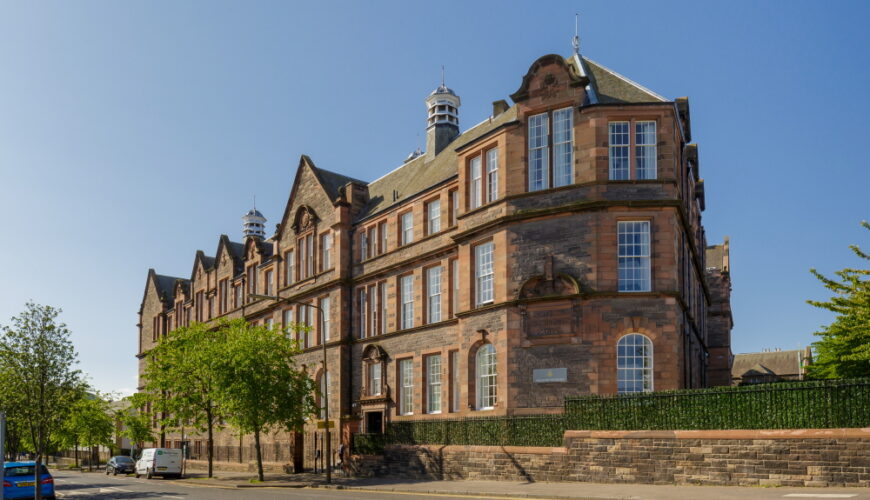
Despite its relative newness, Kingsford Residence, managed by the Kingsford Group and located on McDonald Road, has already received a lot of positive reviews from happy residents, securing it second place in Edinburgh. It offers residents the opportunity to stay in a former Victorian school building which has been newly converted to form one of Edinburgh’s first operational Build to Rent developments. The apartments retain many of the original features of the building while blending them seamlessly with contemporary open-plan living and modern fixtures.
Read reviews and details of Kingsford Residence, EH7
Next up, The Strand at Portobello, by Barratt Homes, sits close to the picturesque Portobello beach. The development comprises 2 and 3-bed homes. As well as close proximity to the beach, The Strand is just a few miles from Edinburgh city centre.
Read reviews and details of The Strand @ Portobello, EH15
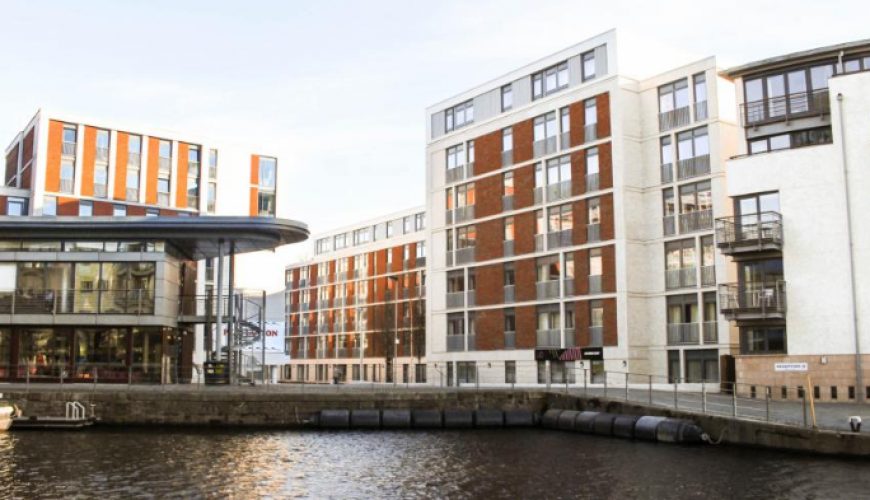
In fourth place, Lochrin Quay, managed by JLL, sits next to the Union Canal, near the heart of the city. The development comprises 113 contemporary apartments, offering a mixture of one, two and four-bedroom options, all to rent. There’s on-site bike storage, a comfy communal lounge and all homes benefit from superfast WiFi. There’s lots of praise from residents for the concierge team too, who they say are always on hand to help with any issues, big or small.
Read reviews and details of Lochrin Quay, EH3
In fifth, Salamander Street by Hillcrest is located in Leith, an up-and-coming area of Edinburgh. The development is six storeys high and provides 145 units, comprising one to four-bedroom flats and maisonettes. There’s also a basement car park for residents’ benefit. The development was funded as part of the Scottish Government’s National Housing Trust initiative, providing affordable homes with the potential opportunity for tenants to buy the properties after five years.
Read reviews and details of Salamander Street, EH6
An exciting new development at number six, Waterfront Plaza by CALA Homes offers a collection of 1, 2 & 3 bedroom apartments, and 4 bedroom townhouses. Situated along the Leith waterfront, the development has easy access to the cinema, gym, shops, cafes, coffee shops, Michelin starred restaurants, fresh seafood eateries, stylish cocktail bars and much more.
Read reviews and details of Waterfront Plaza, EH6
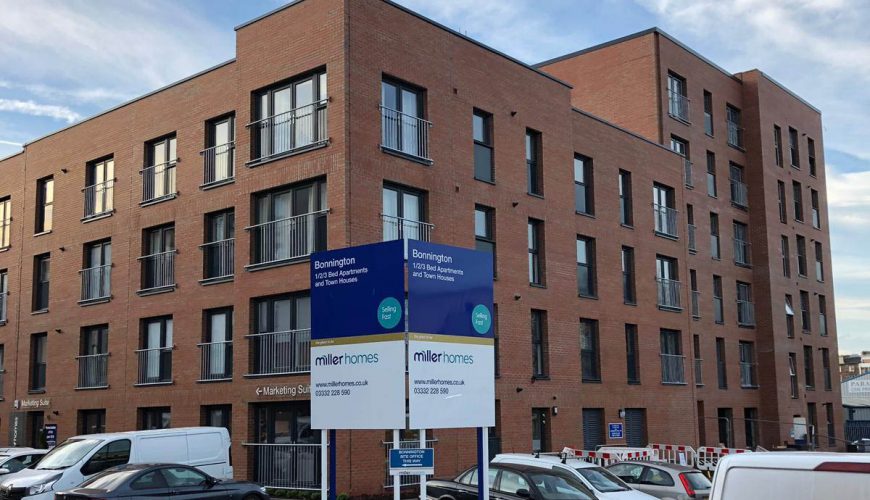
Bonnington Mill, by Miller Homes, is located in the heart of Bonnington, one of Edinburgh’s most vibrant districts. Offering one to three-bedroom apartments, residents benefit from a picturesque riverside setting, as well as a wide variety of useful transport links that really open up the city and surrounding area. Plenty of reviewers call it a friendly development that serves as great place for professionals, families and retirees to live.
Read reviews and details of Bonnington Mill, EH6
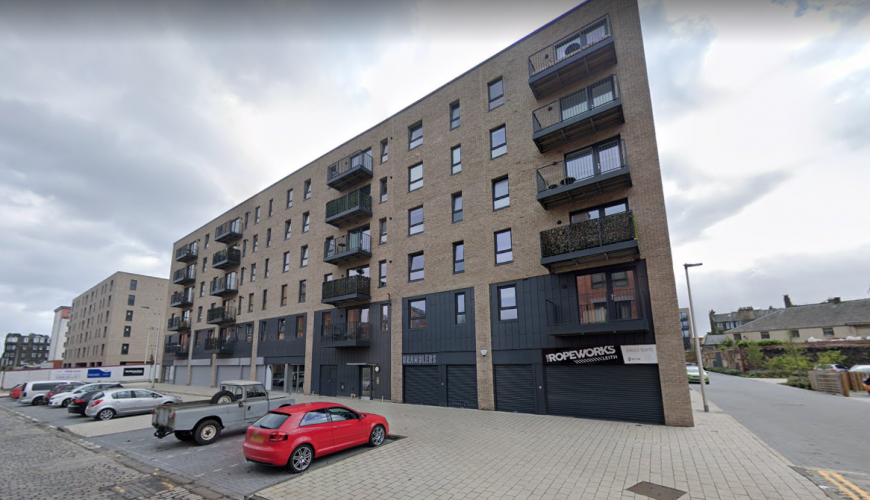
Our eighth place goes to The Ropeworks by The Teague Group, which also sits in Edinburgh’s Leith area. This is a multi-phase development with one to three-bedroom apartments and three-bedroom town houses on offer. The Ropeworks is also part of the historic Edinburgh Roperie and Sailworks company site, which adds plenty of character to the area. Residents are fans of the well laid out and comfortable homes, many of which feature balconies that are ideal for taking in the cityscape views.
Read reviews and details of The Ropeworks, EH6
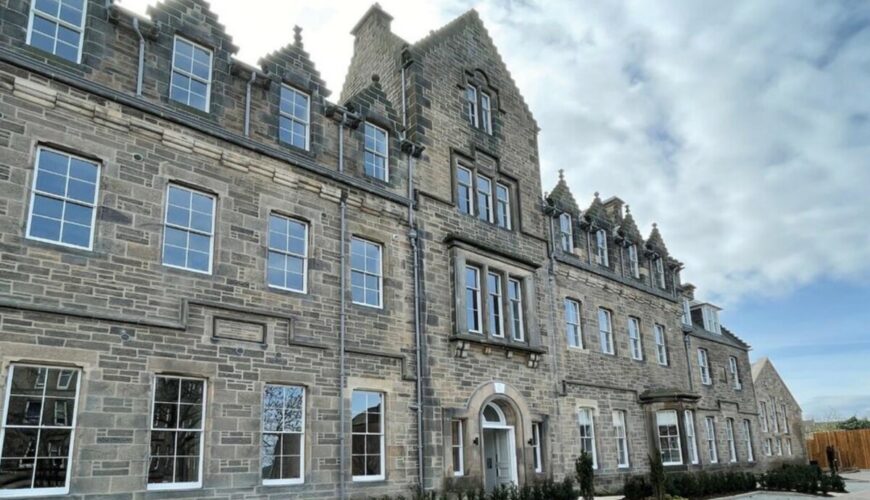
Ninth-placed Springwell is the latest development from AMA Homes. The development will feature 48 new homes, 35 apartments 5 duplexes, 6 family sized townhouses and 2 lodge house. Springwell is a former hospital made up of two Victorian buildings that have been restored and covered into spacious apartments, the landscaped grounds accommodate the Victorian lodge, townhouses and extensive off-street parking.
Read reviews and details of Springwell, EH11
In 10th, Caer Amon Apartments consists of to cruciform-shaped blocks and two lodge houses, inspired by the quads of Scotland’s historic universities. The apartment interiors are light and spacious and benefit from underfloor heating. Located in Cramond, one of Edinburgh’s hidden gems.
Read reviews and details of Caer Amon Apartments, EH4
Living in Edinburgh
In many ways, Edinburgh can be considered the cultural seat of Scotland. With an ingrained culture based on law, medicine, science and literature, it’s a city steeped in learning and history. This is why, despite Edinburgh’s relatively small population, it attracts millions of tourists a year, helping fuel its economy.
But it’s not just tourism that enriches its reputation as an economic powerhouse. Home to institutions such as the Bank of Scotland and Scottish Widows, this is a city that runs on finance. You’ll find the heart of these operations in the West End.
Edinburgh’s History and Culture
Edinburgh also has an academic reputation, with a high proportion of its residents educated to degree-level, working in professional roles, or studying at one of three well-ranked universities. The cultural offerings are pretty potent too. We’ve already mentioned the extraordinary number of listed buildings dotted along the winding streets.
Other than that, you’ll spot the famous castle, various churches, and the Old and New Towns, which both have UNESCO World Heritage status. The area becomes a riot of colour, sound and spectacle during the annual Fringe Festival and The Royal Edinburgh Military Tattoo. Several theatres and production companies keep the populace entertained the rest of the year.
Shopping in Edinburgh
Besides this, there’s plenty of shopping and dining to get done. From the buzz surrounding Princes Street to upmarket independents nestled in George Street, your options are many and varied. Alternatively, escape the hustle and bustle by visiting Edinburgh’s numerous parks or the remains of an ancient volcano. Just outside the city, Pentland Hill’s wild, rugged landscape awaits.
Transport in Edinburgh
Besides a comprehensive rail and tram system, a 24-hour bus service operates in the city, alongside several park-and-ride sites. Most routes run via Princes Street, providing convenient access to the main districts via the city centre.
In addition, two encircling A-roads connect Edinburgh to the Scottish border and the settlements north of the Forth Bridge. The M8 also provides a direct route to Glasgow (c. 46m). Meanwhile, Edinburgh Airport offers a variety of domestic and international flights, including to the USA, Canada, and European destinations.
Edinburgh property prices
So, are apartments in Edinburgh within your budget?
The average property price in Scotland was £200,000 in August 2024. However, according to Rightmove, the Edinburgh average hit £331,000 in October 2024. Perhaps this is not surprising, given all the benefits Scotland’s cultural capital offers.
Data from Home.co.uk reveals that renting in Edinburgh will set you back around £1,550 PCM on average. Breaking rentals down by size, one-bedroom homes cost £1,133 PCM, rising to £3,240 for a five-bedroom property.
What did you think about our top-rated apartments in Edinburgh? To learn more about the city, visit our dedicated area guide below.
The county of City Edinburgh is one of the most desirable places to live in Britain. It’s a county with a rich history and thriving culture, and it’s also the home of many prestigious universities. If you’re thinking about moving to Scotland – or Read more about City of Edinburgh
HomeViews is the only independent review platform for residential developments in the UK. Prospective buyers and tenants use it to make an informed decision on where to live based on insights from carefully verified resident reviews. Part of Rightmove since February 2024, we’re working with developers, house builders, operators, housing associations and the Government to give residents a voice, recognise high performers and to help improve standards across the industry.
Shropshire is one of the most picturesque and historic counties in England. You can find an excellent mix of rural areas and charming market towns. These include Shrewsbury, Ludlow and Oswestry, all of which are packed with character and offer a great range of shops, restaurants and pubs. So, if you’re considering new homes in Shropshire, you’re spoilt for choice. There are plenty of rural cottages and farms, as well as characterful townhouses and period homes available.
New homes in Shropshire – 5 best-rated developments
Of all the counties in England, none can boast a more varied and picturesque landscape than Shropshire. From the wild moorlands of the north to the fertile fields of the south, there’s something to please everyone who takes an interest in rural living.
This is especially true when it comes to finding new homes in Shropshire. There are plenty of superb developments to choose from, each with its own unique selling points. Here are five of the best, ranked entirely on the scores provided by verified residents:
*PLEASE NOTE these rankings take into account how many reviews a scheme has and how recently those reviews have been submitted, so may not match the overall star ratings shown. Buildings with a larger number of more recent reviews are given a greater weighting to reflect current building performance.
Top of the table for Shropshire is Assembly Park, a Packaged Living developed site, managed by Allsop Single Family Housing. Assembly Park is in an excellent location, immediately surrounded by parkland and an established community. In addition Telford’s world-class gymnastics facility, Park Wrekin Gymnastics Club, is adjacent.
One very satisfied resident says: “Love the design of the houses, feel like you have a lot of privacy on your garden etc. Nice spacious front and back gardens and good driveway. Managers are very quick to sort out any maintenance problems. Appliances that are fitted are modern and have everything you need.”
Read reviews and details of Assembly Park, TF1
Developer Simple Life appears in Shropshire’s top 5 three times with our current rankings. Top amongst these is Sutherland Grange. This is a development of 123 new-build houses to rent in Trench, Telford. It is located with convenient access for the Southwater Shopping Centre which has an ice-skating rink, cinema, bowling alley and library. It also offers great transport links, with easy access to the M54 and Oakengates train station. There are also good schools in the area and a nursery right next door.
Read reviews and details of Simple Life at Sutherland Grange, TF2
Taking 3rd place in our ranking of Shropshire’s new build homes developments is Tudor Park from Miller Homes. Situated in the southern Shrewsbury suburb of Sutton, the development offers easy access to Shrewsbury’s centre and mainline station, while the A5 is also nearby.
Read reviews and details of Tudor Park, SY2
Next up in 4th, and situated in the desirable town of Arleston just 3 miles away from Telford, Bluebell Manor is a stunning development of 31 homes exclusively to rent. This development benefits from excellent local facilities such as Wrekin Retail park only 1 mile away, offering an Asda living, Boots and a Costa Coffee. Shopaholics will be spoilt for choice as the nearby town of Wellington, provides a selection of smaller independent shops and cafes.
Read reviews and details of Simple Life at Bluebell Manor, TF1
Finally, 5th-placed development for Shropshire is Simple Life at Silkin Green. Less than a mile away from Telford Town Centre and only a few minutes’ walk from Stirchley Village and Dawley, the site also has excellent transport links with Shrewsbury, Birmingham and Wolverhampton, which are all within easy reach. The nearby shopping centre includes a cinema and great retail outlet options. The nearby Telford Forge Retail Park also includes a Sainsbury’s Supermarket and Tesco Extra. Residents here love the convenience of the location and have plenty of praise for the design and value for money of their large and well-appointed homes.
Read reviews and details of Simple Life at Silkin Green, TF4
Average property prices in Shropshire
Property in Shropshire is, on average, just a tiny bit cheaper than the UK national average house price of £285,000. Buying a property in the county will cost you around £284,000, according to the latest figures from Rightmove (October 2024). You can pick up a terraced property for far below the average cost across the country, at £201,000 while large detached properties sell for an average of £401,000.
Shropshire is located in the west midlands of England. It is a rural county with beautiful countryside and many historical sites. The population is around half a million people. Major towns include Shrewsbury, Telford and Ludlow. There are also many villages and hamlets in the county.
The county is bordered by Wales to the west and the counties of Cheshire to the north, Staffordshire to the east, Worcestershire to the southeast, and Herefordshire to the south.
Living in Shropshire has many benefits. One of these is the sheer number of outdoor activities on offer. Whether you love hiking, biking, kayaking or just taking a leisurely stroll, there’s something for everyone here.
The countryside is also quite pretty and makes for great views, whether you’re looking out from your window or exploring it on foot. Another big bonus is the cost of living. It’s much cheaper to live in Shropshire than it is in London, for example. This means you can save money while enjoying a great quality of life.
And finally, there’s a strong sense of community here which is really welcoming. Everyone seems to know everyone and there’s a real sense of togetherness. If you’re looking for a place to call home, Shropshire should definitely be at the top of your list!
What does Shropshire have to offer?
Shropshire has a lot to offer potential new-build buyers, including stunning scenery, ample outdoor activities, rich history and culture, and delicious food.
The countryside is famous for its rolling hills and picturesque villages, making it a popular destination for those who love the outdoors. There are plenty of hiking and cycling trails to take advantage of, as well as opportunities for fishing, birdwatching, and horse riding. The county is also home to some lovely market towns, such as Shrewsbury, Bridgnorth, and Ludlow. These places are packed with characterful architecture and interesting shops, cafes, and restaurants. There’s always something going on in the local pubs and theatres, too. Shropshire is known for its high-quality food and drink, so there’s no shortage of superb places to eat out. The region is also well known for its production of ciders, beers, and spirits. If you’re looking for a new home in the countryside, with plenty of opportunities to enjoy the great outdoors, then Shropshire is definitely worth considering.
What are the transport links like?
Shropshire is well-connected to the rest of the country via its transport links. The county has a number of motorways and A-roads, as well as a mainline railway station. There are also several airports within reach, making it easy to get around. The M54 motorway runs from Telford in the east to Wolverhampton in the west, and passes through the county’s two largest towns, Shrewsbury and Telford. The A5 road runs from London to Holyhead in Wales, passing through the north of Shropshire. The A49 road connects Shrewsbury and Telford in the south of the county with Chester in the north-west.
If one of the new builds on this list takes your fancy, then why not check out our dedicated area guide below for more information on this amazing country and the wide range of properties it has to offer!
If you are looking for a new home, then Shropshire might be the place for you. This county is located in the West Midlands region of England and has much to offer prospective homeowners. For example, it offers affordable housing prices that will leave Read more about Shropshire
HomeViews is the only independent review platform for residential developments in the UK. Prospective buyers and tenants use it to make an informed decision on where to live based on insights from carefully verified resident reviews. Part of Rightmove since February 2024, we’re working with developers, house builders, operators, housing associations and the Government to give residents a voice, recognise high performers and to help improve standards across the industry.
Looking for apartments to rent in Sheffield? Combining natural beauty with a reputation for innovation and creativity, the city also hosts year-round cultural events and notable independents in every sector. And although prices are rising in line with the area’s economic growth, there are still affordable options whether you hope to rent or buy. Let’s discover more about this vibrant city and the best developments it has to offer.
Apartments to rent in Sheffield: Highest rated developments
So, which apartments to rent in Sheffield do our residents love? These are the top four in the area:
*PLEASE NOTE these rankings take into account how many reviews a scheme has and how recently those reviews have been submitted, so may not match the overall star ratings shown. Buildings with a larger number of more recent reviews are given a greater weighting to reflect current building performance.
PLATFORM_ has arrived in Sheffield to reimagine the rental experience, and it takes top spot for rental apartments in the city. The scheme offers co-working spaces, a games room, gym, three roof terraces, a calendar of social activities, and access to the private dining room, all included in your rent.
Read reviews and details of PLATFORM_ in Sheffield, S1
Taking second place, Brook Place is located a mere 10 minutes from Sheffield city centre. The developer and landlord for this ‘build to rent’ development is Grainger plc, and it offers 237 new homes with a range of studios, plus one and two-bedroom apartments. There is an on-site service team and a great range of amenities for residents to benefit from, including a spacious gym and dedicated social spaces. Residents here routinely mention how warm and welcoming the staff are too.
Read reviews and details of Brook Place, S11
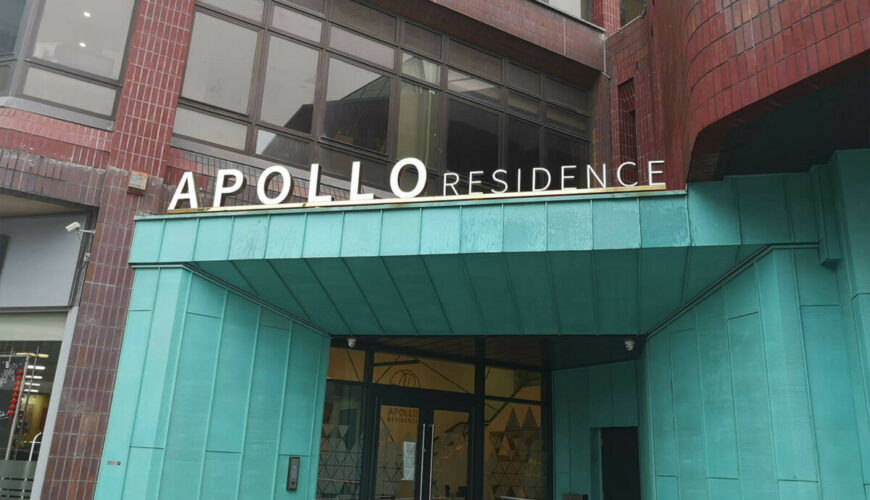
Third-placed Apollo Residence in Sheffield’s S1 area is a residential development designed for both students and professionals, offering a prime city centre location close to universities and amenities. The building features fully furnished apartments with integrated kitchen appliances, high-speed Wi-Fi, and all utility bills included. Additional amenities include a concierge service, secure fob entry, and communal study spaces. The apartments, ideal for student or professional living, come with en-suite shower rooms and modern furnishings. Apollo Residence’s central location provides convenient access to Sheffield Hallam University, local shops, restaurants, and public transport links
Read reviews and details of Apollo Residence, S1
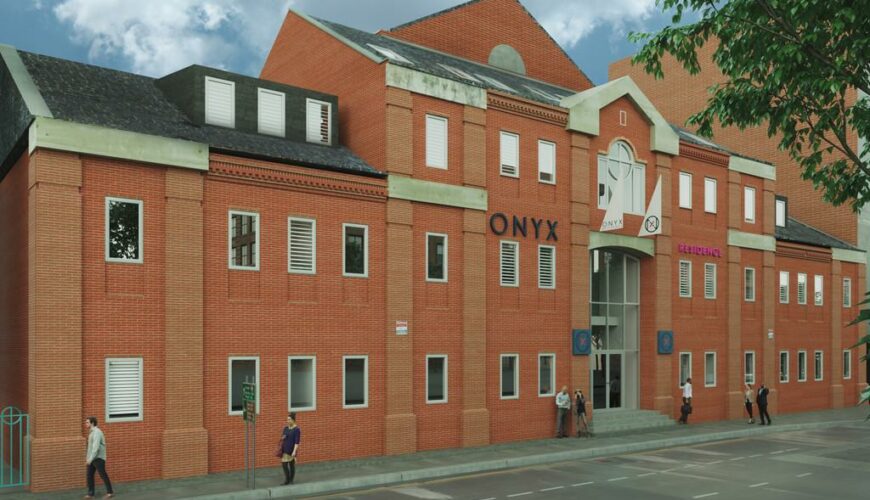
Taking fourth place, Onyx Residence in S2 is a modern apartment development offering studio, one-bed, and two-bed units. Each fully furnished apartment features an open-plan layout with double-beds, sofas, coffee tables, wardrobes, and a study area with an in-built desk and swivel-chair.The development boasts a colorful modern design, secure cycle storage, limited parking at extra cost, and security access via coded fob. It’s conveniently located in the heart of Sheffield, within a 10-minute walk from Sheffield Hallam University and close to various shops, restaurants, and amenitie
Read reviews and details of Onyx Residence, S2
In fifth place, Loxley Heights is a rental development with studio rooms, 1 bed and 2 bed apartments available for rent. Situated in the heart of Sheffield, residents benefit from a roof terrace, sky lounge, co-working space, social events and a dedicated Residents’ Team. Additionally, there is a karaoke room, cinema room, games area a gym and the building is pet friendly.
Read reviews and details of Loxley Heights, S1
Taking sixth place, Kangaroo Works is a community of new build 1, 2 and 3 bed apartments. Located in the heart of Sheffield city centre living. Experience thoughtfully designed amenities with reception and concierge services, spaces for co-working, communal roof top and courtyard gardens.
Read reviews and details of Kangaroo Works, S1
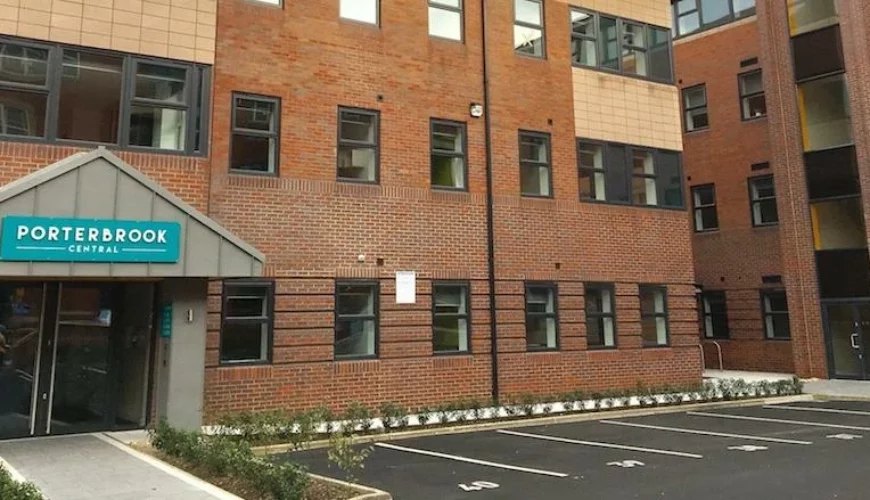
Seventh-placed Porterbrook Apartments, by West One, is located just off popular Ecclesall Road in Sheffield. Comprising a range of studios and one-bedroom apartments, residents here benefit from all-inclusive bills, views of Porterbrook River with spacious landscaped grounds, as well as private parking.
Read reviews and details of Porterbrook Apartments, S11
In eighth, Skye Edge is a neighbourhood featuring modern 3 and 4-bedroom homes available for rent in Sheffield. Located just outside Sheffield City Centre, this area offers incredible hilltop views, spacious gardens, and roof terraces.
Read reviews and details of Skye Edge, S2
In ninth place, Velocity Village by AddLiving is a sleek, ultra-modern development sitting right in the heart of Sheffield. This makes it perfect for professionals or students, with immediate access to everything the city centre offers. The main train station is also just a 10-minute walk away. In addition, Velocity Village is a secure environment being self-contained and comprises almost 300 one or two-bedroom apartments and studios.
Read reviews and details of Velocity Village, S1
Finally, our 10th-ranked development for apartments to rent in Sheffield is Heritage Park. This converted Grade II listed building offers a selection of flatshares, studios, and self-contained flats, ranging from one to four bedrooms, many of which feature large windows with great views. Located within 3 miles of Sheffield Shopping Centre, it is surrounded by numerous local amenities and excellent transport links right at its doorstep. Additionally, it is just a five-minute stroll from Kelham Island.
Read reviews and details of Heritage Park, S6
Where is Sheffield?
Named after the River Sheaf, Sheffield is a city and metropolitan borough in South Yorkshire. Nestled in the heart of England in the eastern foothills of the Pennines, it lies north of Nottingham, south of Leeds, and east of Manchester.
Living in Sheffield
Although well-known for its industrial past, the ‘Steel City’ devotes sixty-one per cent of its area to green spaces. This includes 250 parks, woodlands, and gardens. Besides this, a third of Sheffield lies within the bounds of the Peak District National Park. With so much fresh air and freedom available to its residents, it’s understandable why the city attracts families and those looking for a balance between urban and country living. And as a major retail and cultural hub, there’s plenty of shopping, dining, and entertainment to up your excitement too.
The area is also an excellent place to settle if you’re hoping to improve your prospects. Alongside Aberdeen and Cardiff, professionals in Sheffield were revealed to be among the richest in the UK in 2020. The results of the combined CV-Library and Zoopla survey showed this was partly due to the city’s relatively low living costs, which had a positive effect on disposable income.
When you’d like to travel in the wider region, there are plenty of options. The nearby M1 ensures a straightforward journey north to Leeds or south to London. Meanwhile, The M18 links to Doncaster Sheffield Airport, where you can catch a flight to Florida or various European destinations.
Rail connections in the region are strong too. Sheffield railway station runs services to London, the South West, northeast England and the east of Scotland – to name a few. The city also sits on the Trans Pennine Trail, a National Cycle Network route running from Southport in Merseyside to Hornsea in the East Riding of Yorkshire. The trail also connects Leeds to Chesterfield.
Sheffield property prices
At £236,000 (Rightmove, October 2024), properties in Sheffield are significantly below England’s current average of £310,000. Terraced homes came in at an affordable £186,000, with semi-detached houses driving the market and selling for around £230,000. Meanwhile, detached properties achieved £394,000 on average.
So, how do rentals compare in terms of affordability? According to a recent daily analysis by property search engine Home.co.uk, Sheffield lets average at £900 PCM, which is close to the current national average, excluding London. Naturally, prices vary according to property size, with one-bedroom rentals asking for £767 PCM. This rises to £1,200 for three-bedroom homes and £1,950 for five bedrooms.
HomeViews is the only independent review platform for residential developments in the UK. Prospective buyers and tenants use it to make an informed decision on where to live based on insights from carefully verified resident reviews. Part of Rightmove since February 2024, we’re working with developers, house builders, operators, housing associations and the Government to give residents a voice, recognise high performers and to help improve standards across the industry.
The West Midlands region features bustling metropolitan centres, historic towns and easy access to beautiful rolling countryside. One of the best-connected areas of the country, the region offers fast road and rail links to London and many other major towns and cities. See what the region has to offer with our best new build homes for sale in the West Midlands.
From energetic, vibrant cities to sleepy, rural villages, the West Midlands has something for everyone. The region’s affordable house prices and wealth of new build developments make it a particularly appealing prospect for first-time buyers, young professionals and new families.
New build homes for sale in the West Midlands: Highest rated developments
Our ranking of the West Midlands’ top 10 new build homes for sale is below. Verified residents have reviewed the region’s new homes, so HomeViews can rank new build developments based on the real life experience of living in them. Take a look below to see the best new homes in the West Midlands as rated in October 2024.
*PLEASE NOTE these rankings take into account how many reviews a scheme has and how recently those reviews have been submitted, so may not match the overall star ratings shown. Buildings with a larger number of more recent reviews are given a greater weighting to reflect current building performance – as on our area guide pages.
The top spot currently belongs to Brewers Meadow, situated in Langley, Oldbury. The development overlooks the Titford Canal and is opposite Langley Park. Developed by Lioncourt Homes, Brewers Meadow offers a range of two-bedroom apartments and three and four-bedroom houses, in a choice of eight different designs.
Read reviews and details of Brewers Meadow, B69
For 2nd place we move over to Priors Crescent, which is surrounded by open fields and overlooks seven acres of green space. Priors Crescent offers easy access to Alcester, Evesham and Stratford Upon Avon. One resident was blown away by their new home, describing it as a: “special gem of a development like none I have seen before!”
Read reviews and details of Priors Crescent, WR11
In 3rd, Princes Gate is a new residential development of 100 luxury studio, one and two bedroomed apartments located in central Solihull. Despite only opening last year, it already has 6 outstanding reviews.
One very happy resident says: “We love living here, it’s an amazing location close to town centre and the rail station is on our doorstep. Beautiful flat with modern decor and lovely high ceilings. Really peaceful development and everyone is very respectful and quiet. We really love it!”
Read reviews and details of Princes Gate, B91
In 4th, Bilbrook Mill by Bloor Homes sits within the charming village of Bilbrook. Comprising a range of 2, 3 and 4-bedroom homes, the development is conveniently situated near a range of shops, a pub, medical centre and more within the village itself. It’s also adjacent to the very popular village of Codsall.
Read reviews and details of Bilbrook Mill, WV8
5th place is taken by Heritage Fields, two miles from the centre of Nuneaton and within easy reach of several major motorways. Coventry, Birmingham and Leicester are all just a short drive away, as well as schools, local shopping centres and sports and entertainment options.
Read reviews and details of Heritage Fields, CV11
In 6th we have Tudor Park by Miller Homes. The development may only have seven reviews to date, but they are all extremely positive. One happy resident says the following:
“Perfect home for first time buyers. Been lovely to make this house into our home. The neighbours all seem very friendly and miller homes have been very approachable when needed.”
Read reviews and details of Tudor Park, SY2
Taking 7th place in the West Midlands is Bloor Homes at Penkridge. The development is conveniently positioned for Penkridge town, as well as access to nearby Stafford. The development currently (October 2024) has a perfect location score of 5 out of 5, while residents also love the overall design of their homes and the easy access to great in-site facilities.
Read reviews and details of Bloor Homes at Penkridge, ST19
In 8th place, Kenilworth Corner is a prime development of two, three, four and five-bedroom homes in the rural (and much desired) location of Kenilworth. Coventry, Warwick and Birmingham are all within easy reach. Residents say that there are beautifully designed houses here, and that it offers a quiet neighbourhood with great views of the area.
Read reviews and details of Kenilworth Corner, CV8
It’s back to Birmingham for the 9th entrant on our tour of the top-ranked developments in the West Midlands. Park Central is a Crest Nicholson development comprising 1,300 apartments dispersed across 61 acres. Winner of Property Week’s ‘The Placemaking Award’ in 2016, the development is located merely 15-minutes walk from Birmingham City Centre and provides a great range of one, two and three-bedroom apartments.
Read reviews and details of Park Central, B15
To round off the list we have another new entry. Somerford Park is a new development with 2, 3 and 4 bedroom homes in Staffordshire. It is located half a mile from local amenities such as a salon and a library. Additionally, Cannock Shopping Centre and The Wulfrun and Mander Shopping Centres are all less than 10 miles away.
Read reviews and details of Somerford Park, ST19
Living in the West Midlands
Don’t be fooled, this region isn’t all about Birmingham! The cities of Wolverhampton, Stoke-on-Trent and Coventry all have plenty to offer, including affordable house prices. Additionally, the smaller towns and cities of Worcester, Warwick and Leamington Spa, each have their own charm and appeal.
Although the West Midlands is a bustling, well-connected region, you can still find peaceful seclusion within easy reach. The area boasts The Cotswolds, The Malvern Hills, The Shropshire Hills and Cannock Chase. Each of them is an Area of Outstanding Natural Beauty, with stunning, rolling countryside. These protected areas offer miles of walking and cycling routes, providing an escape from city life and a slower pace of life.
Is the West Midlands a good place to live?
With Birmingham at its heart, the West Midlands is a thriving hive of activity in the centre of the country, with many appealing qualities. A number of the UK’s major motorways converge in the West Midlands. This makes it easily accessible from all parts of the country. Equally, you can reach London and other major centres with ease from the West Midlands, whether by rail or road.
Birmingham is understandably the focal point of the region. With its population of more than a million people and its reputation as a centre for industry and manufacturing, the city is the powerhouse of the region’s economy. Birmingham brings great opportunities for employment and career development, and is home to five universities. However, this vibrant and beautiful part of the UK has much to offer beyond its foremost city.
West Midlands property prices
The West Midlands offers an affordable option for buyers, with property prices significantly below the average price for England. According to Rightmove, in the 12 months to October 2024, the average price of property in the West Midlands was £276,000. This compares to an average property price across England of £302,000. This is the latest average that the ONS recorded in December 2023.
Apartments and terraced houses in the West Midlands offer great value compared to the rest of England. The average price of an apartment in the region comes in at just under £150,000. Meanwhile, terraced houses are at an average price of just £207,000. Larger properties are still significantly below the national average price, though a detached house will set you back around £440,000.
If you’re a city dweller, you’ll be pleased to hear that property prices in the major urban centres of the West Midlands are even lower than the regional average. Birmingham property costs an average of £245,000, while the average for Coventry is £235,000 and Wolverhampton is a solid £225,000. In contrast, prices in the smaller, historic towns and cities of Warwick, Leamington Spa and Worcester are significantly above the regional average (£370,000, £394,000 and £274,000 respectively). Again, these are all October 2024 averages.
Are you interested in learning more about the wealth of options for buying in the West Midlands? If you’re thinking of moving to the region, check out our area guide below for more information. From there, you can discover the towns and cities of the region, and all the latest new build developments across the West Midlands.
West Midlands is the name of both a large region and a smaller county on the western side of central England. This guide covers the larger region, which stretches from Shropshire and Herefordshire in the west to Staffordshire and Warwickshire in the east. Read more about West Midlands
HomeViews is the only independent review platform for residential developments in the UK. Prospective buyers and tenants use it to make an informed decision on where to live based on insights from carefully verified resident reviews. Part of Rightmove since February 2024, we’re working with developers, house builders, operators, housing associations and the Government to give residents a voice, recognise high performers and to help improve standards across the industry.
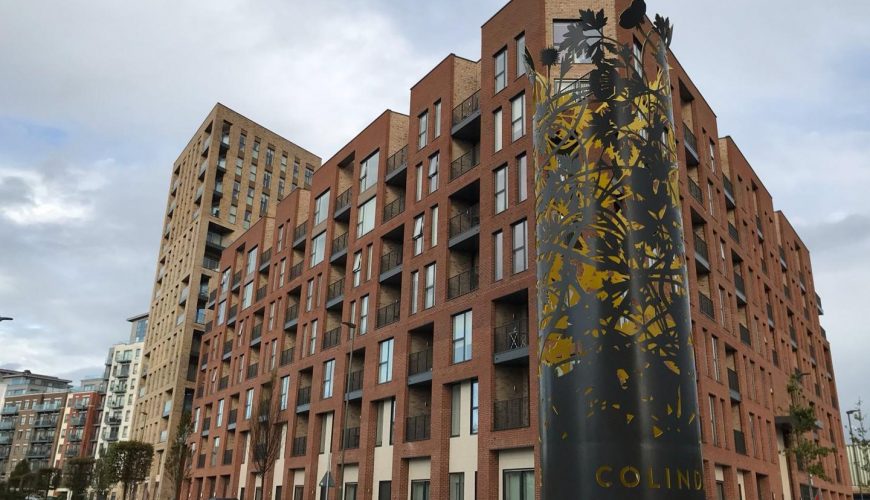
The bustling north-west London suburb of Colindale has plenty to offer renters, first-time buyers and established London homeowners. Thanks to its well-connected transport network and affordable property prices, the area has become a hub for development. Verified residents of Colindale have been reviewing its best new build developments on HomeViews. Read on to discover the highest-rated new build homes in Colindale.
Highest rated new build homes in Colindale
Colindale’s affordable property prices and convenient location set it apart as an attractive option for buyers and renters in the capital. Below you can find our rankings of the best new build homes in Colindale. The list is drawn solely from the ratings of verified reviewers on HomeViews.
*PLEASE NOTE these rankings take into account how many reviews a scheme has and how recently those reviews have been submitted, so may not match the overall star ratings shown. Buildings with a larger number of more recent reviews are given a greater weighting to reflect current building performance.
Jumping up from 3rd to 1st place is L&Q at Colindale Gardens, comprising 211 apartments, ranging between one, two and three-bedrooms. This rental-only development offers residents an on-site concierge and private balconies, and is only a 10-minute walk from Colindale Underground station, serviced by the Northern Line.
Read reviews and details of L&Q at Colindale Gardens Private Rental, NW9
Another riser in 3rd place, Trinity Square is a Barratt London development and recent winner of the ‘Best Project’ Housing Design Award. The development offers 326 one, two and three-bedroom apartments and 70 three and four-bedroom houses. The apartments all benefit from open-plan living areas, with large floor-to-ceiling windows.
Read reviews and details of Trinity Square, NW9
We’re back to Colindale Gardens for number 4. This is a mixed-use development in the heart of North West London featuring a range of studio, one, two, three and four-bedroom apartments and duplexes. Additionally, there are a range of three and four-bedroom townhouses alongside cafés, restaurants, retail facilities, a residents-only gym and a concierge service. Colindale Underground station is the nearest transport link with connections to the Northern Line.
Read reviews and details of Colindale Gardens, NW9
Storming back into the top 5 we have UNCLE Colindale, a modern residential development offering a range of pet-friendly apartments including studios, 1, 2, and 3-bedroom options. Each unit features high-spec kitchens and bathrooms, with the option of being furnished by BoConcept. Amenities include a 24/7 gym, co-working lounge, meeting spaces, and high-speed internet. It’s conveniently located a minute from Colindale Underground Station, providing quick access to central London.
Read reviews and details of UNCLE Colindale, NW9
In 6th place, Beaufort Park is a St George development with access to good transport services towards central London in the form of Beaufort Park’s Underground Station on the Northern Line. The development also has various health and fitness facilities such as a spa, gym, pool and landscaped courtyards. There is also a range of shops and restaurants at Beaufort Park.
Read reviews and details of Beaufort Park, NW9
7th in Colindale is Silver Works, a residential development from Galliard Homes, previously used during the First World War by the Royal Air Force. Today, it’s a collection of apartments, suites and townhouses, all in a central location in Colindale. Colindale tube station, serviced by the Northern line, is close to the development, as is the M1, the A41 and the Brent Cross shopping mall.
Read reviews and details of Silver Works, NW9
8th place is taken by Rhythm, a Fairview New Homes development located in Colindale. It comprises 104 studio, one, two and three-bedroom apartments. Residents benefit from private car parking and landscaped communal gardens. The development is just a four-minute walk from Colindale underground station, which is served by the Northern Line.
Read reviews and details of Rhythm, NW9
Next up for Colindale’s best developments is Hendon Waterside in 9th place. This is a large regeneration scheme by Barratt London. Covering an expansive range of 2,000 one, two and three-bedroom homes, this development is in West Hendon, towards the southern edge of Colindale. It’s also adjacent to the Welsh Harp Reservoir, and is a five-minute walk from Hendon station, with its direct links to Central London.
Read reviews and details of Hendon Waterside, NW9
Taking the 10th spot is Pulse by Fairview New Homes. The development features a range of studios, one, two, three and four-bedroom apartments and was designed by Lichfields. In total, it comprises a pleasingly regular 1,111 residential units and sits conveniently close to the Colindale Underground Station.
Read reviews and details of Pulse, NW9
Where is Colindale?
Colindale is conveniently located in north-west London, alongside Harrow, Edgware and Hendon. Central London is just six miles to the south via the A5 or the A41. Additionally, there’s easy access to the picturesque towns and villages of Hertfordshire, via the nearby M1.
Is Colindale a good place to live?
Colindale is a thriving community with a lot to offer both renters and buyers. The area features a wealth of residential avenues lined with post-war semi-detached properties, providing spacious accommodation and superb value for buyers. For renters and first-time buyers, there’s a choice of numerous new builds, including several rental-only developments.
The area’s main high street is along the A5/Edgware Road. This busy thoroughfare offers a range of shops and acts as one of the main routes into Central London. There’s also several major supermarkets, while neighbouring Brent Cross, Burnt Oak and Edgware provide a further choice of shops and facilities.
The sheer number of excellent schools in the area reinforces Colindale’s reputation as a great place for young families. Five primary schools within proximity of the centre of Colindale are rated ‘outstanding’ by Ofsted. Additionally, the area is home to renowned independent North London Grammar School.
As far as green space is concerned, Colindale boasts the peaceful greenery of Silkstream Park. It has a children’s playground and stream running through its centre. Additional parks in the surrounding area include Fryent Country park and Sunny Hill Park. Meanwhile, the wide open Central London spaces of Hampstead Heath and Regent’s Park are both easily accessible.
What transport links are available in Colindale?
Colindale’s position in TfL Zone 4 is within easy reach of Central London. There are excellent road links both to central areas and away from the city. The M1 and the A406 meet at the southern edge of Colindale. The M1 offers swift access towards the M25 and Hertforshire beyond. The A406 is one of the major inner-London circular roads, providing easy access to the main arterial routes into the centre. In Colindale’s central area, you can also access the London Underground. There are Northern Line services to the major rail terminals of Euston, King’s Cross and St. Pancras International, as well as easy access to the City of London and the West End.
What are Colindale average property prices like?
Rightmove lists the average property price in Colindale as £438,000, according to sales in the 12 months to October 2024. This means property in Colindale is, remarkably, on average more than £253,000 cheaper than the London average of £691,000.
Have you seen something you like in Colindale? To find out more about living in this bustling north London neighbourhood, read our dedicated area guide below. From there, you can also find more information on the best new build developments to buy and rent in Colindale.
The lively North London suburb of Colindale has been making waves with savvy home-seekers for years. Many are lured by its proximity to Central London and more affordable housing options. Where are the best places to buy or rent in Colindale? Discover more about Read more about Colindale
HomeViews is the only independent review platform for residential developments in the UK. Prospective buyers and tenants use it to make an informed decision on where to live based on insights from carefully verified resident reviews. Part of Rightmove since February 2024, we’re working with developers, house builders, operators, housing associations and the Government to give residents a voice, recognise high performers and to help improve standards across the industry.
Is a new build home in Bristol a good buy and, if so, where should you start looking? From its Georgian streets and historic landmarks to its amazing art scene and unique cultural identity, Bristol is a thriving West Country hub that attracts students and families alike. It’s also one of the safest cities in the UK, and with rolling hills and AONB countryside on its doorstep, a rural adventure is never far away. So it’s not surprising then that the city plays host to a wide range of new build homes and developments.
Bristol’s top 10 new build homes developments
Of course, not all developments are created equal! So which of them offers the best quality homes and excellent value for money? Below, we share out 10 top-rated new build homes in Bristol, as rated by HomeViews verified residents. Our ranking system is based on five distinct categories – facilities, design, location, value and management – so you can make an informed choice about where to buy.
*PLEASE NOTE these rankings take into account how many reviews a scheme has and how recently those reviews have been submitted, so may not match the overall star ratings shown. Buildings with a larger number of more recent reviews are given a greater weighting to reflect current building performance.
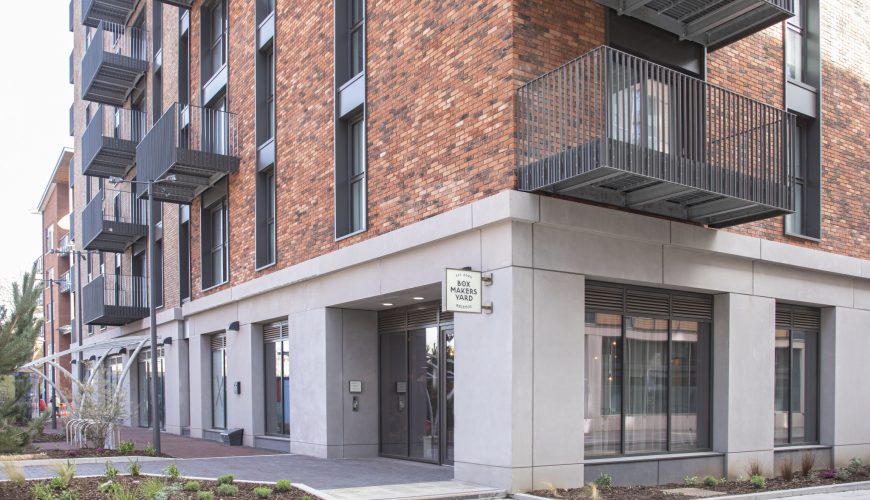
Top of the table for Bristol is Box Makers Yard, a rental only development managed by Urbanbubble. It offers a great range of 1, 2 and 3-bed apartments with a variety of furnished and unfurnished options. These come with courtyard or city views, extra storage and private balconies or terraces. In addition, there are a range of flexible tenancy lengths up to 5 years. Additional facilities include a resident lounge with a games area, an air-conditioned gym with weekly fitness classes as well as a private rooftop dining suite with an outdoor terrace.
Read reviews and details of Box Makers Yard, BS2
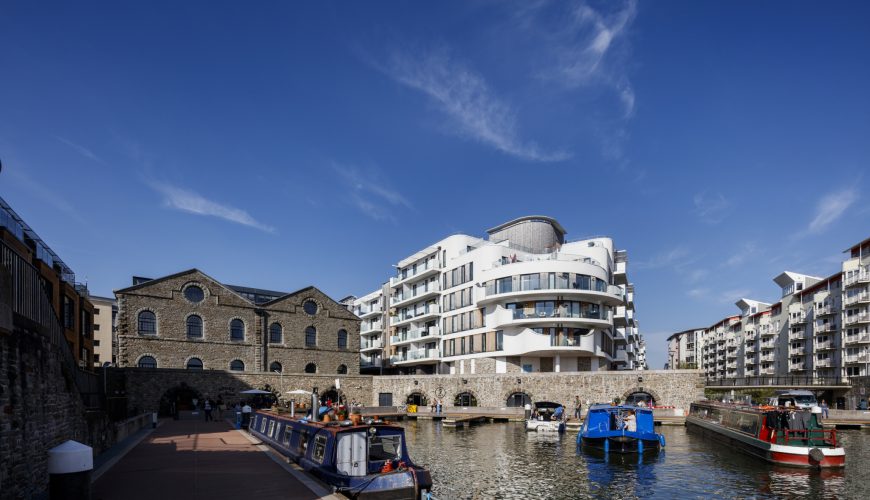
Next up we have Templebridge apartments, a prime development located on Bristol Harbourside, in close proximity to Cabot Circus and Temple Meads train station. It comprises just 22 sought-after apartments, most of which feature river views from spacious balconies and access to resident-only car parking.
Read reviews and details of Templebridge Apartments, BS1
Located at Finzels Reach, Hawkins & George is in the heart of Bristol with over 194 homes to rent. The homes range from studios, 1 and 2 bed apartments. The scheme benefits from being located next to modern offices, bars, restaurants and coffee shops. As well as local amenities renters have onsite resident services team […] Read reviews and details of Hawkins & George, BS1
In fourth place, Frenchay Gardens by Redrow Homes sits in close proximity to Bristol. In addition to being just 6 miles away from the city centre, Frenchay is located just half a mile from J1 of the M32. Residents benefit from a range of local supermarkets and leisure facilities such as a cricket club and golf courses nearby.
Read reviews and details of Frenchay Gardens, BS16
At number five it’s another rank secured for A2Dominion, this time with Invicta, a residential development with a range of one, two and three-bedroom apartments. Also located on Bristol’s Harbourside, it is only a short distance away from various waterfront attractions. This is in addition to various nightlife options and the City Centre’s shopping outlets. Bristol Temple Meads station is less than a mile away, which has links to CrossCountry, GWR and South Western Railway services.
Read reviews and details of Invicta by A2Dominion Rental Only, BS1
Sixth place goes to Wapping Wharf, an Umberslade development that was designed by Alec French Architects. It boasts around 500 one, two and three-bedroom apartments located in the historical and cultural heart of Bristol. It is also only a 20-minute walk or 6-minute cycle away from Bristol Temple Meads station.
Read reviews and details of Wapping Wharf, BS1
Our seventh spot goes to Canons Gate, which is an Rental Only development by A2Dominion, located on Bristol’s Harbourside. The development features 101 rental only apartments. Additionally, Canons Gate features include balconies, landscaped communal gardens and open plan living rooms. Furthermore, the Harbourside is full of great places to see and go, offering plenty of bars, restaurants, shops and visitor attractions. Similarly, Bristol Temple Meads station is only a 23-minute walk away.
Read reviews and details of Canons Gate by A2Dominion Rental Only, BS1
Paintworks Apartment is a Verve development and is comprised of 331 one to four bedroom apartments, alongside offices and commercial space. It has a waterside location with a close proximity to Bristol Temple Meads station. The apartments vary in style from old paint factory buildings to newly built apartment and houses. Read reviews and details of Paintworks Apartments, BS4
Highbrook Park, by Crest Nicholson, sits in the village of Harry Stoke. Comprising of one to five-bedroom homes, the development benefits from excellent transport links. With Parkway Station a few minutes away, as well as the M32, residents here have access to Central Bristol within 30-minutes. Read reviews and details of Highbrook Park, BS34
Steamship House is located on Spike Island, a stone’s throw away from Bristol’s best shops, cafés and restaurants, and is part of the wider development of Great Western Dockyard by Linden Homes. Apartments come with balconies and access to a communal courtyard with decked seating. The development is also a very short walk away from […] Read reviews and details of Steamship House, BS1
Castle Park View is a 26 storey high-rise building in Bristol, offering one and two bedroom rental apartments. Castle Park View’s central location with Castle Park and Bristol Temple Meads are a short walk away, meaning it offers most amenities on the doorstep. Read reviews and details of Castle Park View, BS2
Redcliff Quarter is a mixed use development comprising of 128 rental only apartments. The development is only a short walk away from Bristol Temple Meads station. This offers links to the capital and various other key locations across the UK. In addition, residents benefit from a range 0f facilities and amenities on site. These include […] Read reviews and details of Redcliff Quarter by A2Dominion Rental Only, BS1
The Copper Building, by Urban Splash, is a part of the wise Lakeshore development. Situated in south Bristol, residents here benefit from parking, balconies, 10 acres of private gardens and a lake. As well as this, the development has been made with sustainable materials and is stated to be eco-friendly. Read reviews and details of Copper Building, BS13
Park Farm is surrounded by 27 acres of open space and is less than a 5 minute drive from Thornbury High Street. Thornbury high street has a great variety of local stores, restaurants and pubs as well as excellent transport links to the M48, M4 and M5. Read reviews and details of Park Farm, BS35
Lakeshore, by Urban Splash, sits in Crox Bottom, Bristol. Offering studio, one and two bedroom apartments, Lakeshore’s a Grade II listed building and the former home of Imperial Tobacco. Residents here benefit from a lake view, acres of green space, as well as, sustainable features. Read reviews and details of Lakeshore, BS13
In 17th, Jessop Park has been designed to provide a habitat for wildlife and community use. The development of Jessop Park will therefore feature a wildlife corridor including water features and open green spaces. It offers 1 & 2 bedroom apartments and 2, 3, & 4 bedroom homes, located just 4 miles from Bristol City Centre.
Read reviews and details of Jessop Park, BS13
Urban Quarter is a development of 261 homes, offering a variety of bespoke 2, 3 & 4 bedroom homes with parking. Located within easy access of Bristol City Centre, the development is also well placed for public transport routes, public amenities and primary and secondary schools. Read reviews and details of Urban Quarter, BS14
Great Western House is located on Spike Island – this great harbourside location is known for the famous SS Great Britain and also the renowned Brunel’s Buttery. There is also a ferry which can take you to Broad Quay and Temple Meads in only a few minutes. Residents have access to private balconies, resident parking […] Read reviews and details of Great Western House, BS1
Finzels Reach is a development by Cubex and is one the largest mixed-use regeneration projects in the South West. The development holds 737 apartments, including 198 Build-to-Rent apartments and office space for 3,300 workers. It also includes a 168 bed hotel and a 30,000 square foot leisure space. Finzels Reach is located in the heart […] Read reviews and details of Finzels Reach, BS1
Are Bristol’s new build homes a good investment?
While character properties have their charm, new builds are ready to live in, often more energy-efficient, and easier to maintain. If you don’t fancy tackling a long list of expensive jobs, a new house is an attractive prospect. This is especially true when it is sold with a decent developer’s warranty that will cover any teething problems.
Sunset over the Clifton suspension bridge
Double points for buying in an area with a booming local economy and housing market – somewhere just like Bristol, in fact. Home to high net-worth industries and a cutting-edge tech scene, it’s no wonder house prices may grow by 20.5 per cent between 2021 and 2024. Thanks to this rapid expansion, the city is becoming an increasingly popular choice for home hunters and investors.
Is Bristol expensive to live in?
According to the latest stats from Rightmove, the average sale price for a home in Bristol is £380,000 (October 2024). Flats commanded an average sale price of £267,000, with terraced houses going for around £385,000. Prices in Bristol are holding relatively stable, even while prices in other areas of the UK are struggling.
How does this compare with other UK cities? Bristol follows hot on the heels of London, Oxford, Cambridge and Bournemouth in terms of claiming some of the country’s highest property values. However, it offers a range of lower-cost shopping and entertainment options too – including plenty of free cultural attractions.
Want to learn more about the area before buying a new build home in Bristol? Click our area guide link below for a more in-depth look at the city’s unique mix of urban and country living.
Bristol is located in the South West of the UK but it has great transport links throughout the country. It also has an airport close to the centre. Combining city and countryside living Bristol is one of the most popular cities for Londoners looking Read more about Bristol
HomeViews is the only independent review platform for residential developments in the UK. Prospective buyers and tenants use it to make an informed decision on where to live based on insights from carefully verified resident reviews. Part of Rightmove since February 2024, we’re working with developers, house builders, operators, housing associations and the Government to give residents a voice, recognise high performers and to help improve standards across the industry.
Where are the best new build homes in Newcastle? We decided to ask the residents! Verified reviews on HomeViews provide the best insights into what it’s really like to live in a new build development in any given city or area. Armed with this knowledge, you can make the best and most informed decision that’s right for you.
Now let’s take a look at the five highest-rated new homes developments in central Newcastle. This includes new homes for rent and for sale, so you can see the very best the city has to offer.
Top 5 new homes developments in Newcastle
If you’re intrigued by the thought of living in Newcastle, then let’s dive into some specifics! Below, you’ll find the top-rated new developments in Newcastle. If any catch your eye, just click for a closer look. Happy house hunting!
*PLEASE NOTE these rankings take into account how many reviews a scheme has and how recently those reviews have been submitted, so may not match the overall star ratings shown. Buildings with a larger number of more recent reviews are given a greater weighting to reflect current building performance.
The Forge takes first place in our list of the best new homes developments in Newcastle. A HomeViews award-winning More. ‘Superenting’ scheme by Moorfield, The Forge is situated in the heart of Stephenson Quarter. It comprises 283 pet-friendly, one, two and three-bedroom apartments and residents have access to range of facilities and amenities.
These include a 24-hour on-property concierge service, a private gym, as well as a landscaped courtyard garden. In addition, apartments are available in furnished and unfurnished options and come with stylish premium furniture packages.
Read reviews and details of The Forge, NE1
Next up, City Quadrant is a mixed-use development located at the western entrance to Newcastle City Centre, just a short walk from Central Station. The development also includes office space and some restaurants and retail space that residents can benefit from. The idyllic location means that residents here can also benefit from everything that exciting central Newcastle has to offer.
Read reviews and details of City Quadrant, NE1
In third, situated on Newcastle Quayside, Hanover Mill is a residential development with outstanding views of the River Tyne. It’s also approximately a 5-minute walk away from Newcastle Central Station and has great access to the universities, Newcastle College, and RVI Hospital.
Read reviews and details of Hanover Mill, NE1
Our fourth spot goes to Northumbria House, developed by Omnia Property Group. The development comprises a range of 1 and 2-bed apartments available for rental only. Situated in Gosforth, the development is a few minutes away from Gosforth High Street. This allows residents to benefit from a wide range of amenities and local facilities.
Read reviews and details of Northumbria House, NE3
And finally, ‘The Bar, St James Gate’, is located on Newcastle’s vibrant quayside, and is very close to the city centre. This means easy access to an immense variety of shops, bars and restaurants. Plus, there’s the train station, which is on the East coast mainline. The development comprises 142 apartments, which come with a large balcony and a dedicated parking space. It is a mixed-use development, and features 500,000 sq ft of office space and a 274-bedroom Jurys Inn.
Read reviews and details of The Bar, St James Gate, NE1
The impressive residents’ lounge at The Forge by More. ‘Superenting’
Living in Newcastle
Newcastle upon Tyne is the largest city in the North East of England. The city has the eighth largest population for urban areas in the UK. It sits on the River Tyne, just under 10 miles from the North Sea coastline to the east.
Newcastle is usually found near the top of any list of the friendliest cities in the UK. Its industrial past has made way for a thriving economy based around corporate headquarters, tourism, digital tech, retail and leisure businesses. Major landmarks in Newcastle include the iconic Tyne Bridge and Gateshead Millenium Bridge, St James’ Park football stadium and The Castle that gives the city its name.
Property development in Newcastle
The Gateshead Millenium Bridge, built in 2001
Newcastle’s property market has been performing strongly for many years. This major northeast city is enjoying increasing prosperity among residents, as well as population growth and healthy house price rises.
New homes developments are also adding to the Tyneside city’s appeal. The North of Tyne devolution deal is bringing hundreds of millions of pounds of investment into Newcastle and its surrounding regions. Strong housing delivery has created a wealth of new homes in Newcastle for renters, buyers and investors alike.
House prices in Newcastle
According to the latest figures from Rightmove, the average price of a property in Newcastle is currently around £219,000 (October 2024). The average price of a flat in Newcastle is currently about £141,000, while a terraced house averages around £209,000. Renting in Newcastle is likely to set you back an average of £1800 PCM (Home.co.uk). These average prices for both renting and buying place Newcastle among the most affordable cities in England.
Newcastle – also known as Newcastle upon Tyne or The Toon to locals – can be found in the county of Tyne and Wear in northeast England. Read on to discover developments that are rated the best places to live in Newcastle. In addition, Read more about Newcastle
HomeViews is the only independent review platform for residential developments in the UK. Prospective buyers and tenants use it to make an informed decision on where to live based on insights from carefully verified resident reviews. Part of Rightmove since February 2024, we’re working with developers, house builders, operators, housing associations and the Government to give residents a voice, recognise high performers and to help improve standards across the industry.
East London is a fascinating patchwork of old and new. It’s a trendsetting place, leading on everything from fashion trends to property market changes. If you’re looking to be part of the East London vibe, but without spending the earth, then new build homes in Canning Town can provide both the lifestyle and the convenience you’re after. Come explore what this exciting district has to offer.
New build homes in Canning Town: 10 highest rated developments
While the general attraction of Canning Town is easy to explain, it’s important to see what’s happening on the ground. That’s why we’ve compiled a list of the 10 highest-rated developments featuring new build homes in Canning Town. As always, this list is based purely on reviews given by verified residents. This means you can trust that the score is based on insiders’ opinions and genuine experiences of living there.
Take a look, and see if there’s a place in Canning Town you would like to call home.
*PLEASE NOTE these rankings take into account how many reviews a scheme has and how recently those reviews have been submitted, so may not match the overall star ratings shown. Buildings with a larger number of more recent reviews are given a greater weighting to reflect current building performance.
We start our list with a Fizzy Living favourite – Fizzy East 16. The top-ranked development for the area is located a mere 30-second walk from Canning Town Station. The homes here comprise 292 apartments, with a mix of studios and one, two and three-beds available. In addition, residents have access to podium gardens, a co-working suite with a meeting room and resident lounges to meet, work and play. The development is also pet-friendly, in-line with the Fizzy Living model.
Read reviews and details of Fizzy East16, E16
Hot on the heels of Fizzy East 16 is another offering from the same developer. This is Fizzy Canning Town, and on offer here are one, two and also three-bedroom apartments in a multi-storey building. It actually forms part of the larger Vermillion development, which is a few minutes’ walk from Canning Town Station. The staff here are repeatedly praised as being outstandingly professional, friendly and caring.
Read reviews and details of Fizzy Canning Town, E16
Our number 3 spot goes to St Luke’s Square, a Galliard Homes development comprising 162 one and two-bedroom apartments. Residents here benefit from a 24-hour concierge, communal cycle storage and beautifully landscaped grounds. The development is located a seven-minute walk away from Canning Town underground station.
Read reviews and details of St Luke’s Square, E16
In 4th, Royal Gateway is another Galliard Homes development, this time in the very desirable Royal Victoria Dock area. This enormous development is made up of five towers, and is home to some 336 studios, one, two and three-bedroom apartments. There are also a handful of two-bedroom duplex penthouses on offer. Canning Town tube station is just five minutes’ walk away, and you can reach Custom House within 15 minutes – the latter offering Crossrail services.
Read reviews and details of Royal Gateway, E16
Next up in 5th, Argo Apartments is a high-rise development built by Linkcity and now owned and managed by Grainger. It’s home to a selection of one and two-bedroom apartments, and is also located opposite Canning Town station. From here, residents can expect an easy commute into Bank, Canary Wharf and Bond Street via the DLR or Jubilee line.
Read reviews and details of Argo Apartments, E16
Hallsville Quarter comes in at number 6. This is a mixed-use regeneration project that is still in construction, as Hallsville Quarter is being delivered over five phases and is due to be fully completed by the end of 2024. Once that’s accomplished, the site will provide approximately 1,100 new homes alongside various leisure and retail spaces as well as a range of community facilities. Already though, reviewers are ranking it highly across all categories, showcasing its great potential.
Read reviews and details of Hallsville Quarter, E16
In 7th, East City Point is a huge regeneration project, part of the multi-billion-pound investment from Countryside Properties, the London Borough of Newham and Clarion Housing Group. There are 649 homes on offer here – a mix of apartments, townhouses, penthouses and Countryside’s signature ‘uberhauses’, featuring outstanding design and attention to detail. As an added plus, there’s an onsite primary school.
Read reviews and details of East City Point, E16
8th place goes to Brunel Street Works, a Linden Homes development with nearly 1,000 homes on offer, ranging from one to two and three-bedroom apartments spread over 26 storeys. Residents here benefit from excellent views over the O2 Arena, the River Thames and Canary Wharf, improved by the presence of rooftop terraces. There’s also a 24-hour concierge. As well as this, the development is situated just a four-minute walk from Canning Town station.
Read reviews and details of Brunel Street Works, E16
In 9th place, Rathbone Market is an award-winning mixed-use development comprising one and two-bedroom apartments and an attached commercial space for added convenience and a greater sense of community. It was developed as a joint venture between Muse, Legal & General and the Homes & Communities Agency, and completed over three phases. The development is on the north side of the A13, and is also close to Canning Town Station.
Read reviews and details of Rathbone Market, E16
Rounding off the list at number 10 we have Folio London at Rathbone Market. This is a subset of 35 studio, one and two-bedroom apartments to rent at Rathbone Market, a sustainable and mixed-use community by Muse Developments. It is located close to Canning Town underground station with links to the Jubilee Line.
Read reviews and details of Folio London at Rathbone Market, E16
Where is Canning Town?
Canning Town is a district in the East London Borough of Newham. Its southern part pushes up against the River Lea, just before it flows into the River Thames. It’s bordered on the north by Plaistow, on the east by Beckton, on the south by Custom House, and on the west by Leamouth.
Why live in Canning Town?
Like so much of East London, Canning Town is undergoing an amazing transformation. Back in 2012, Newham Council greenlit the ‘Canning Town and Custom House Regeneration Programme’, a £3.7 billion project to completely revitalise the area.
12 years on, and Canning Town is more desirable than ever as a place to live. Thousands of new build homes, shops, culture and leisure developments have added depth, colour and convenience to the district. Add in its useful location – easy striking distance from Central London – as well as good schools and an improving safety record, and it’s clear to see why more people are interested in making Canning Town their home.
The urban regeneration work here isn’t slowing down either. In 2024, we should see the development of a £600 million new town centre. Attached residential construction projects to support the growth of the area means that we can expect a further wave of new build developments in Canning Town.
Transport in Canning Town
Canning Town is well connected by rail, road and underground. It benefits from its DLR connection which continues to expand and add value. The Jubilee Line is also a great option for commuters, putting Custom House, Royal Victoria and Canary Wharf just four minutes away.
The A13 provides great road connections to Central London as well as Barking and Dagenham. For something a bit different, there’s also the Emirates Cable Car to whisk you over the River Thames to Greenwich. Perfect for a fun day out or just a break from the regular commute.
Property prices in Canning Town
Canning town is not cheap for buying property. The days of knock-down prices here are long gone. However, it is comparatively cheaper than the rest of the borough. This is especially the case when you look at the likes of Silverton and Victoria Docks.
Currently (October 2024), Rightmove has the Canning Town house price average at around £419,000. Again, this isn’t cheap, but it’s significantly below the London average of £691,000 and there are plenty of great options ranging from period brick homes to desirable modern new builds.
If you want to catch the best Canning Town new builds while they’re on the up and up then check out our area guide below. There’s plenty to explore here, from information about the area and its history, to a full listing of all the properties and their attached rankings.
Canning Town is in the West Ham area of the London Borough of Newham. It’s situated in the former Royal Docks district on the north side of the River Thames. Another of East London’s regeneration success stories, the area has welcomed huge transformation since Read more about Canning Town
HomeViews is the only independent review platform for residential developments in the UK. Prospective buyers and tenants use it to make an informed decision on where to live based on insights from carefully verified resident reviews. Part of Rightmove since February 2024, we’re working with developers, house builders, operators, housing associations and the Government to give residents a voice, recognise high performers and to help improve standards across the industry.