During a recent Seinfeld trivia night, I discovered a side of myself I never knew existed. When I’m really into something, I go all in, completely all in, and suddenly I’m the person who wants to win. I become competitive! Yikes. This revelation made my head spin because I didn’t even know that person existed. Who am I?
Why I love Seinfeld
I think Seinfeld is one of the funniest sitcoms ever! The humour is so clever, and I love it because the punchlines are unpredictable. Well, after watching and rewatching it, I can predict what’s coming next. But the humour itself isn’t like so many other shows.
I also love all the memorable quotes. I don’t think a week goes by without me sneaking in a Seinfeld reference. And yes, I can do the Elaine dance pretty well. Just ask some of my work colleagues!
More Than Just Laughs
Seinfeld isn’t just a sitcom for me. It’s more than laughing or cringing at the ridiculous things the characters get up to. It’s a fascinating look at human behaviour, social quirks, and the absurd moments of everyday life. And yes, most of the stuff they do is completely over the top. But I don’t think I’ve found another sitcom that makes me laugh out loud the way Seinfeld does.
I actually think it’s a show about everything, not a show about nothing, which, by the way, was only one episode and not the original pitch.
Seinfeld Trivia Night
When my friend invited me to a Seinfeld trivia night, I was excited to go. I’ve been watching Seinfeld since it first started airing in Australia in the mid-90s. I would put my baby to bed and plonk myself in front of our old tube TV for my weekly comedy fix.
So you could say I was pretty confident my general knowledge of Seinfeld was solid. But I wanted to be sure, and I probably studied for this trivia night more than I did for my HSC. I wanted our team to win.
My friends, including my husband, were my teammates, and while they are all fans too, I’m pretty sure they didn’t obsess over it like I did.
And then we lost, and it stung.
I was surprised at how bothered I was because, before the trivia night, I would have easily said I am one of the least competitive people ever. I don’t even have a favourite football or soccer team. But then again, put Australia at the Olympics, and suddenly I’m a die-hard fan of whatever sport is on. I can totally relate to Puddy and his face painting (if you know, you know).
So what does this mean? Am I actually competitive or not? Was the Seinfeld trivia night just a one-off competitive moment I experienced? And are there maybe a couple of things that trigger me into competitive mode? Come along with me as I explore this aspect of my personality. Because it’s never too late to discover new things about yourself. Giddy up!
Intrinsic Motivation Is My Driver
I’m putting on my pseudopsychologist hat and saying that the Seinfeld trivia night turned me into a competitive person (for a short while) because it tapped into something I enjoy.
I didn’t really care about the prize. In fact, I didn’t even know what it was until after the night was over. Sure, the $100 pub voucher would have been amazing, but that wasn’t the point.
It wasn’t just about beating others, although I still don’t know how the other teams knew what they knew! Google cheats? Nope. I’d better not say that because I don’t want to be a sore loser.
For me, it was all about knowing the tiny details that got me motivated, like Jerry lived in apartment 5A (though it was 3A in the early episodes), Elaine got banned from ordering at Hop Sing, you have to say please and step aside when ordering soup from the Soup Nazi, and George’s ATM password was Bosco.
Remembering all of that lit up my brain. And all of that trivia only mattered to me because I love the show so much, and that’s what motivated me. It wasn’t for anyone else. It came from within. Intrinsic!
I Got A Dopamine Hit!
Humans are wired to feel pleasure from mastering things that challenge them. For me, the Seinfeld trivia night was a test of how well I could remember all those small details. Apparently not as well as I had hoped.
That buzzy feeling of knowing you’re good at something you actually care about is a dopamine hit. That’s why I got so absorbed, so “all in.” It’s not a feeling I notice too often, and I liked it.
Selective Engagement
The fact is, I’m not competitive about everything, hardly anything if the truth be told. Which is probably why my mother-in-law couldn’t relate to me, but that’s another story. Something has to really and truly resonate with me to bring out that competitive spark. So far, I’ve discovered two things: Seinfeld trivia and cheering for Australia at the Olympics.
No Ego
I wasn’t out to prove anything to anyone. It was all about me, my love for Seinfeld, and my own enjoyment. Me, me, and more me.
Am I Competitive After All?
So I guess in short, I’m not competitive all the time. But I can be competitive, super focused and maybe a little absorbed in the things that I love. Who knew a trivia night could teach me so much about myself? Get out!!
Customer success, even from its early beginnings, has positioned itself at the forefront of business tactics.
If we’re to remain there and stay up to date on current trends, making use of AI in customer success is the logical next step.
A while back, I guided you through some powerful tactics for customer retention that use AI. Today, we’ll explore AI tactics for customer success, making note of those that overlap, but mainly focusing on those serving the role of CS in setting the strategy, managing client relationships, and leading customer-centric efforts.
10 Breakthrough Tactics of Using AI in Customer Success
1. Expand the Granularity of Customer Data
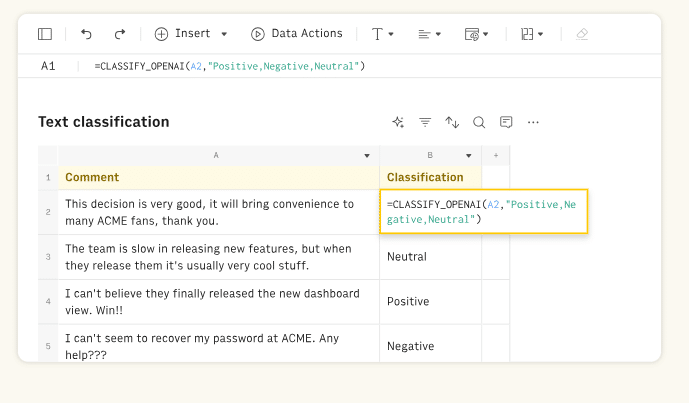
The first and most impactful thing AI can help with is analyzing large amounts of data. For a long time in CS, we’ve been collecting more data than we could reasonably analyze. This is where AI comes in – while CSPs have helped condense that into true insights, AI has the potential to scan exponentially more data sets, conducting sentiment analysis, and delivering insights you can use.
You might be thinking that sounds overly complex – not necessarily. Some methods – like the Rows example below – can be simple and quick to use while providing great insights in a flash.
Here are some basic steps for unlocking advanced analytics for your customer success workflow:
Identify all your data sources. Start by making a list and determining how data from your various tools can be exported. This step will make the rest easier and faster.
Determine the scope of your AI effort. Disparate efforts will only yield disjointed results. Make a conscious effort to focus on one specific goal, and the steps towards achieving it will become that much clearer.
Make a list of the stakeholders. Who needs to have access to the resulting insights? Make sure your team has visibility and add all other stakeholders.
Feed the data into your preferred AI BI tool. Determine which one best suits your needs. Examples include: Rows, AnswerRocket, Team-GPT, Luzmo, and Tableau.
Generate insights to feed back into your CS workflows. Next, start generating insights and use your CSP to take action based on them.
Example of text classification by sentiment in Google Sheets using Rows. More on how to use AI for data analysis here.
Your AI is only as good as your data map. Clean events, stable identifiers, and feedback loops beat any shiny model—otherwise you’ll just automate guesswork.
– Philipp Wolf, CEO, Custify
2. In-depth Personalized Interaction, at Scale
Armed with new datasets and new insights, apply them to your existing workflow:
Fine-tune your customer segments and create new cohorts. Newly-unlocked details about your accounts can reshape the way you think of them.
Optimize timing, duration, and precision. Something I also mentioned in our piece on AI tactics for retention – use your preferred AI to determine the right moment, messaging, and length of interaction for all your customer engagements.
Create specific playbooks based on new insights. Target new and updated segments with a revamped approach that takes into account new information.
Example:
You might notice customers for smaller enterprises (series A-B SaaS) prefer more regular check-ins (1-2 per week).
Despite this, you see they don’t normally respond on Slack (5+ messages never got a reply), but are likely to reply on WhatsApp (4 calls were set up after WhatsApp discussions).
Using your AI assistant, you determine that short check-in messages at the beginning of the week on WhatsApp are the best approach to drive engagement.
You also find that customers aren’t always responsive, and account circumstances change often, so you have to stay agile.
Using your customer success platform, you proceed to set up automatic playbooks that trigger every Monday morning: checking whether it’s ok to engage, sending a message, and then notifying you as it goes out.
3. Generate Automation Flows Quickly and Efficiently
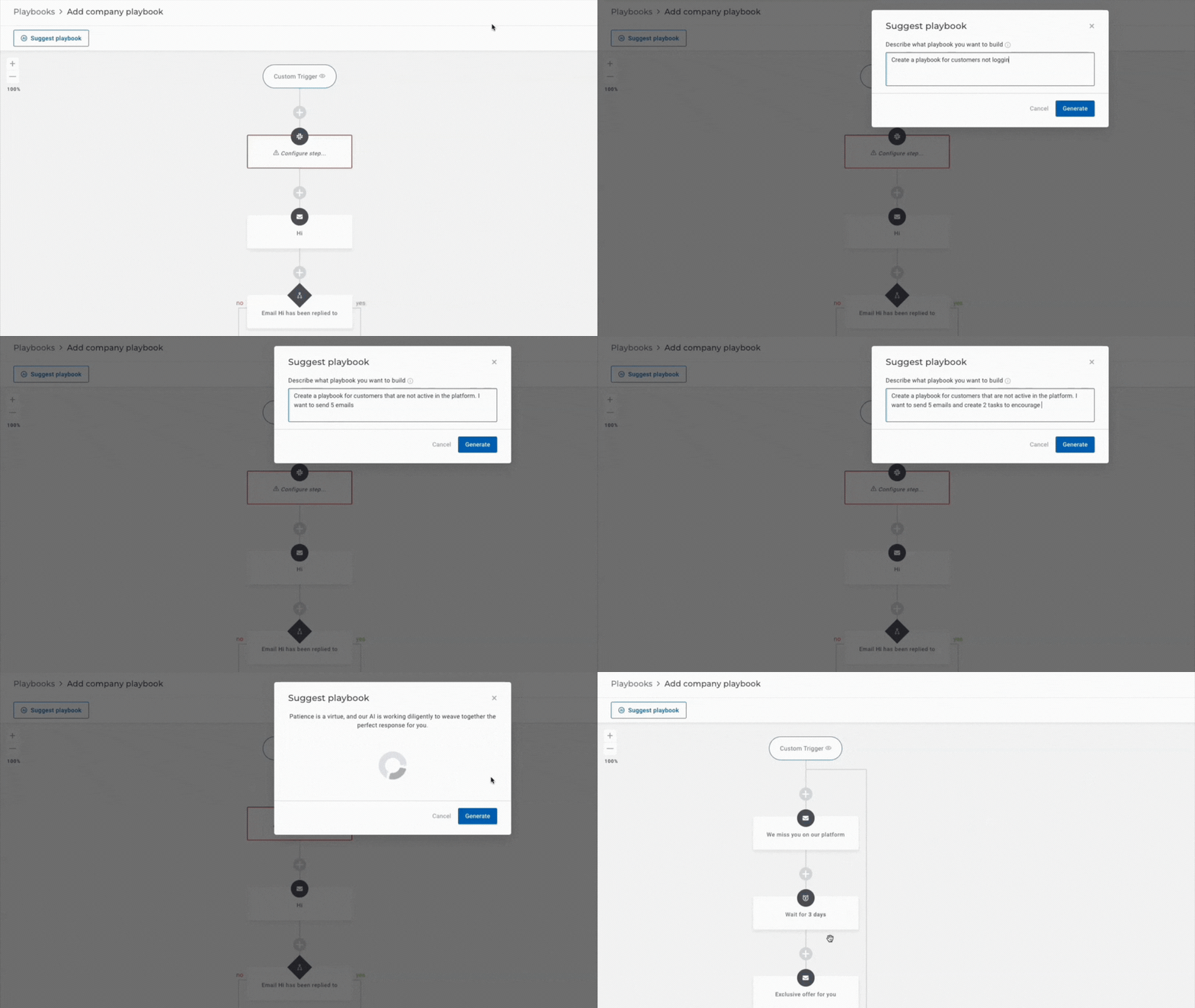
Speaking of automation flows – AI is making it increasingly easy to generate them on the fly. Using powerful customer success tools such as Custify, you can simply write a prompt about what type of automation you want, and the tool will automatically generate all the steps. All that’s left on your end is to simply review each item and make any necessary adjustments.
Example: if you notice a significant portion of your customer base isn’t engaging with your product, you can use AI to generate automation flows that send emails encouraging them to re-engage.
4. Propensity Scoring for Renewal & Expansion (Real-Time)
AI also enables a more advanced way to track renewals and capitalize on expansion opportunities. Simply train a lightweight model on product usage, license utilization, support patterns, C-suite inputs, and billing signals. Then, using this model, produce scores for renewal probability and expansion likelihood per account.
How to implement:
Pull the last 6–12 months of labeled account statuses (renewed, expanded, churned).
Engineer simple features first (logins, core-feature depth, time-to-value, seat fill, ticket repeats, NPS trend, dunning events).
Train an initial version of the model using standard algorithms, such as logistic regression or XGBoost, to establish a performance benchmark.
Push scores to your CSP and trigger playbooks:
High-renewal + high-expansion: reach out and attempt upsells / cross-sells.
Low-renewal: push into proactive engagement flow
Monitor and update the model quarterly to keep it relevant and prevent drift.
5. In-Depth and Extensive Customer Journey Mapping
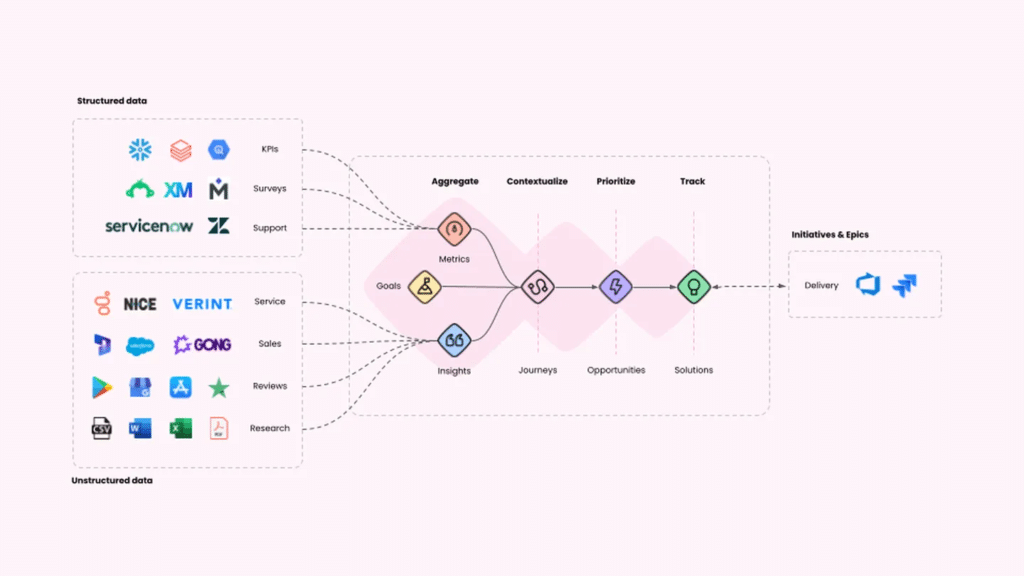
With AI taking the business world by storm, multiple micro-revolutions are happening at any given time. One such example comes from the area of experience intelligence. Tools such as TheyDo’s Journey AI, Contentsquare’s Sense, or MyMap now exist to give companies a more holistic view of their customers’ journey.
One thing these tools get right is that they reduce the quantity of cluttered, disparate data points, simmering them down to something digestible. This, I believe, is one of the key competitive advantages AI can give your organization.
The path to competitive advantage isn’t more dashboards or another department-specific project. It’s a unified, living view of the journeys that matter.
– Martin Palamarz, Co-founder & Chief Customer Officer @ TheyDo
Example: here’s an illustration of how journey analytics and experience intelligence tools that use AI can condense your data into actionable points:
Source: Journey management: A path to truth in a world of noise
6. Using Custom GPTs as Personal Customer Success Assistants
LLMs such as ChatGPT often give subscribers the option to have more advanced GPTs specific to their needs. One example is the GTM Assistant from OpenAI.
Having a personal AI customer success assistant enables a range of efficiencies beyond what regular LLMs can do:
Advanced customer research. On a typical workday, I use AI to discuss current customer realities and determine what the ideal next steps are. With a specific customer success GPT, the process is much smoother as the tool already has access to the essentials and can give me short briefs, account overviews, alongside a list of priorities.
Deeper customer relationships. An LLM ally can help CSMs nurture customer relationships by offering advice on targeted engagement tactics, pointing out hidden facts about specific accounts, or recommending cross-sells or upsells that could increase revenue, along with customer satisfaction and loyalty.
In-depth product Q&A. Even the best CSMs can have trouble with in-depth product knowledge, particularly if their product is highly complex, requiring advanced technical knowledge. With a custom GPT trained on product data, the CS team can simply ask what they don’t know or the best way to explain something to a customer.
Overall, such a customizable tool will enhance productivity and reduce fact-finding work as well as busywork, allowing us to focus more on strategy and ideation (for which the assistant can also help, acting as a partner to throw ideas at and get real-time feedback and suggestions).
7. Intelligent AI Account Summaries
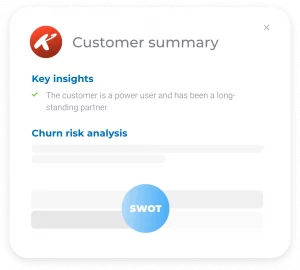
A simple but effective way to use AI for customer success is through customer summaries. In Custify, we have short AI summaries for each account inside the customer 360 view. Here are some advantages I’ve seen in my day-to-day:
Great for new hires. New CSMs often need a bit of help to get the ball rolling. Account summaries are great when there’s so much information they need to process quickly.
Good start to the day. At any given point in CS, we have multiple fires waiting to be put out. So when I begin my day, it’s helpful to see the account summary next to my key customers. That brings me right back into the tasks at hand, ready to continue the work I paused yesterday.
Great for medium touch accounts. Sometimes accounts don’t need frequent check-ins, but still require you to review their experience and offer assistance on occasion. Account summaries are a great way to see what’s been happening with a customer and step in with the appropriate context.
8. Using AI in Meetings, QBRs, and EBRs
One of the most common professional ways to use AI in a business setting is in meetings. Tools like Fireflies, Krisp, Otter, or even Zoom can help you take notes, remember important information, and converse with the AI engine about what’s been going on in your meetings.
These AI meeting assistants can give CSMs multiple advantages when it comes to customer interactions, acting like:
A good assistant who remembers key details about customer interactions.
A smart planner who can help set up your next QBR or EBR.
A live note-taker that shows you a summary of the meeting after it’s done.
A conversation partner who knows what happened in the meeting.
Meeting notes in Otter AI.
Furthermore, AI in general can help prep meetings in other ways:
With AI summaries, you can put together more comprehensive QBRs and EBRs.
Customer portals can be filled in with the help of your customer CS GPT, allowing for better, more purposeful interactions.
Also, with your AI assistant, you can brainstorm more effective methods of leading your meetings and delivering value to your customers.
9. Proactive Support, Sentiment Analysis, and Churn Prevention
A key CS tactic is proactive engagement – talking to customers before their problems become reasons for churn, sometimes before they even know they have a problem. Naturally, AI can enhance that process too.
One of the most intriguing ways to do that is through sentiment analysis aided by AI. I have already highlighted an example in our article on AI retention tactics, but essentially, it implies:
Feeding the data (such as a call transcript or a customer email) into a sentiment analysis tool such as Qualaroo, Yogi, or Symbl AI.
Receive insights from the emotion analysis model.
Review the information manually for any nuggets of information that can be useful.
Upload sentiment analysis into a different tool, such as Snoflwake or one of the experience analysis tools presented at point 1 on this list.
At the end of the process, you should have plenty of new and interesting datapoints to work with for:
Improving product experience
Launching a voice-of-the-customer program
Conducting market research
Enhancing proactive engagement
Conducting a border sentiment analysis of your brand
10. Free Your Workflow from Repetitive, Time-Consuming Tasks
All of the tactics highlighted above can be used to free up workflows. Not only are LLMs powerful tools for strategy, research, and customer engagement, but the entire breadth of AI tools available to CSMs allows us to remove busywork from our day-to-day tasks and improve our focus on customers.
Advances in agentic AI could go even further in that direction. AI agents are already good enough to automate many parts of a CSM’s workflow, from customer health scores to customer support assistance, upsell tactics, customer monitoring, and more.
What you choose to automate will come down to personal preference and your overall CS strategy. CSMs using AI agents should aim to improve efficiency in delivering customer outcomes while making sure their time isn’t spent correcting work done by AI.
AI in Customer Success – Things to Consider
Humans vs AI? No. Humans + AI
According to a recent CX Annual Insights report, 88% of customers are satisfied with human-led AI service interactions, while just 60% are satisfied with AI-only interactions.
The conclusion is clear: despite the trend of AI replacing support workers, humans are not just necessary but essential for customer satisfaction. AI can unlock never-before-seen efficiencies, but it’s still humans’ job to dictate the strategy, engagement tactics, and fine-tune their AI tools to improve their work quality and speed.
The highest-ROI AI setups keep humans in the loop. Let AI triage signals, surface patterns, and draft; let CSMs decide, coach, and build trust. Replace conversations with automation and churn goes up.
– Philipp Wolf, CEO, Custify
How to Track AI Implementation in CS: Metrics and Measurement
If you’re implementing AI, you’ll need to actually track how it’s doing. To that end, here are a few metrics to look out for:
Improved eNPS. Keeping in line with my previous post, AI should make your CSMs feel better about their jobs and performance. A great way to track the impact of AI on employee workloads and morale is by measuring your employee net promoter score. If it’s going down, you might have an issue with AI adoption.
Lower customer churn rate. Adding AI into your CS workflows should help lower your churn. If its impact is negligible or non-existent, you might want to review your AI adoption.
Faster time-to-value. By adopting AI solutions, you should be able to determine what customers want faster and deliver those outcomes with increased reliability and speed, lowering their time-to-value.
More streamlined CSM ratio. Through productivity enhancements, AI tools should make your CSMs feel less pressure from their many accounts. That means more time for complex interactions and less time spent on busywork.
Improved customer health scores. Customers overall should feel the positive impact of your AI solutions. If done right, you should see an overall increase in their health scores.
Ethics and Privacy when Using AI in Customer Success
AI is not the ultimate holder of truth. In fact, many AI models can hallucinate or have inherent biases.
To that end, make sure to double-check all the specific information you receive – check the sources, verify that they’re reliable, and make sure the information is factual and not distorted to better serve your prompt. While some tools have built-in checks to ensure accuracy, not all of them do. As such, it’s a good idea overall to be vigilant with AI answers.
Lastly, don’t forget to consider your users’ privacy when talking to AI engines. You can either remove proprietary information and customer data before talking to the LLM, or ensure none of it is recorded by the tool (less reliable).
Will AI Revolutionize Customer Success?
In our opinion, AI is already changing the world of customer success. Whether it will be a revolution or just another paradigm shift is difficult to say at this moment. What is clear is that we need to stay up to date with current developments and, as CSMs, always make sure we’re using the tools at our disposal.
CustifyAI Opens the Door to Enhanced CS Workflows
At Custify, we’ve been hard at work on building AI tools that are actually helpful and complement CSM work instead of replacing it with cookie-cutter LLM responses that don’t fit the bill.
Interested in how Custify can drive up your CS team’s efficiency and boost your revenue with the help of AI? Schedule a demo with the Custify team, and we’ll walk you through everything we’ve been cooking up!
Five of us, friends since primary school, decided to celebrate our 70th year in style with nine days of togetherness. We chose Sri Lanka and Flying Squirrel Holidays made our travel itinerary and arrangements. Sri Lanka, though in many ways is like parts of Southern India, has so much to offer – it has natural beauty, ancient history, Buddhist temples, stupas and statues that are truly impressive, colonial ports, buildings and churches, hill country, lush forests, as well as stunning beaches and seascapes.
It also offers a range of excellent hotels with amazing food spreads, clean air, polite people, orderly traffic. It has something for everyone! What was also very encouraging was that whomever we spoke to seemed confident about the future under the leadership of Anura Kumara Dissanayake of the National People’s Power (NPP). They came to power after the overthrow of Rajapaksa in 2022 after the government announced that it was defaulting.
Reaching Sri Lanka and starting instantly
Despite having left Kolkata before dawn, making our connecting flight in Chennai, we drove to our hotel, dropped off our bags and were ready to make the most of the day. After a delicious Sri Lankan lunch, we headed off to the Gangaramay Temple in the heart of the city.
What was most impressive for me in this Buddhist temple cum museum was the rows of Buddhas, seated in neat lines, which made their way up to the spire. We explored the large grounds and admired the statutory and the artifacts, which included a carving of the Buddha on a grain of rice, only visible with a magnifying glass. Then we visited Seema Malaka that rests on a floating platform on a lake nearby. Though close in distance the two temples could not have been more different in style and ambience. While Gangaramay was cluttered, Seema Malaka was serene, minimalist, and open lending charm to the water body.
Of crabs and clandestine trysts
Two of the most intrepid of our five, trooped off to the Ministry of Crab, a renowned Sri Lankan dining experience famous for the delicate preparation of the enormous crabs it serves. While our two diners savoured the experience the rest of us luckily had crab legs, great fish preparations, and relished many other kinds of seafood throughout the trip.
Before leaving Colombo, we visited the Mount Lavinia Hotel, constructed in 1806 as the governor’s residence. We heard about the romance between the British Governor, Sir Thomas Maitland, and a local woman, Lovina. We went inside the tunnel he built that lay between a disused well near Lovina’s home to the wine cellar in the Governor’s mansion. I am sure their clandestine trysts made their affair ever more alluring.
Dambulla Cave Temple and Geoffrey Bawa’s masterpieces
The next day we drove to Dambulla, as one of my friends and I wanted to see the Buddhist caves that were developed from the first century BC right up to the eighteenth century. Though I had visited the caves before to experience their quiet majesty, the intricate paintings and the massive and multitudes of Buddhist statues, they once again took my breath away. The caves are among the most impressive of sites I have even seen, and I have travelled extensively across the world.
From this spiritual historically layered site we made our way to the very contemporary Kandilama hotel designed by the incredibly famous Geoffrey Bawa. This hotel, tucked away amid a forest with views of an enormous lake that borders the property, is a masterpiece of design. Bawa, brings together nature and stone in a monumental and inspiring communion, to create a truly sublime space for visitors.
After experiencing Kandilama we made sure we visited his estate – Lunuganga – which is an exclusive get-away in Bentota. We took the tour of his garden which was once a rubber and cinnamon plantation which is also on the shores of a lake that leads into a river. On this property he has not only built beautiful interior spaces but “designed” several of the massive trees on his property. He constructed walls around the towering mahogany to make the roots form what looks like an above ground curtain. He used and transformed found objects to merge with the landscape with an exquisite environmental sensitivity.
A Sacred Tooth Temple and a Kingdom from Kandy
At Kandy we especially enjoyed our visit to the Sacred Tooth Temple as it was a day when the shrine was open, and devotees flocked there offering flower garlands, artistically arranged flower filled platters and straw boxes of flowers to the deity.
From Kandy we drove a long distance to Anuradhapura, the capital of the ancient Anuradhapura Kingdom. While there was much to see what was of great historical significance was the Thuparamay temple, the oldest Buddhist temple founded in the third century BC, and the massive grounds and impressive Ruwanwelisaya stupa were truly awe inspiring. The level of engineering that it took to build the stupa is mind boggling.
Boat rides and beach time
We spent our last few days exploring Galle, going for a boat ride on the Madu river where we visited a small cinnamon island, and relaxed on the beach. Even our swim at the beach near Bentota was extraordinary. I spotted a number of small turtles sharing the waves with me. They seemed as joyous as I was in the warm water gliding by with the gentle waves.
Before our trip ended, we stopped at a roadside stall where we bought Sri Lankan souvenirs, shopped in Colombo, and managed to have tea at the very elegant Galle Face hotel that is one of the oldest hotels east of the Suez. It was established in 1864. We sipped tea as the waves crashed against the hotel boundary wall, enjoyed the vast ocean view and felt the foam spray upon us.
Our holiday went without a hitch and even the weather surprised us. Though it was monsoon we did not have a single rainy day but enjoyed clear skies that made our visit pitch perfect.
Thank you, Flying Squirrel for organising our trip and taking care of every detail for us. Sri Lanka, though small, is truly a gem that has something to please everyone. We certainly enjoyed its sparkle.
Jael Silliman is an author, painter, scholar and women’s rights activist.
Experience the charming Zanzibar beaches across the archipelago. Powdery white sand, swaying palms and waters so blue that it almost looks unreal. Few places on earth embody tropical beauty as completely, as Zanzibar does. Add to it centuries of history, vibrant markets and traces of old-world charm and this destination becomes much more than just a beach escape. The pristine image of Zanzibar beaches has become iconic, drawing travellers from every corner of the world to experience life on the islands in Zanzibar. To many travellers Zanzibar is a most intriguing archipelago full of hidden treasures that they come to discover and relish.
This archipelago in Tanzania can boast of a cultural legacy shaped by centuries of trade. It also has extraordinary biodiversity both above and below the ocean surface. At the heart of it lies Unguja, often called Zanzibar Island, famous for its vibrant Stone Town. Beyond Unguja, smaller islands unveil hidden worlds like giant tortoises on Prison Island, coral reefs near Mnemba and sandbanks like Nakupenda that shift with the tides.
The islands in Zanzibar encompass a fascinating world that tourists love to explore.
Do check out: Off-season in Thailand: Why it’s worth it! – Flying Squirrel Holidays
Jump to Sections
Best time to visit Zanzibar
Top 10 Zanzibar Islands to explore
Luxury resorts in Zanzibar
How to get around Zanzibar
Tips for a better travelling experience
How Flying Squirrel Holidays can help you
Best time to visit the Zanzibar islands
Choosing the right season can transform a trip to Zanzibar from memorable to unforgettable. The dry season, stretching from June to October, is widely regarded as the best period to experience the archipelago. During these months, the skies are clear, the seas are calm, and the sun illuminates the famous Zanzibar beaches in their full tropical glory. Snorkelling and diving conditions are excellent, making it the prime time to explore vibrant coral reefs and rich marine life.
From November to March, the weather turns warmer and the islands carry a lively, festive energy. This is when the turquoise waters around the Zanzibar beaches appear especially inviting for swimming and kitesurfing.
The rainy season arrives in April and May, bringing heavier showers but also offering quieter ambience and reduced accommodation prices. Whether travelling in peak season or off-peak, the archipelago ensures that the allure of Zanzibar never fades.
Top 10 Zanzibar islands to explore
Zanzibar isn’t merely one island; it’s a vibrant archipelago where each island tells its own unique story. While Zanzibar beaches are celebrated worldwide, the surrounding islets reveal coral reefs, cultural gems and tranquil escapes that make the archipelago unforgettable. Here are ten islands that showcase the diversity of Zanzibar.
Unguja (Zanzibar Island)
Unguja, often referred to simply as Zanzibar Island, is the beating heart of the archipelago and the most popular destination for travellers. Known for its rich cultural history, this island is home to the UNESCO-listed Stone Town, a maze of winding alleys, spice-scented markets and grand architecture that tells the story of centuries of trade and cultural exchange. From the lively shores of Nungwi and Kendwa to the more tranquil stretches at Matemwe, Jambiani, and Paje, this island has fascinating beaches.
What makes Unguja remarkable is its balance of heritage and natural beauty. Spice plantations dot the countryside, where guided tours justify the name “Spice Island.” Inland, lush forests like Jozani provide the chance to spot the rare red colobus monkey. Meanwhile, the east coast offers ideal conditions for kitesurfing, while the north and south are better suited for swimming and relaxation.
What to expect: A dynamic blend of history, culture, and seaside charm.
Ideal for: First-time visitors, culture seekers and those eager to enjoy beach life.
Unique experiences: Wandering around Stone Town, exploring spice farms and sailing at sunset on a traditional dhow.
Pemba Island
Just north of Unguja, Pemba Island—nicknamed the ‘Green Island’—boasts lush hills, fertile valleys and pristine landscapes waiting to be explored. Far less developed than its southern neighbor, Pemba offers an atmosphere of seclusion that feels worlds apart. Known as a diver’s dream, its coral reefs are considered some of the richest in East Africa, teeming with tropical fish, manta rays, and turtles. Unlike the busier shores of Unguja, this place is largely untouched, framed by mangroves and dotted with traditional fishing boats that give the island a timeless charm.
Although life here flows gently, there are lots of things to do on Pemba island. Swahili traditions thrive in the villages, clove plantations fill the air with their sweet aroma, and meandering dirt paths reveal secluded bays stretching toward an endless horizon where one can go for long walks. While luxury resorts are fewer here, the ones that exist blend seamlessly into the natural environment, making them ideal for privacy and tranquility.
What to expect: Remote, scenic landscapes and reefs that are among the most pristine in the Indian Ocean.
Ideal for: Honeymooners, diving enthusiasts and those seeking an authentic, uncrowded escape.
Unique experiences: Drift diving along untouched coral walls and visiting clove plantations.
Mafia Island
Though technically part of the Mafia Archipelago, Mafia Island is often included in conversations about Zanzibar due to its striking natural beauty and thriving marine life. Unlike the bustling main islands, Mafia offers a quieter, more remote experience. The island is most famous for its marine park, which protects one of the richest ecosystems in East Africa. Here, coral reefs host over 400 species of fish, while migrating whale sharks glide through turquoise waters from October to March.
One of the best islands in Zanzibar, the charm of Mafia Island lies in its adventure and serenity. Its fishing villages reflect traditional coastal life, while eco-lodges provide sustainable accommodations close to the sea. Inland mangroves and coastal forests add depth to the island’s landscape, giving travelers opportunities for birdwatching and kayaking.
What to expect: An untouched island where vibrant marine life thrives and the pace of life slows to a gentle rhythm.
Ideal for: Adventure divers, nature lovers and travellers looking for off-the-grid experiences.
Unique experiences: Swimming alongside whale sharks, diving in the protected Chole Bay.
Do read: 10 Best scuba diving destinations – Flying Squirrel Holidays
Latham Island
Latham Island, or Fungu Kizimkazi as locals call it, ranks among the most secluded and rarely visited islands in the Zanzibar Archipelago. Sitting far out in the Indian Ocean, this small coral outcrop is uninhabited and primarily recognized for its ecological significance. It serves as an important breeding ground for seabirds and turtles, making it a destination treasured by conservationists and adventurous travelers alike.
This isolated island is not a mainstream tourist spot but rather a haven for marine researchers, birdwatchers and experienced divers. Its surrounding waters drop steeply into the ocean, creating rich conditions for big-game fishing and advanced diving. The coral reefs here are spectacular but largely unexplored, offering glimpses of marine life rarely seen closer to shore.
What to expect: A raw, rugged island focused on wildlife and marine exploration rather than traditional tourism.
Unique experiences: Watching flocks of seabirds nesting on rocky cliffs, spotting sea turtles along the sandbanks and diving in crystal clear waters.
Prison Island (Changuu)
A brief boat journey from Stone Town brings you to Prison Island, or Changuu, a favorite destination for day-trippers exploring the Zanzibar Archipelago. Despite its ominous name, the island was never used as a prison for criminals; instead, it once housed a quarantine station during colonial times. Today, it is better known for its colony of giant Aldabra tortoises, some of which are over a century old. Visitors can walk among these gentle creatures, feed them and learn about their conservation. Beyond its historical sites and wildlife, the island boasts some of the most picturesque turquoise waters. Snorkeling is a major draw, with vibrant reefs around Changuu teeming with marine life and the island’s colonial-era ruins add an extra layer of fascination, offering visitors a deeper glimpse into Zanzibar’s rich past.
· What to expect: A compact island that combines history, wildlife and scenic beauty in one stop.
Ideal for: Families, first-time visitors and visitors seeking a convenient outing close to Stone Town.
Unique experiences: Walking alongside giant tortoises, exploring historic ruins, and snorkeling in clear waters just off the coast. Pemba island is ideal for a day trip.
If you are planning a trip to Zanzibar just tell us what’s on your mind and we will take care of everything.
Nakupenda Island
Nakupenda, meaning “I love you” in Swahili, is one of Zanzibar’s most enchanting natural wonders. Known as “The Vanishing Island,” it is a sandbank that emerges and disappears with the tides, creating an otherworldly setting in the middle of the ocean. Its soft white sand rivals some of the most beautiful Zanzibar beaches, yet its temporary nature makes every visit feel magical and fleeting.
A visit to Nakupenda is often combined with a boat trip from Stone Town and many tours include freshly prepared seafood barbecues on the sand. The waters here are shallow, making it a safe and enjoyable spot for families, while snorkelers are rewarded with schools of colourful fish dancing along nearby reefs.
What to expect: A sandbank paradise that exists only for a few hours each day, shaped by the rhythm of the tides.
Ideal for: Honeymooners, photographers and travellers seeking a romantic or unique escape.
Unique experiences: Enjoying a beach picnic on the ocean, snorkeling in turquoise waters, and walking barefoot on sand that feels like silk.
Tumbatu Island
Tumbatu Island, lying off the northwest coast of Unguja, is one of Zanzibar’s most culturally rich yet lesser-known islands. Access is limited, requiring special permission from village elders, which has helped preserve its traditions and way of life. Tumbatu remains deeply rooted in its Swahili heritage. Visitors are welcomed into fishing villages where dhows rest along the shoreline and life follows rhythms unchanged for centuries.
The island is also a haven for divers and snorkelers, with coral reefs that remain vibrant and relatively untouched. The ruins of ancient Shirazi mosques on Tumbatu Island stand as a reminder of the island’s rich historical importance in the archipelago. The island emphasizes authenticity over luxury, presenting an atmosphere far removed from the polished resorts lining other Zanzibar beaches.
What to expect: A secluded island steeped in history, culture and natural charm.
Ideal for: Culturally curious travellers, history enthusiasts and those who prefer quiet alternatives.
Unique experiences: Exploring centuries-old ruins, meeting villagers who maintain traditional lifestyles and snorkeling over unspoiled reefs.
Uzi Island
Situated off Unguja’s southern coast, Uzi Island is a hidden treasure reachable via a causeway during low tide. The island is dominated by dense mangroves, small fishing villages and abundant birdlife, offering an authentic slice of coastal life in Zanzibar.
Walking along these sandy shores, the only sounds one can hear are gentle waves and the calls of seabirds. Uzi also offers kayaking through its mangrove channels, a unique perspective on the island’s intricate ecosystem.
What to expect: Tranquil surroundings, abundant wildlife and an authentic village experience.
Ideal for: Eco-travellers, photographers and anyone seeking quiet retreats away from mainstream Zanzibar beaches.
Unique experiences: Kayaking through mangrove forests and observing nesting birds.
Mnemba Island and Atoll
Off the northeast coast of Unguja lies Mnemba Island, a private atoll that defines exclusivity and luxurious seclusion. Surrounded by one of Zanzibar’s most vibrant coral reefs, it offers crystal-clear waters and abundant marine life. The island’s privacy and limited access ensure that visitors can enjoy sun-soaked sands without crowds, making it ideal for honeymooners and luxury seekers.
The sparkling beaches of Mnemba feel untouched, offering a rare combination of natural beauty and exclusivity.
What to expect: High-end accommodations, pristine waters, and well-preserved coral reefs.
Ideal for: Honeymooners, couples and travellers seeking a secluded getaway.
Unique experiences: Snorkeling with colorful reef fish and dolphins, private beachfront dining and exploring the coral gardens surrounding the atoll.
Chumbe Island
Chumbe Island is a protected marine reserve and eco-tourism haven located southwest of Unguja. Renowned for its award-winning eco-lodge and some of the most diverse coral gardens in the Indian Ocean, the island exemplifies sustainable tourism in Zanzibar. Unlike the more frequented islands in Zanzibar, Chumbe’s shores are untouched, offering a rare opportunity to enjoy pristine sand and clear waters in complete seclusion.
The island’s coral reefs are home to an incredible variety of marine life, making it a paradise for snorkelers and divers. The balance of marine and terrestrial ecosystems creates a holistic natural experience.
What to expect: Eco-friendly accommodations, thriving coral reefs, and secluded beaches.
Ideal for: Eco-travelers, nature enthusiasts, and those seeking a quiet retreat away from busy Zanzibar beaches.
Unique experiences: Visitors can explore the reef on guided eco-tours, discovering vibrant fish, sea turtles and delicate corals. Walking trails wind through lush vegetation, providing habitat for rare birds and native plants.
Also read: Best time to visit Seychelles – Flying Squirrel Holidays
Luxury resorts in Zanzibar islands
Zanzibar is home to some of the most luxurious resorts in the Indian Ocean, offering world-class hospitality alongside access to the archipelago’s iconic beaches. These resorts combine comfort, privacy, and stunning natural surroundings to create unforgettable experiences for travelers seeking upscale accommodations.
Park Hyatt Zanzibar Located in Stone Town, the Park Hyatt combines historic elegance with contemporary luxury. Guests can relax in sophisticated rooms featuring private terraces, sweeping ocean views and a rooftop pool that overlooks the historic streets below. While the resort offers city conveniences, its curated excursions bring travelers to nearby beaches. Personalized spa treatments, fine dining and guided tours to spice plantations further enhance the luxurious stay.
Baraza Resort & Spa Nestled on the southeastern coast near Bwejuu Beach, Baraza Resort is a Swahili-style retreat offering villas with private pools and ocean views. Guests can indulge in beachfront dining, holistic spa therapies and traditional dhow cruises. The resort’s location ensures immediate access to a tranquil beach, perfect for sunbathing, snorkelling or romantic walks along white sands. Attention to detail in décor and service reflects the height of luxury.
Zuri Zanzibar Set on the western shores of Kendwa, Zuri Zanzibar provides an eco-conscious luxury experience with stunning oceanfront villas and suites. Infinity pools overlook the sparkling waters, and yoga sessions on the beach enhance wellness-focused stays. The resort offers curated culinary experiences, including seafood feasts and sunset cocktails on the sand, blending nature with indulgence.
The Residence Zanzibar Located on the southwest coast near Kizimkazi, The Residence features expansive villas with private pools and direct access to the beach. Activities include diving, snorkeling, and dolphin-spotting excursions. The resort also emphasizes holistic wellness with spa treatments and private yoga classes, ensuring guests enjoy both luxury and connection with the natural surroundings.
Essque Zalu Zanzibar Perched above Nungwi, Essque Zalu merges modern design with traditional Swahili architectural elements. Villas and suites feature ocean-facing balconies, infinity pools and private butler service. Guests can enjoy water sports, romantic dinners, or simple relaxation on the sand. Dining options include gourmet seafood restaurants emphasizing local flavors.
Do check out: Luxury resorts in India that redefine opulence – Flying Squirrel Holidays
How to go around the islands in Zanzibar
Exploring the Zanzibar Archipelago involves a mix of boats, dhows, ferries, and local transport, offering both convenience and adventure while connecting travelers to islands. Understanding the best ways to navigate the islands ensures smoother trips and maximizes time spent enjoying the archipelago’s natural and cultural highlights.
By boat and dhow The most common way to reach outer islands like Prison Island, Nakupenda, Mnemba, and Chumbe is by boat. Traditional dhows, often equipped for snorkeling and day trips, provide a scenic journey through turquoise waters. Speedboats or private charters offer faster travel and are ideal for visiting remote beaches or sandbanks. Many operators include snorkeling stops, allowing visitors to explore vibrant coral reefs and swim in waters fringed by powdery sand.
By ferry Ferries connect Unguja to Pemba and other nearby islands. These are longer journeys but offer a comfortable and budget-friendly option for travellers. Watching the ocean pass by while heading toward secluded Zanzibar beaches adds a sense of anticipation and adventure. Ferries often accommodate luggage and bicycles, making multi-island trips feasible.
By local transport Once on Unguja or Pemba, local transport includes taxis, rental cars, and minibuses. These vehicles provide access to inland attractions and spice farms. Hiring a local guide or driver is highly recommended, as it eases navigation and provides insights into hidden coastal spots and quiet stretches of sand.
Private charters For luxury seekers, private yachts or charters offer bespoke itineraries, allowing travelers to visit multiple islands in Zanzibar. From sunrise to sunset, private trips provide flexibility for diving, snorkeling, or simply enjoying deserted sandbanks without crowds.
Tips for a better travelling experience
Exploring Zanzibar’s islands is rewarding when prepared with practical knowledge. Following these tips enhances safety, comfort, and overall enjoyment while respecting local culture and the environment.
Transport: Ensure all inter-island transfers are arranged through licensed boat operators for safety and reliability. Reliable services ensure safe travel and smooth access to remote islands like Nakupenda, Mnemba, and Chumbe.
Cultural etiquette: Modest dress is recommended in villages and Stone Town. Respectful clothing helps maintain local traditions.
Money: Carry cash in Tanzanian shillings, as smaller islands and local markets rarely accept cards. This is particularly important when paying for boat rides, snacks or entry to secluded Zanzibar beaches.
Health & safety: Drink bottled water, avoid isolated beaches after dark, and respect marine life when snorkeling or diving. These precautions safeguard health while preserving the natural beauty of the islands.
Timing: Plan visits around tides to enjoy sandbanks like Nakupenda at their fullest.
Respect nature: Do not litter, step on coral, or disturb wildlife.
How Flying Squirrel Holidays can help you explore Zanzibar
Planning to explore the islands of Zanzibar? Flying Squirrel makes your journey effortless. We guide you to the best times to visit, recommend the most pristine beaches, and ensure you experience each island’s unique charm, from historic Stone Town on Unguja to the secluded sandbanks of Nakupenda.
For travellers seeking adventure or relaxation, we arrange smooth inter-island transfers, private tours and snorkeling or diving excursions at Mnemba, Pemba, or Chumbe. Our experts craft itineraries tailored to your interests like luxury stays, cultural exploration, wildlife encounters, or wellness retreats. We handle flights, hotels, transfers and guided tours and you can reach us over the phone 24X7.
You simply tell us your preferences and we take care of the rest, ensuring every day on Zanzibar’s islands is memorable.
Call +91 33 4052 5777 or visit www.flyingsquirrelholidays.com to start planning your perfect Zanzibar escape.
FAQs
1.What are the must-visit islands in Zanzibar? Unguja, Pemba, Mafia, Nakupenda, Mnemba, Chumbe, Uzi, Tumbatu, Prison Island, and Latham Island are the top destinations.
2.When is the best time to visit Zanzibar islands? The dry season from June to October is ideal. Travelers can enjoy clear skies and calm seas.
3.How do I get to the outer islands? Boats, dhows and ferries connect the islands. Using licensed operators ensures safety while reaching secluded Zanzibar beaches.
4.Are Zanzibar beaches suitable for first-time visitors? Yes. Unguja’s Nungwi and Paje beaches, along with Nakupenda, are accessible and scenic.
5.What activities can I do on the islands? Snorkeling, diving, sailing. Also, whale shark encounters on Mafia and turtle watching on Prison Island are unique experiences.
6.Can I stay overnight on the smaller islands? Some islands like Mnemba and Chumbe offer luxury eco-lodges. Guests enjoy exclusive access to private beaches.
7.How should I dress while visiting Zanzibar islands? Modest clothing is recommended, especially in villages and Stone Town. Swimwear is acceptable on beaches but local norms should be respected.
8.Is it safe to swim at Zanzibar beaches? Most Zanzibar beaches are safe for swimming. Avoid isolated beaches at night and always follow local advice regarding tides and currents.
9.What should I carry for a day trip to the islands? Bring cash in Tanzanian shillings, bottled water, sunscreen, and snorkelling gear.
10.Are Zanzibar beaches family-friendly? Yes. Beaches like Nungwi, Jambiani, and Nakupenda are ideal for families, offering shallow waters, soft sands and safe areas for children to explore.
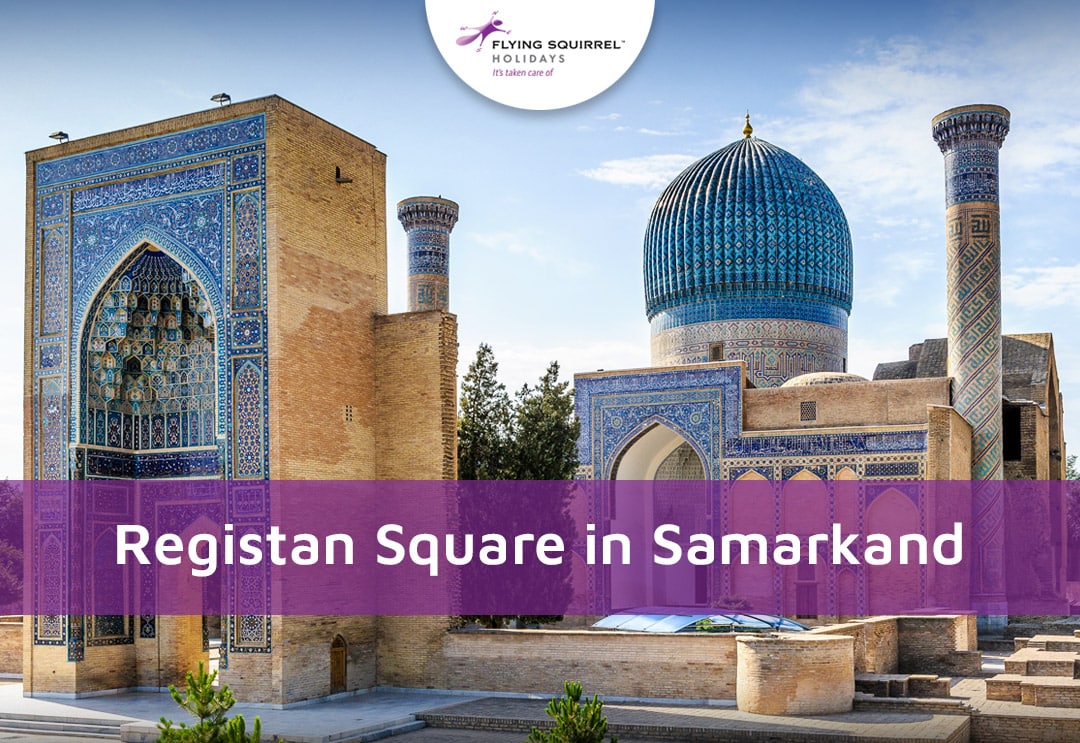
Few landmarks in the world capture history and beauty quite like Registan Square in Samarkand, the crown jewel of Uzbekistan and a shining reminder of Central Asia’s golden age. Once the bustling core of the ancient city, it still captivates visitors as a timeless masterpiece of Islamic architecture.
Recognized as a UNESCO World Heritage Site, Registan Square in Samarkand is more than a group of monumental madrassahs, it is a living symbol of culture, science and art. For centuries, the square served as a stage where rulers issued decrees, Silk Road merchants bartered their wares and scholars shared knowledge. Today, its three grand madrassahs — Ulugh Beg, Sher-Dor and Tilla-Kori — stand in harmony, showcasing intricate tilework, golden domes and fascinating design.
Also read: Unexplored Destinations In India – Flying Squirrel Holidays
Registan Square: A captivating experience
For visitors, Registan Square in Samarkand offers a rich blend of history and atmosphere. By day, the courtyards glow under the Central Asian sun, revealing details in every mosaic. By night, the square transforms into a magical stage, with concerts, light shows and celebrations that echo its past as a gathering place for the city.
To walk across Registan Square is to trace age-old eras of cultural exchange and artistic brilliance. Every arch, dome and patterned wall tells a story of ambition and legacy. It is not just an architectural wonder, but the beating heart of Samarkand —a site that continues to inspire awe.
No journey to Uzbekistan is truly complete without standing in the centre of Registan Square in Samarkand, where the spirit of the Silk Road still lingers.
Jump to Sections
History of Registan in Samarkand
The tale of Registan Square in Samarkand goes back to an era before its glittering mosaics and majestic madrassahs came into being. The name “Registan,” meaning “sandy place,” recalls a time when the square was a bare expanse where rulers spoke to their people, armies gathered and the city marked both its joys and sorrows.
As Samarkand thrived on the Silk Road, this space grew into the vibrant heart of daily life. Markets surrounded it, with merchants from Persia, India and China selling goods, artisans showcasing their crafts and farmers offering fresh produce. The bustle of trade and the mix of cultures made Registan Square in Samarkand not just a market place, but a vibrant crossroad of the ancient world.
Over time, visionary rulers transformed the space into the dazzling landmark seen today. They built madrassahs that elevated the square into a hub of knowledge, art and spirituality. Each era left its mark, adding to the architectural richness that centuries later would secure its place on UNESCO’s World Heritage List.
For today’s travellers, exploring Registan Square is about walking through layers of history and understanding its role in the birth and development of the city. Knowing details like Registan Samarkand opening hours ensures visitors can plan their trip well, but appreciating the square’s history makes the experience unforgettable.
The Three Madrassahs of Registan Square
Standing on the square today, one is embraced on three sides by madrassahs, each distinct yet together forming one of the most breathtaking ensembles of Islamic architecture. These were not just religious schools but places where science, art and culture thrived. These are a testament to Samarkand’s role as a beacon of learning in Central Asia.
Ulugh Beg Madrassah (1417–1420)
The first to be built was the Ulugh Beg Madrassah, commissioned by Ulugh Beg, grandson of the great conqueror Timur. Unlike many rulers of his age, Ulugh Beg was less interested in conquests and more fascinated by the mysteries of the universe. A renowned astronomer and mathematician, he envisioned his madrassah as a center of intellectual brilliance.
Finished in 1420, the madrassah stood as one of the era’s greatest centers of learning, housing nearly 100 students. Within its walls, scholars pursued philosophy, astronomy, mathematics and theology. Designed as a rectangle with a central courtyard, dormitory cells, and study rooms, the structure balanced practicality with elegance.
Its façade, flanked by soaring minarets and adorned with delicate tilework and ten-pointed stars, reflected Ulugh Beg’s passion for astronomy. To walk through this madrassah today is to step into the legacy of a ruler who believed that knowledge, not conquest, was the truest path to greatness.
Sher-Dor Madrassah (1619–1636)
Two centuries later, Emir Yalangtush Bahadur commissioned a new madrassah to rise directly opposite Ulugh Beg’s masterpiece. Intended as a mirror image, the Sher-Dor Madrassah turned out slightly taller due to shifts in the ground level over time. Its grandeur matched the ambition of its patron, who sought to revive Samarkand’s architectural glory.
The highlight of the Sher-Dor Madrassah is its monumental portal, adorned with rare imagery in Islamic art like golden tigers with radiant suns on their backs chasing graceful white deer. This bold design gave the madrassah its name, “Sher-Dor,” meaning “adorned with tigers.” The symbolism, blending strength and cosmic energy, became so iconic that it later evolved into a national emblem of Uzbekistan.
Though structurally inspired by its older counterpart, the Sher-Dor incorporated more advanced building techniques of the 17th century, reflecting the progression of architecture through time.
Tilla-Kori Madrassah (1646–1660)
The final jewel completing the ensemble of Registan Square was the Tilla-Kori Madrassah. Built by the same emir who commissioned the Sher-Dor. It was intended not only as an educational institution but also as a mosque. Tilla-Kori stands out for its opulent use of gold in the décor, a feature that inspired its name meaning “gilded.” The moment you step inside, the radiant golden interiors will take your breath away.
The central mosque is crowned with a striking blue dome, while the symmetrical façade balances the surrounding buildings, creating harmony across the square. For travellers standing in the courtyard of Tilla-Kori, the richness of its decor is unforgettable. Many even plan their visit carefully around Registan Samarkand opening hours to catch the golden interiors glowing under natural light, and to stay until the evening when the entire square shimmers under illumination.
Together, the Ulugh Beg, Sher-Dor, and Tilla-Kori madrassahs represent more than just architecture; they embody the enduring spirit of Samarkand.
Registan Square through the ages
As the golden age of the Silk Road faded, so too did the fortunes of Registan Square in Samarkand. Once the beating heart of a thriving city, the madrassahs gradually fell silent. Their courtyards emptied, their tilework weathered and their grand arches became shadows of former glory. In time, the square was so neglected that animals wandered freely through its halls, a striking contrast to the centuries when scholars and merchants had filled the space with life.
The turning point came in the Soviet era, when authorities recognized the immense cultural value of the architectural ensemble. Restoration efforts began on a monumental scale, with artisans and architects working meticulously to recover mosaics, repair minarets and bring back the brilliance of the façades. This labour was painstaking but transformative, ensuring that the artistry of the Timurid and later dynasties would not be lost to history.
Thanks to those efforts, the Square shines once again as the city’s cultural centrepiece. Today, visitors can admire it as much as travellers did centuries ago. By day its colours dazzle, and by evening light it becomes a stage of magic, affirming its place as the living soul of Samarkand.
Also read: Rajasthan Itinerary Guide: Plan Your Perfect Royal Escape – Flying Squirrel Holidays
Best time to visit and opening hours
The best time of the year to explore Registan Square in Samarkand is during spring and autumn. From April to June and September to October, the weather is at its most pleasant—warm days, clear skies and cool evenings create the perfect setting for wandering through the square. These months also coincide with cultural festivals, when music, dance and local traditions bring the heart of Samarkand to life. Summer, on the other hand, can be intensely hot, while winter offers quieter visits but with a chill that makes long hours outdoors less comfortable.
Beyond the seasons, the time of day makes a big difference. Early mornings are ideal for travellers who enjoy peace and space to themselves. With the square almost empty, the courtyards feel serene and the golden light of sunrise brings out the detail in the mosaics. In the evening, the Square transforms again. As the sun dips behind the city, the domes and façades glow with rich color before the illumination begins. Nighttime light shows are especially magical, turning the square into a dazzling spectacle.
Reaching the Square is simple. Thanks to its central position, it is within walking distance of many hotels, allowing travellers to approach much in the same way as Silk Road merchants once did. Affordable taxis are readily available, and buses connect the area with other parts of the city for those who prefer local transport. However when you arrive, the moment the madrassahs come into view is unforgettable; their immense portals and intricate tiles rising over the city’s heart.
By planning around both the seasons and Registan Samarkand opening hours, which are usually from 8 am to 7 pm and November to March between 9 am and 5 pm, visitors can choose between quiet mornings, glowing sunsets, or lively festival nights.
Things to do around Registan Square
There is more to experiencing Registan Square in Samarkand than simply standing before its three majestic madrassahs. The area around the square offers a peek into history, food, culture, and local life that make every visit richer. ·
Stay for the night shows
One of the most memorable experiences is staying into the night for the light shows. When dusk settles and the crowds disperse, the madrassahs glow in golden and blue tones, turning Registan Square in Samarkand into a breathtaking spectacle. The projections highlight every arch and mosaic, making it feel like the square has come alive again.
Enjoy traditional food & shop at local markets
Food lovers will also find plenty to devour nearby. Traditional teahouses serve hot samsa, plov and fresh bread straight from clay ovens, while local restaurants offer hearty Uzbek meals with a view of the illuminated square. For those who enjoy markets, the bustling stalls not far from Registan Square in Samarkand sell spices, dried fruits, and handwoven textiles that carry the legacy of Silk Road trade.
Explore nearby landmarks
Daytime visits are equally rewarding. After exploring the madrassahs, a short walk leads to landmarks like the Bibi-Khanym Mosque or the Siyob Bazaar, where the energy of the city is on full display. For photographers, the golden hours before sunset are perfect for capturing the square’s mosaics glowing against the sky. And for those eager to understand the stories behind the walls, hiring a local guide can transform a simple walk into a journey through centuries.
Capture golden-hour photos The shifting light throughout the day makes sunrise and sunset especially magical times for photography. Having a suitable camera is a brownie point for capturing the glowing mosaics and minarets.
Wear comfortable shoes The courtyards are vast, and exploring every corner takes time. Good walking shoes ensure you can enjoy the details of the three madrassahs without discomfort.
Hire a local guide A guide can share stories that uncover the history behind the madrassahs and explain the symbolism hidden in the intricate designs.
Combine with nearby landmarks To make the most of your trip, pair your visit with nearby attractions such as the Bibi-Khanym Mosque, Gur-e-Amir Mausoleum and Shah-i-Zinda necropolis, all just a short walk or drive away.
Why Registan Square belongs on your bucket list
Visiting Registan Square in Samarkand is not just about admiring architecture – it is about stepping into the living history of Central Asia. The three madrassahs that frame the square tell stories of rulers, scholars and artisans who shaped the city into a center of learning and culture along the Silk Road. To stand at the heart of this ensemble is to feel the weight of centuries, where trade, knowledge, and artistry once converged in a single space.
While Ulugh Beg himself taught in the madrassah he built, he also looked up to Qadi Zada al-Rumi, a famous mathematician and astronomer who mentored him. Ali Qushji, an astronomer, mathematician and physicist, who later worked in the Ottoman Empire and Ghiyath al-Din Jamshid al-Kashi, a Persian mathematician and astronomer, known for advancements in trigonometry and pi calculation, are people who have left their mark in Registan Square.
What makes the experience truly unforgettable is the atmosphere. In the morning, the calm courtyards allow for quiet reflection, while evenings bring glowing mosaics and breathtaking light shows.
For anyone exploring Uzbekistan, Samarkandbelongs at the very top of the itinerary. Beyond being a monument, it serves as the cultural soul of Samarkand — a testament to resilience, beauty and the very essence of Silk Road travel.
If you love history and culture, and this stunning place is on your bucket list, just give us a call and we will curate a seamless trip for you.
Best Places to visit from Samarkand
While Registan Square in Samarkand often steals the spotlight, the city and its surroundings are packed with treasures waiting to be explored. From architectural wonders within walking distance to full-day adventures beyond, here are the best places to visit near Samarkand — both inside the city and on rewarding day trips from Samarkand.
Within the city
Some of the most impressive sights are located right inside Samarkand, making them easy to combine with a visit to the Registan:
Bibi-Khanym Mosque – Only a short 10-minute stroll from Registan lies a grand mosque that was once one of the world’s biggest in Islamic history. Its towering entrance and turquoise domes remain striking reminders of Timurid ambition.
Shah-i-Zinda Necropolis – Just a 15-minute drive or 30-minute walk from the center, this avenue of mausoleums dazzles with blue-tiled facades. It’s one of the best places to visit near Samarkand for photography and history.
Gur-e-Amir Mausoleum – Located about 10 minutes by foot from Registan, this mausoleum is the resting place of Timur. Within, the radiant interiors match the brilliance of the famed Registan madrassahs.
Siab Bazaar – Only 5 minutes from Bibi-Khanym, this bustling marketplace is perfect for sampling Samarkand bread, dried fruits and sweets. A must for travelers seeking an authentic local experience.
Day trips and excursions
When you are ready to venture further, there are unforgettable day trips from Samarkand that reveal even more of Uzbekistan’s charm:
Shahrisabz – About 90 km south (2 hours by car), this UNESCO World Heritage city was Timur’s birthplace. Visitors can explore the ruins of his Ak-Saray Palace and other Timurid monuments. A rewarding day trip from Samarkand for history lovers.
Urgut – Situated roughly 40 km away — just an hour by taxi — the town is best known for its lively, time-honored bazaar. Antiques, textiles, and handicrafts make it the perfect place to shop for souvenirs beyond tourist markets.
Afrasiyab Museum & Ruins – These ancient ruins, only 15 minutes away by car, showcase the enduring legacy of Samarkand’s earliest days. It’s a short excursion, ideal for those with limited time.
Bukhara – Perhaps the most popular of all day trips from Samarkand. Thanks to the Afrosiyob high-speed train, traveling from Samarkand to Bukhara by train takes just 1.5–2 hours. A day trip here offers mosques, madrasahs, caravanserais and the stunning Kalyan Minaret. Many travellers say that going from Samarkand to Bukhara by train is the most convenient way to experience two Silk Road jewels in one trip.
Also read: Best Places For Family Vacations: Top 15 Destinations In India & Abroad – Flying Squirrel Holidays
7-Day Samarkand Itinerary
[Please note that this is a sample itinerary. We specialise in personalising your Samarkand tour for you.]
DAY 1 – Arrival and evening at Registan
Arrive in Samarkand by flight or train and transfer to your hotel (20–30 minutes from the airport).
After some rest, take an evening stroll to Registan Square in Samarkand. Spend 1–2 hours admiring the Ulugh Beg, Sher-Dor, and Tilla-Kori madrassahs, and if timing allows, enjoy the evening light show that illuminates the square beautifully.
Have dinner at a local restaurant nearby to try traditional Uzbek plov or shashlik.
Tip: Check Registan Samarkand opening hours for evening illumination times.
DAY 2 – Registan and city markets
Begin your day early at Registan Square to explore the interiors of each madrassah without crowds (1.5–2 hours).
Afterward, visit the Bibi-Khanym Mosque (10–15 minutes by foot), where the massive portals and turquoise domes are perfect for photography.
Spend the afternoon exploring Siab Bazaar, just 5–10 minutes from Bibi-Khanym, where the air is filled with the aroma of fresh bread, dried fruits, and local sweets.
Return to your hotel to rest before an evening stroll or dinner.
Tip: Morning visits allow quieter exploration and better photos of the mosaics.
DAY 3 – Shah-i-Zinda & Gur-e-Amir
After breakfast, head to Shah-i-Zinda Necropolis (15–20 minutes by taxi), spending around 2 hours exploring its stunning mausoleums.
In the afternoon, head to the Gur-e-Amir Mausoleum (a 10–15 minute drive), the majestic resting place of Tamerlane.
Allocate 1 hour for a guided tour to understand its historical significance. In the evening, enjoy a traditional Uzbek dinner with music or dance performance in town.
DAY 4 – Afrasiyab Museum & city views
Start with a visit to the Afrasiyab Museum and Ruins (15 minutes drive), where you can see remnants of ancient Samarkand and historic mosaics (1–1.5 hours).
Next, explore Khazrat Khizr Mosque, offering panoramic views of the city. Return to Registan in the late afternoon for some sunset photography.
Spend the evening at leisure.
Tip: Morning visits help avoid the crowds at Afrasiyab and maximize photo opportunities at Registan.
DAY 5 – Day trip to Shahrisabz
After breakfast, embark on a full-day excursion to Shahrisabz, approximately 90 km south of Samarkand (2 hours by car).
Visit Ak-Saray Palace, Dorut Tilovat complex, and other Timurid monuments.
Spend 3–4 hours exploring the city before returning to Samarkand in the evening.
Dinner in Samarkand can include local specialties like samsa or lagman.
DAY 6 – Day trip to Bukhara by train
Board the Afrosiyob high-speed train for a day trip from Samarkand to Bukhara, which takes 1.5–2 hours each way.
Spend 5–6 hours exploring highlights such as Kalyan Minaret, Lyabi Hauz square, Ark Fortress, and centuries-old caravanserais. Return to Samarkand in the evening.
Tip: Book train tickets in advance and check schedules for optimal arrival times in Bukhara.
DAY 7 – Leisure & departure
Enjoy a relaxed breakfast and some last-minute shopping at Siab Bazaar or take a leisurely walk through the streets of Samarkand.
Transfer to the airport or train station for your onward journey (20–30 minutes).
Tip: Use your final morning for souvenirs like handwoven silk, ceramics, or local spices.
Book your trip with Flying Squirrel Holidays
Planning to explore Registan Square in Samarkand? Flying Squirrel makes your journey effortless. We guide you on the best times to visit, help you check Registan Samarkand opening hours, and ensure you don’t miss any of the city’s iconic madrassahs, markets and cultural landmarks.
For travellers looking beyond the city, we arrange smooth day trips from Samarkand, including Shahrisabz and Urgut, and help you plan travel from Samarkand to Bukhara by train.
Flying Squirrel tailors your itinerary to your interests—history, photography, cuisine, or luxury stays—handling flights, hotels, transfers and guided tours. You simply tell us your preferences and we take care of the rest.
Call +91 33 4052 5777 or visit www.flyingsquirrelholidays.com to start planning your perfect Samarkand trip.
FAQs
What is Registan Square in Samarkand famous for? It is the heart of the city, framed by three stunning madrassahs, and is a UNESCO World Heritage Site.
What are the Registan Samarkand opening hours? The square is open daily, usually from 8:00 AM to 7:00 PM, though evening light shows may extend beyond visiting hours.
Is there an entry fee for Registan Square in Samarkand? Yes, tickets are required, with discounts often available for students and locals.
What is the best time of the day to visit Registan Square?
Early morning for peace and fewer crowds, or evening for magical lighting and light shows.
What is the best time of the year to visit Samarkand? Spring (April–June) and autumn (September–October) offer pleasant weather and clear skies.
What are the best places to visit near Samarkand? Shahrisabz, Urgut, Afrasiyab ruins, and Shah-i-Zinda are top picks for history and culture.
Are there good day trips from Samarkand? Yes, Shahrisabz (2 hours by car) and Bukhara (1.5–2 hours by train) are popular choices.
How do I travel from Samarkand to Bukhara by train? Take the Afrosiyob high-speed train, which connects the two Silk Road cities in under 2 hours.
Do I need a guide for Registan Square in Samarkand? While you can explore alone, a local guide enriches the experience with history and hidden details.
What should I wear when visiting Samarkand’s monuments?
Comfortable shoes for exploring large courtyards and modest clothing when entering religious sites.
In this new episode of the Mastering CS podcast, Irina Cismas, Custify’s Head of Marketing, sits down with Glenn Debattista, COO at BetStarters.
Glenn shares how a sportsbook trading background shaped his leadership style, what it takes to scale a B2B organization, how he hires for attitude over ego, and why community and trust ultimately power growth.
Let’s dive into Glenn’s path and the lessons he’s learned along the way.
What You’ll Learn
How a trading & risk-management mindset translates to CS leadership
Building and scaling lean, high-performing B2B teams
Balancing customer partnership with realistic timelines (and saying “no”)
Common scale-up challenges and how to mitigate them
Practical advice for stepping into senior CS/COO roles in iGaming
Key insights and takeaways for CSMs & CS leaders
Trader mindset → better leadership. Glenn’s foundation in trading and risk management still informs how he builds teams, aligns functions, and makes decisions under pressure.
Hire for humility and learning, not ego. He avoids “primadonnas.” Curiosity, openness to learn, and team fit beat pure skill if the attitude isn’t right.
Scale is a puzzle, not a sprint. Growth requires placing the right people in the right roles at the right time—accepting that some pieces won’t fit, and that’s ok.
AI is already an ally. Teams need to adapt and use AI to improve efficiency; being AI-ready is now a hiring advantage.
Operational backbone matters. In a B2B setup, account managers act as the client’s voice, translating needs into tickets (e.g., Jira) and bridging customers with technical teams.
Podcast transcript
Irina (0:02) Mastering CS and Digital Insights, the podcast where we deep dive into the world of customer success with industry leaders. I’m your host, Irina Cismas, and today’s guest is Glenn Dybakista, CEO at Betstarters. Glenn, welcome.
Thanks for joining us.
Glenn (0:19) Thank you, Irina, for inviting me. It’s a pleasure to be on this podcast with you.
Early Career and the iGaming Journey
Irina (0:24) How did you first land in iGaming and what kept you hooked?
Glenn (0:29) Oh, that was a very long time ago, and it was over 20 years ago, so we’re talking about ancient history here. Yeah, well, basically, the story of iGaming about over 20 years ago. There was this idea to bring iGaming to Malta, and it brought with it lots of new roles and jobs in this industry, especially in Malta, so it was something quite new and fascinating at the same time.
It also brought with it lots of new opportunities for us, and me, myself, I used to enjoy betting a bit, and I love sports, so joining an iGaming company, as I always like to say, was a match made in heaven. In fact, my first role was that of a trader in the sportsbook where we used to, you know, create odds and make sure no risk managed the company’s bets that come through from the customers, and it was interesting because, we get to speak and talk about sports all day long during work, whereas before in a normal job, maybe that would be frowned upon.
Lessons from Trading and Leadership Growth
Irina (1:46) You mentioned training for one of your first roles, and I know that you’ve changed a lot along your career in those 20 years that you are mentioning. Any role that still shapes how you see things today?
Glenn (2:06) Absolutely. I’m still at heart, still a trader, I believe, because I’m always, especially with meds., was always my favorite subject at school, so the probabilities and managing risk has always been a part of me, no matter what roles I did after that. In fact, I spent 15 years, you know, working in training departments, and over the past five years, I moved on more specifically on product, and then eventually as an operations CEO role. I believe that was a normal transition, and that in fact helped me, the fact that I knew also what granular aspects of the trading department, it helped me better align with different departments and helped me build teams, because obviously in the trade departments, I managed to move up forward as well in the different roles that were available over there.
So yes, I do strongly believe that the trading aspect and the risk management aspect did help a lot in shaping my present and also future.
Irina (3:18) And if you apply the same question, but when it comes to leadership, which move changed you the most as a leader?
Glenn (3:30) Well, inside the trade department, as I said, I spent 15 years there, so I would say, you know, I managed to climb up the steps over the years. In fact, in my first role, I became a team leader of the traders, and that’s where sort of I started realizing, okay, I have a knack for this thing. So I really enjoyed being there, planning, building teams, and shaping up the department accordingly. So that definitely helped me also in this role of eventually of CEO, because before that, obviously, I was also in different roles like head of and managing roles, and so on and so forth. I strongly believe that the shift that started basically by me having more responsibility and having more influence in the department I was in.
Scaling and Building the Right Team
Irina (4:31) Let’s speak about the Betstarters setup and about your current team. How is your current team set up?
Glenn (4:42)
“We’re actually in an interesting phase right now. We’re in the phase where we’re scaling up. So obviously, that means more resources are needed in the company. It’s like a jigsaw puzzle, where basically you need to find the right people for the right roles for the right tasks. And so you need to fit them all in one good jigsaw puzzle. There will be some pieces that might not fit properly. And there might be some pieces which, slide in really nicely into the whole organizational chart. “
In fact, right now, I would say that we’re in a lean, right, structure, but it’s also strong. It has a strong basis. And on top of it, we’re building on with these roles. We’re always on the lookout, in fact. So if anyone wants to join the starters, just one click away from applying with us.
Irina (5:40) What roles are you trying to fill in as they speak?
Glenn (5:44) Well, we have different roles. And to be fair, the roles, we look at the people. I like to, in fact, when I interview people, I like to look not only at their skills, but especially at their attitude, at the way, they might fit within the company, because it’s like in a football team you might have the best footballer in the world, and you might sign him, but if he does not fit in the team, it could be just more destructive than actually helpful for the team. So we need to find the right people with the right attitude and the right mindset.
Irina (6:27) Speaking about your process, hiring process, what’s one trait that you don’t compromise over in the recruitment process? What’s the most important? Is it the attitude towards the job, the implications? What are you searching for?
Glenn (6:48) Yes, well, I’m definitely not searching for primadonnas or people who think that they never, that they know everything and just want to keep on, think they just basically reached the top, and so on and so forth. I feel that even us, anyone in this industry who has a lot of experience and knowledge, I mean, you never stop learning. And this is such a fast-paced industry that you need to be very humble and always willing to learn, even from people who might not be in a lower position than yourself.
Of course, I mean, you can’t know everything, you cannot expect to know everything, and you need to be willing to learn more. So definitely the trait I’m always looking for is people who are open to learn and willing to accept the fact that they don’t know everything.
Technology, Operations, and Customer Relationships
Irina (8:43) I’m curious, you mentioned earlier that one of the things that you are trying to do as we speak, one of the challenges and opportunities in the same time is scaling the team and trying to fill in the puzzle or fill in the blanks and you are recruiting or searching for the right people at the right time with the right attitude and the right skill set. Is hiring the only way you are thinking of overcoming this challenge or does technology play a role in the scaling process?
Glenn (9:25) Technology, I think, over the past two years has been playing a huge role, especially with AI. I know where you are going with that. I knew that, right?
“So, yes, AI has become extremely important ally in, I think, every situation. Every company and it’s very important for management but also for the employees themselves to learn how to deal with it, and survive with it and adapt to it because it’s obviously, it’s still in its infancy and this infancy stage is still a very, very powerful tool to have. “
So, having the right people is important and part of having the right people is people who actually are able to adapt themselves to be able to help the company by also using these tools and not just their experience and knowledge.
Building Trust and Long-Term Partnerships
Irina (14:16) As a CEO, how do you balance the operational part of things and the customers? How do you try to, how do you serve equally best words operational and customers?
Glenn (14:31) Yeah, balance. Balance is a very important aspect, right? I mean, you build trust, you need to build trust with the client. They need to trust you, they need to know that you’re not there once you sign the contract with them you just disappear. You need to be there present for them. You need to build sort of, helping yourself with networking or having a good relationship with them, with making sure that they feel like, that they are partners and not clients.
That’s an important thing because some, maybe some companies, they might treat clients just as clients, as a number. Whereas, at the end of the day, they are your partners because their success means your success. So, it is very important, it is imperative that they feel that they have your trust, that they can trust you back and that they, that you can rely on each other.
Challenges, Failures, and Lessons Learned
Irina (19:48) We always talk about the good sides when it comes to our customers, but now I want to ask about an experiment that didn’t go as planned or a decision or something that you agreed with a customer and didn’t go as expected. And how did you turn it around or what happened? What was the outcome of it?
Glenn (20:15) Well, this obviously happens in every company I’ve worked for, obviously. There’s always, I mean, there is no, like, 100% one size fits all that works for everyone. So, you need to learn to adapt accordingly.
And sometimes, yes, things might not go the right way. So, you need to make sure that you are always prepared for any eventuality. And I think that is the only and best way to deal with failure, right? You need to be prepared for any eventuality. Sometimes there’s something that, unexpected might happen. And in that case, you take it in stride and you use it as a teaching for future lessons, even ourselves, I believe.
I mean, this is something I always tell everyone. I mean, if someone never made a mistake, they’re not going to learn anything from life or from these roles in iGaming or any other role in the industry. And I believe that all the people who are making C level or made it, at the top of their career, they all failed eventually, more than once.
So, you cannot really, I mean, that’s the only way how you can learn and improve yourself. Same things for companies. And like ourselves, once we see that a failure occurs, of course, we’re going to be, we’re going to learn and understand what we did wrong, do the introspective, and then take it in stride and learn as much as possible out of this situation.
Networking, Community, and Personal Branding
Irina (21:58) You’ve been involved in projects like building communities and you’ve developed iGaming professionals, MIG. What did you learn from those type of projects and how did they impact you? What does it take to build a community?
Glenn (22:16) Yes. Well, first of all, I believe that in this industry, especially networking is one of the most important aspects in the sense that, either going to conferences or LinkedIn, which is a great tool, it’s very important to be active in these scenarios.
Why? Because it’s all about personal branding. Once, improve your personal branding, then this will spread on even to your company.
What I mean is that, for example, a lot of times, people know me from my personal branding, but thanks to that, they will know the company I work for and what we do and that will generate also leads for our company in order to get more clients. I believe that, networking is a big, big, big value. So, I wanted to create also these communities on purpose so that we can all become closer and, having a close-knit industry, especially here in Malta, which is a big, huge hub for the gaming industry, and this way,we can all help each other out. It’s so easy, nowadays, if someone comes to ask me, I’m looking for someone or a company who does this, it’s easy to sort of, yes, I know this person, I know this company, so let me introduce him. It’s part of being a community and helping each other out.
The Future of Customer Success and Leadership Advice
Irina (23:58) What do you think will be the biggest shift in the way we serve customers?
Glenn (24:06) Oh, well, as I think we touched it before, and it’s definitely going to be AI. AI is the present and the future. It’s becoming so important for, even just daily things, right, not just for work, but especially for work.
It’s going to be a huge, huge platform on which to build future businesses and improve efficiency, operations. In fact, I believe it’s similar to the trend in the 70s, the early 80s, you know, when computers came into play. And back then, people, first of all, were afraid that they would be replaced by computers, but in reality, people just needed to adapt and learn how to use them to be able to help themselves work better and be better, employees and better reach the goals that they have set for themselves and for their own company.
Irina (25:10) What’s your advice for someone stepping into a senior CS or COO role in iGaming?
Glenn (25:21) I meet a lot of people in this industry and even lots of people from high-level of roles and a few of them just love their voice, the sound of their voice. So they like to talk a lot and they like to make sure that people hear them. And I think that’s not the ideal way you can step into such a role.
I believe that, best thing to do is actually listen to what others have to tell you, let it soak in, let it soak in, let people tell you what through their experiences and then you throw your own conclusions and then you are able to speak better and tell others what you’ve learned and what you’ve heard about these things. It’s again, it’s all about balance, make sure that you listen to what people say, that obviously you tell them, you give always your opinions and build networks, make sure that your relationship with clients and employees is always good enough, that you can actually work internally and externally with these people and improve your personal branding from the beginning.
Irina (26:53) I want to end this episode with one key takeaway for our listeners.
Glenn (27:02) Right, iGaming, about iGaming. So a lot of people think that iGaming, all the fancy titles and tech that is available, it’s all about that, but in reality, it’s all about people and this is why I believe strongly in networking. Success is generated by the people that you meet along the way, by building your trust, make sure that people know more about you and trust you in the way that you work and the way you interact with them, the way that show that you actually can help out either from your experience or from your knowledge.
And I believe, that once people earn your trust and vice versa, then everything else will fall into its place.
Irina (28:00) Thank you so much, Glenn, for sharing your insights with us today and a big thank you to all our listeners. Until next time, stay safe and keep mastering customer success.
Discover beautiful places in Kazakhstan and top tourist spots. From mountains to lakes and cities, this Central Asian gem is a must-visit.
When you think of travel hotspots, Kazakhstan may not be the first name that comes to your mind. Yet for those who love uncovering hidden treasures, this Central Asian giant is a revelation. Imagine a land where snow-capped peaks meet endless golden steppes, where futuristic skylines rise alongside centuries-old Silk Road monuments, and where warm hospitality turns every journey into a memory.
For Indian travellers eager to go beyond the ordinary, the beautiful places in Kazakhstan feel like pages from an undiscovered travel diary.
The landscapes alone could fill a bucket list. From the mighty Tien Shan mountains to turquoise alpine lakes, and from tulip-covered valleys to bustling bazaars, Kazakhstan has unbelievable diversity. One moment you’re hiking in the crisp mountain air, the next you’re sipping coffee in Almaty’s stylish cafés or marvelling at Astana’s bold architecture. This mix of natural splendour and modern vibrance ensures that no two days feel the same.
Jump to Sections
Beautiful places in Kazakhstan
There are unforgettable Kazakhstan tourist spots. The raw beauty of Charyn Canyon, the serenity of Kolsai Lakes and the sparkling blue waters of Big Almaty Lake leave travellers awestruck.
Unlike many crowded destinations, these Kazakhstan tourist spots retain their authenticity—allowing you to experience culture, history, and nature without the rush.
Adventure lovers will find no shortage of thrills here—trekking, skiing, and camping all come alive against epic backdrops. And yet, comfort isn’t far away. Luxury stays with sweeping views, combined with the legendary Kazakh hospitality, make the beautiful places in Kazakhstan feel even more magical.
When is the best time to visit Kazakhstan?
Timing is everything when it comes to travel, and in Kazakhstan, the seasons paint the country in completely different shades. Visiting at the right moment can transform your journey, letting you see soak in the full glory.
The ever-changing landscape means that the Kazakhstan tourist spots you explore in June won’t look or feel the same in October or January. Each season has its own gift to offer: vibrant colors, crystal-clear skies, or snow-dusted peaks. For travellers who want more than a one-dimensional trip, choosing the right season unlocks the best adventure, ensuring that no visit ever feels the same twice.
Spring (April to June)
Spring is often considered the most enchanting time to visit. The barren winter landscapes suddenly burst into life—steppes carpeted with wild tulips, mountain slopes glowing in fresh green, and valleys turning into natural gardens. This is when Kazakhstan looks most colorful.
Imagine walking through the tulip fields of Aksu-Zhabagly Nature Reserve or watching the turquoise waters of Big Almaty Lake sparkle in the spring sunshine. Almaty itself becomes lively with outdoor cafés, blossoming parks, and cultural festivals, blending nature and city life seamlessly. For travellers who want variety, spring offers both vibrant landscapes and buzzing urban experiences.
Summer (July to August)
Summer brings long, sunny days, making it the perfect season for adventure. The Tien Shan mountains are at their most accessible for hikers, trekkers, and campers. Popular tourist spots like Charyn Canyon and Kolsai Lakes are breathtaking during this time—the lakes shimmer in vivid shades of blue, and trails open up to panoramic alpine views. While the southern regions can get hot, the higher altitudes remain pleasantly cool, offering the best of both worlds. For Indian travellers seeking adventure, summer is the time when Kazakhstan truly reveals its wild side.
Autumn (September to October)
Autumn in Kazakhstan feels like walking into a painting. Forests turn golden, mountain air becomes crisp, and crowds begin to thin out. This is the season for travellers who prefer calm exploration without extremes of heat or cold.
Cities like Astana and Shymkent look especially beautiful under the clear skies, while Lake Kaindy, with its eerie sunken forest, becomes even more magical surrounded by autumn colors. Many seasoned explorers say that autumn is when the beautiful places in Kazakhstan are at their most photogenic. If you enjoy photography, scenic road trips, or simply soaking in peaceful landscapes, this is the season for you.
Winter (November to March)
Winter in Kazakhstan is cold, but it transforms the land into a snow-dusted wonder. For those who love skiing, snowboarding, or simply soaking in winter scenery, it’s an incredible time to visit. Shymbulak Ski Resort near Almaty offers world-class slopes without the hefty price tags of Europe, making it one of the most popular tourist spots in winter.
The snowy peaks, frozen lakes and festive city lights add another layer of charm to the beautiful places in Kazakhstan, giving travellers a completely different perspective of the country.
Major tourist destinations in Kazakhstan
Travel through Kazakhstan is like stepping into a living storybook, where every page reveals a new wonder. This vast Central Asian nation is filled with contrasts—modern skylines that glitter with futuristic design, ancient Silk Road towns echoing with history, and landscapes so dramatic they hardly seem real.
Whether you’re chasing adventure, culture, or serenity, the Kazakhstan tourist spots scattered across the country promise experiences unlike anywhere else. Here are some of the most iconic places every traveller should see.
Almaty
Framed by the snow-capped Tien Shan mountains, Almaty is often the first stop for visitors and sets the tone for what awaits. The city balances modern life with deep-rooted tradition: stroll through the buzzing Green Bazaar, step inside the rainbow-colored Zenkov Cathedral, or ride a cable car up to Kok Tobe Hill for sweeping views.
Just a short drive away, the Shymbulak Ski Resort and Medeu Skating Rink keep adventure alive through all seasons. It’s no wonder Almaty is considered one of the most beautiful places in Kazakhstan, blending urban charm with stunning natural surroundings.
Astana (Nur-Sultan)
Few capitals surprise visitors the way Astana does. Emerging from the vast steppe, its skyline looks straight out of the future. Iconic landmarks such as Bayterek Tower, Khan Shatyr Entertainment Center, and the futuristic Nur Alem Pavilion showcase the city’s bold architecture and ambition. For travellers who think the Kazakhstan tourist spots are only about nature, Astana proves otherwise—it’s a destination where innovation and culture go hand in hand.
Charyn Canyon
Often called the ‘Grand Canyon of Central Asia,’ Charyn Canyon spans more than 90 kilometres, shaped by the powerful Charyn River. Its iconic Valley of Castles, with striking rock formations, captivates hikers, photographers, and wanderers alike. As the sun rises or sets, the cliffs glow in fiery reds and golds, making Charyn Canyon one of the most memorable and mesmerising places in Kazakhstan.
Lake Kaindy
Lake Kaindy feels like it belongs in a fantasy novel. Formed after an earthquake, it is famous for its sunken forest—pine trees that still stand tall beneath the turquoise water. Few Kazakhstan tourist spots are as mysterious and hauntingly beautiful, making it a must-visit for those who crave the unusual.
Big Almaty Lake
A short drive from Almaty leads to Big Almaty Lake, a dazzling alpine gem surrounded by towering peaks. Its waters change color with the sunlight, shifting from emerald to sapphire.
Easily accessible yet breathtakingly scenic, it remains one of the most popular spots for photographers and nature lovers.
Kolsai Lakes
Known as the “Blue Necklace of the Tien Shan,” Kolsai is a chain of three alpine lakes, each more enchanting than the last. Visitors can hike, camp, or ride horses along the trails, making it a playground for adventurers. The pristine beauty here proves that Kazakhstan’s tourist spots are as diverse as they are magical.
Shymkent & Turkestan
For history and culture lovers, the southern cities of Shymkent and Turkestan are unmissable. Visitors can explore the Silk Road heritage in Turkestan, witness local festivals, and admire the Mausoleum of Khoja Ahmed Yasawi, a UNESCO World Heritage Site, making these Kazakhstan tourist spots a rich blend of history, culture and authenticity.
Aksu-Zhabagly Nature Reserve
Kazakhstan’s oldest nature reserve serves as a haven for wildlife, including elusive snow leopards, agile ibex, and majestic golden eagles. In spring, wild tulips paint the valleys in vibrant colors, creating a scene straight from a painting. It’s an experience that sets these Kazakhstan tourist spots apart, highlighting the country’s extraordinary biodiversity.
Baikonur Cosmodrome
Not all journeys in Kazakhstan stay grounded. At Baikonur, the world’s first and largest space launch facility, travellers can explore museums, visit launch pads, and even witness rocket launches. This tourist spot gives a peek into humanity’s leap toward the stars.
Luxury and unique experiences in Kazakhstan
Kazakhstan isn’t only about rugged canyons, turquoise lakes, and endless steppes—it’s also a land where luxury and tradition meet in surprising ways. Travellers exploring this country often discover that comfort and exclusivity are woven seamlessly into the journey, turning wild adventures into unforgettable indulgences.
Luxury stays with a view
In cities like Almaty and Astana, five-star hotels rise against mountain backdrops and glittering skylines. Floor-to-ceiling windows open to sweeping views, while spas and fine-dining restaurants add touches of sophistication. These elegant stays offer a blend of modern amenities and authentic Kazakh warmth.
The Ritz-Carlton hotels in Almaty and Astana and InterContinental Almaty, boast of amazing mountain views, while the Pana Unique Kolsay near Kolsai Lake is a boutique, luxury stay that has stunning lake views and exalted hospitality standards.
Private Yurt and Adventures in Style
For travellers seeking something beyond traditional hotels, Kazakhstan offers luxury with a twist. Private yurt stays in the endless steppes let you experience nomadic traditions in comfort, where sunsets and starry skies create pure magic.
For thrill-seekers, adventure comes with elegance—helicopter rides over Charyn Canyon or the Tien Shan mountains reveal breathtaking views, while guided treks to Kolsai Lakes or Lake Kaindy can include luxury camping. Together, these experiences show that a luxury holiday in Kazakhstan can turn out to be perfect.
Wellness and gastronomy
Luxury in Kazakhstan also extends to wellness and food. Resorts near Almaty offer holistic spa treatments inspired by Central Asian traditions. Food lovers can enjoy private culinary tours or dine at gourmet restaurants in Astana and Almaty, sampling both Kazakh and international cuisines.
These cultural indulgences ensure that Kazakhstan tourist spots are not just about sightseeing but also about memorable lifestyle experiences.
Space and beyond
For the ultimate unique luxury, a tour of the Baikonur Cosmodrome can include exclusive access and curated experiences. Few places in the world allow you to witness space exploration while enjoying VIP hospitality, making it one of the most remarkable Kazakhstan tourist spots for elite travellers.
From modern skylines to nomadic traditions, the luxury offerings of Kazakhstan are as diverse as its landscapes.
Travelling from India: Advantages
For Indian travellers, reaching Kazakhstan is surprisingly easy. Direct flights from Delhi to Almaty take under four hours—less time than many domestic trips—making weekend getaways possible.
Once there, you’ll find luxury hotels, great food, and transport far more affordable than in Europe, letting you experience the beauty of Kazakhstan without stretching your budget. Add to that Kazakh warmth, Indian dining options in big cities, and vegetarian-friendly meals, which make a holiday exciting and comfortably familiar.
Practical tips and challenges
While travelling to Kazakhstan is rewarding, being prepared helps avoid common challenges.
Language barrier: English is rare outside major cities. A translation app helps when visiting Kazakhstan.
Visa process: Indian travellers can easily obtain a simplified e-visa online for smooth and hassle-free entry into Kazakhstan.
Weather extremes: Pack wisely—hot summers and freezing winters affect Kazakhstan tourist spots like Charyn Canyon or Big Almaty Lake.
Connectivity: Cities have strong internet, but remote beautiful places in Kazakhstan require offline maps.
Plan your Kazakhstan trip with Flying Squirrel Holidays
Planning a trip to a new country can be confusing, but Flying Squirrel Holidays makes it simple. We’re here to make sure your journey is seamless and hassle-free. While we will guide you on the best seasons to avoid extreme weather, we will also tell you about the must-visit places keeping your comfort in mind.
We will design the perfect itinerary for you keeping your aspirations in mind. Whether it’s adventure, culture, or luxury, or a mix of all, we will curate the perfect holiday for you. Leave the flights, visas, hotels and all unique experiences to us. All you need to do is enjoy the journey.
Call us at +91 33 4052 5777 or visit www.flyingsquirrelholidays.com to plan your Kazakhstan holiday today.
FAQs
When is the best time to visit Kazakhstan? The ideal time depends on your interests. Spring (April–June) and autumn (September–October) offer mild weather and colourful landscapes.
Can I travel to Kazakhstan in winter? Yes. Winters (November–March) are cold but ideal for skiing at Shymbulak or enjoying snow-covered scenery at Big Almaty Lake and other Kazakhstan tourist spots.
Do I need a visa to visit Kazakhstan from India? Indian travellers can apply for an e-visa online, making entry smooth and hassle-free.
Which cities are must-visits in Kazakhstan? Almaty and Astana (Nur-Sultan) are essential stops. Almaty combines natural beauty with vibrant city life, while Astana showcases futuristic architecture.
Are the natural attractions accessible year-round? Most beautiful places in Kazakhstan like Charyn Canyon, Kolsai Lakes, and Lake Kaindy are accessible year-round, but conditions vary by season, so plan accordingly.
Is Kazakhstan safe for Indian travellers? Yes. Kazakhstan is generally safe, with welcoming locals and well-managed tourist areas. Basic precautions, like checking weather and carrying offline maps, make trips easier.
Can I experience luxury while exploring nature? Absolutely. From private yurts in the steppe to five-star hotels in Almaty and guided luxury treks, Kazakhstan tourist spots offer comfort alongside adventure.
How long is the flight from India? Direct flights from Delhi to Almaty take less than four hours, making it a convenient destination for Indian travellers.
Are there unique cultural experiences in Kazakhstan? Yes. Visitors can explore Silk Road heritage in Turkestan, local festivals, traditional nomadic life, and authentic Kazakh cuisine.
Who should consider visiting Kazakhstan? Adventure seekers, nature lovers, culture enthusiasts, and luxury travellers will all find something special.
If you are wealthy and enjoy the very best life has to offer, then a private island Maldives resort is the ultimate holiday choice for you. These islands are not just about living the luxe life, they are about owning an experience that very few people in the world can access or afford. Private island resorts in Maldives are the ultimate symbol of luxury travel, offering total privacy, world-class service and unmatched high-life experiences.
The luxury private islands in Maldives are designed for travellers who want tailor-made experiences, from private dining to personal butlers. Menus are curated by master chefs, transfers often include private yachts or seaplanes and wellness is taken to new heights with unique spas and tailored programs.
What exactly is a private island in the Maldives?
The Maldives has around 1200 islands and most of these are owned privately. Either one resort occupies the entire island or the private island is fully rented out to a couple, family or group. A private island resort stands for unparalleled luxury where you have a private butler and chef services, unique pools and jacuzzis, spa, lush gardens, swings, hammocks, reading nooks, outdoor showers, beach candlelit dinner set up and a host of other amenities.
Private island resorts in Maldives have luxurious overwater villas that are an experience to savour, beach bungalows, exclusive snorkeling and diving centres. Private islands are usually booked by celebrities, royals or ultra-high-net-worth travellers.That means they are the only guests with dedicated staff, chefs, butlers and yachts at their service.
Also read: Best Time To Visit Seychelles – Flying Squirrel Holidays
Quick chart on private island resorts in the Maldives
A vacation in a private island resort in the Maldives is not just a vacation, but an experience of a lifetime. It’s where the rich and famous usually head to for their holidays, so if you are aspiring for that ultra-rich lifestyle, you must experience this ultimate island getaway in Maldives.
Privacy & seclusion– Share the island with no one, no crowds.
Luxury in every detail – Size of villas to the people serving you, all is tailor made with only luxury in mind.
Exceptional adventures – Eat by the stars, snorkel with reef fish, or enjoy an overwater spa.
Ideal on special occasions – Honeymoons, anniversaries, and landmark birthdays get even more magical here.
World-class service -Employees take an extra step to ensure that each detail is memorable.
Celebrity appeal– A lot of Hollywood stars and royalty prefer to spend their holidays on the private island of the Maldives.
Top private island resorts in the Maldives
There are many luxury resorts in the Maldives, yet very few are actual private island resorts. Here you can genuinely luxuriate in a space of your own with individual attention. Every private island is stylish in its own way: Some are better suited for couples, others for families and others for people who need total peace. Allow us to discuss the top private island resorts in the Maldives and how each of them is unique.
Cheval Blanc Randheli
Cheval Blanc Randheli is a private island resort in the Maldives that is highly exclusive and offers a French style of luxury, design and service. It is where coziness is combined with utmost elegance. Experience secluded luxury in the Maldives, where families can enjoy privacy without compromising on comfort.
Ultimate luxury: Jean-Michel Gathy-designed modern villas, fine dining by Cheval Blanc, Guerlain spa and butler service.
Accommodation: Overwater villas, beach villas, garden villas, large living spaces, private infinity pools.
Best for: Honeymooners, celebs, privacy-seeking families.
How to get there: A 40-minute seaplane trip out of Malé.
Starting price: Approx. ₹2.1 lakh per night.
Amilla Fushi
Amilla Fushi, or My Island Home, is a high-end private island Maldives resort combining luxury with a contemporary, relaxed atmosphere. It has large villas and a modern design, making it popular among families and groups seeking something trendy and at the same time a relaxed vibe.
Ultimate luxury: Contemporary design, customised service, fitness-wellness emphasis and fine dining.
Accommodation types & features: Beach pool villas, reef water pool villas, treetop villas, and large-group residences.
Unique experience: Spacious treetop villas with pools in a deck suspended over the trees. Wellness retreats, glamping bubble tents, exclusive dining in special locations.
Best for: Families, groups of friends, wellness lovers.
How to get there: Thirty minutes by seaplane or 15 minutes by domestic flight + speedboat at Malé.
Starting price: Approx. ₹ 80k per night.
The Nautilus Maldives
The Nautilus Maldives is a small, ultra-exclusive island in the Maldives that focuses on freedom and flexibility. It has just 26 beach and ocean houses, which provide the unmatched privacy and a no rules philosophy; guests can eat anywhere, anytime, lounge and walk around wherever they please and live entirely at their own pace.
Ultimate luxury: No rules concept, ultimate privacy, customized and world-class culinary experiences.
Accommodation types & features: Beach houses, ocean houses, 2-3 bedroom overwater villas and two storey residences that allow complete privacy.
Unique experience: The chefs and House Master can arrange a bespoke meal wherever you like. It could be served on your deck, a private sandbank, over the water, under the stars. Here wellness includes crystal singing bowls and tea ceremonies, and diving and snorkelling in the UNESCO Biosphere Reserve.
Best for: Honeymooners, ultra-luxury and privacy seekers.
How to get there: Thirty-minute seaplane transfer to Malé.
Starting price: Approx ₹2.5 lakh per night
Must read: 10 Best Scuba Diving Destinations – Flying Squirrel Holidays
Finolhu Baa
Finolhu Baa is a modern and vibrant Maldives private island resort with a long sandbank and vibrant ambience. It is a mix of barefoot luxury and music, art and a touch of the contemporary. It is popular among young travelers and those who prefer the social environment and privacy. Gentle lagoons here are perfect for snorkeling. In fact, this is the best snorkelling private island in Maldives and also the one that offers affordable luxury.
Ultimate luxury: Trendy design, beach clubs, colorful events, fine dining and a luxury spa.
Accommodation types & features: Lagoon villas, ocean pool villas, beach villas, rockstar pool villas.
Unique experience: Sandbank walks, beach parties, live music, outdoor movies and snorkeling in Baa Atoll.
Best for: It is ideal for couples, friends, young luxury travellers and honeymooners.
How to get there: A 30-minute seaplane ride from Malé.
Starting price: Beginning with ₹40k per night.
Velaa Private Island
Velaa Private Island is commonly regarded as the millionaire playground in the Maldives. This is the most exclusive of the luxurious islands in Maldives, with few villas and personalized service beyond the imagination of anyone. All the information here is on luxury, including personal submarines and one of the finest Maldives wine cellars.
Ultimate luxury: Ultra-private villas, overwater houses, fine dining, own submarine, award-winning spa.
Accommodation types & features: Beach villas, water villas, pool residences and romantic pool residences.
Unique experience: Golf academy by Olazabal, family tours on the mini submarine checking out marine life in Noonu Atoll, luxury yacht tours and the snow room spa.
Best for: Ultra-luxury travellers, celebrities, honeymooners and families that want to have privacy.
How to get there: A 45-minute seaplane trip out of Malé.
Starting price: Approx. ₹4.5 lakh per night.
Coco Privé
Coco Privé has been known as one of the most personalized Maldives experiences involving a single group of people on the island. It has its own master house plus five guest villas, so it seems like a personal heaven. You can elevate your stay with personalized butler service in the Maldives, handling everything from excursions to dining.
Accommodation types & features: It has 1 master house: 5 guest villas, beach access, swimming pools.
Unique experience: Whole island, personalized dining, lifestyle, water sports.
Best for: Large families, friends and the incredibly rich.
How to get there: It takes 40 minutes by speedboat from Malé.
Starting price: Approx. ₹ 37 lakh per night.
If you want to experience bespoke luxury at a Maldives private island, give us a call and we will ensure you enjoy a holiday like a Hollywood star.
Four Seasons Private Island at Voavah
Four Seasons Voavah is the world’s first exclusively UNESCO hideaway, making it one of the rarest and most exclusive UNESCO resorts in the Maldives. The island can accommodate up to 21 people and features an expensive yacht, ensuring total privacy, making it an ideal ultimate family or group getaway.
Ultimate luxury: Whole island hire, seven-bedroom villa, personal luxury yacht, dive shop, spa.
Accommodation types & features: It has total 7 bedrooms spread over two, beachfront villas and mezzanine suites that have beautiful kids rooms with bunk beds. In all, the villas accommodate 21 people on the island and no more.
Unique experience: Yachts, manta ray diving tour, spa, UNESCO biosphere.
Best for: Families, friends groups, celebrity groups, ultra-luxury holidays.
How to get there: Only 40 minutes by seaplane from Malé.
Starting price: Approx ₹18 lakh per night
Naladhu Private Island
Naladhu Private Island is a small and intimate resort with only 20 villas, which makes it feel cozy and homely but ultra-luxurious at the same time. It has a classical colonial-style architecture and offers full privacy, customized services and suits those travellers who are looking for a relaxing time at a small resort that allows complete privacy.
Unique experience: You can have a 19-metre luxury yacht at your disposal and go for dolphin cruises and snorkeling at remote reefs.You can have private events with fireworks and DJs.
Best for: Couples and families with kids because it’s got a Lounge for them and also treasure hunts and marine biology lessons.
How to get there: Thirty-minute speedboat ride in Malé.
Starting price: Approx ₹1.2 lakh per night.
Also read: Luxury Resorts In India That Redefine Opulence – Flying Squirrel Holidays
Huvafen Fushi
Huvafen Fushi is a resort that combines traditional Maldivian beauty with modern luxury. It has the first underwater spa in the world and has gorgeous villas that allow a balance between privacy and access to the beauty of nature. It is popular among people who desire something special and fashionable.
Ultimate luxury: First underwater spa in the world, personal infinity pools, and contemporary Maldivian architecture.
Accommodation types & features: Over-water villas with private plunge pools and glass floors, ocean pavilions that extend over the water.
Unique experience: At Spaquarium you can watch the rays swim over you and the underground cellar Vinum is 8 metre below the ground and houses thousands of wine bottles. It’s an ideal space for wine tasting and dining.
Best for: Honeymooners, wine connoisseurs, spa and wellness enthusiasts.
How to get there: It’s 30 minutes by speedboat from Malé.
Starting price: Approx ₹90k per night.
One&Only Reethi Rah
One&Only Reethi Rah is one of the biggest and most glamorous private islands in the Maldives. It is a family and celebrity favourite, boasting 12 beaches as well as spacious villas, which provide diversity and privacy. The resort is characterized by a fashionable design, global cuisine, and unparalleled service.
Accommodation types & features: Beach villas, water villas, grand houses, personal pools.
Unique experience: Private picnics on sandbanks, dhoni or catamaran cruises, an adventure sports centre, ample opportunity to cycle around because the island is really big. Fine dining at overwater restaurants and kid’s clubs.
Best for: Families with kids or luxury seekers looking for some adventure.
How to get there: It’s a 45-minute speedboat ride or 20-minute seaplane ride out of Malé.
Starting price: Approx.₹1.5 Lakh per night.
Do check out: Tropical Glamping In Bali – The Ultimate Luxury Retreat In Nature – Flying Squirrel Holidays
Best time to visit
The Maldives is stunning throughout the year, but the experience can be incredibly different. Here’s what you need to know:
December-April (high season): The weather is best and there is much sunshine, calm sea water, the season is ideal and good to go snorkeling or diving, but the prices are very high.
May to November (low season): It does have more rain and humidity; however, there are still many sunny days, surfers have a great time, there are fewer people, and prices are low.
Pro traveler tip: To see manta rays and whale sharks, schedule your trip between May and October in the Baa Atoll.
Private islands in the Maldives: The playground of the rich and famous
The Maldives resorts on private islands are really popular among Hollywood celebrities, sports stars and world leaders. It’s where Bollywood stars head too, for some unwinding. These islands guarantee undisturbed privacy, unbelievable luxury and the possibility of living like a king, which is why the most renowned names of the world continue to go on their holidays to these private islands.
From honeymoons to family holidays, the Maldives has played host to an impressive list of A-listers. These islands have been exclusive to Leonardo DiCaprio, Cristiano Ronaldo, Roger Federer, Blake Lively & Ryan Reynolds, Tom Cruise, who’s celebrated his birthdays here often, Russell Crowe, Orlando Bloom, Gwyneth Paltrow to name a few. Beyoncé & Jay-Z and Victoria and David Beckham have celebrated anniversaries in Maldives private islands.
Bollywood movie stars are also fond of the Maldives. Often spotted enjoying luxury getaways here are Kareena Kapoor and Saif Ali Khan with their brood, Varun Dhawan, Katrina Kaif, Alia Bhatt and Ranbir Kapoor, Sushmita Sen with her girls or Hrithik Roshan with his boys, making it one of the favourite destinations of the Indian elite as well.
To the wealthy and renowned, a private island Maldives resort is their ultimate playground, be it diving with the manta ray, cruising in fine yachts, or simply relishing the serene beauty of a clean beach with no other humans in sight. Also, no fans and paps to hound them either.
Why book a private island stay with Flying Squirrel Holidays
It might seem that planning a trip to a private island Maldives resort can be daunting, with so many choices, transfers and undisclosed costs. Here is where Flying Squirrel comes in. We deal with luxury travel and are familiar with the Maldives.
Personalized planning: We would recommend the appropriate personal island depending on your finances, preferences and the type of travel you want to do.
Best deals and perks: Upgrades, spa credit, early booking benefits and so on.
Seamless transfers: Seaplanes to speedboats, all is smooth sailing.
Always there: We provide support before, during and after your trip.
You book a holiday with Flying Squirrel Holidays and you book peace of mind in the luxury resort on a private island in Maldives. Call us at +91 33 40525777 / +91 833 697 8737 or go to www.flyingsquirrelholidays.com for further details.
FAQs about Maldives Private Islands
What is the best private island resort in the Maldives? The best private islands in Maldives include Velaa Private Island and Cheval Blanc Randheli, both known for unmatched privacy, service and luxury.
Can you rent an entire private island in the Maldives? Yes, some exclusive Maldives islands like Coco Privé and Four Seasons Private Island at Voavah can be booked entirely for one group.
Are the Maldives’ private islands all-inclusive? Many Maldives private island resorts offer flexible plans—some are all-inclusive, while others focus on tailor-made luxury experiences.
How much does a private island in the Maldives cost? Prices start from around ₹40k per night for some villas, while exclusive full-island buyouts can cost ₹15–40lakhs per night.
Which Maldives private islands are good for honeymoons? For romance and seclusion, Naladhu, Huvafen Fushi, One&Only Reethi Rah, and Nautilus Maldives are among the top choices in Maldives private island resorts.
Banyak pemain fokus cari bonus besar atau tampilan website Japritoto Togel yang keren, tapi sering lupa satu hal penting: fitur-fitur penting yang membedakan bandar togel terbaik dari yang abal-abal.
Fitur ini bukan cuma pelengkap, tapi jadi penentu kenyamanan dan keamanan kamu saat bermain. Kalau bandar yang kamu pakai sekarang nggak punya fitur-fitur ini, mending pikir ulang sebelum lanjut!
1. Transaksi Cepat & Metode Pembayaran Lengkap
Bandar togel terbaik selalu kasih kemudahan transaksi. Minimal harus punya:
Deposit & WD cepat (hitungan menit)
Dukungan berbagai metode: bank lokal, e-wallet, QRIS
Sistem otomatis yang nggak perlu konfirmasi manual ribet
Kalau proses WD masih lama dan sering pending, itu tanda besar untuk cabut. Pemain berpengalaman nggak mau ambil risiko saldo “nyangkut”.
2. Live Result Resmi & Arsip Keluaran Lengkap
Salah satu ciri bandar profesional adalah transparansi hasil. Mereka selalu tampilkan live result dari pasaran resmi (Macau, Singapore, Hongkong, dsb) dan arsip keluaran yang bisa dicek ulang kapan saja. Kalau bandar nggak punya fitur ini, gimana kamu bisa yakin hasilnya valid?
3. Sistem Keamanan Modern & Enkripsi Data
Bandar terbaik selalu mengutamakan keamanan pemain. Minimal harus punya:
Enkripsi SSL untuk lindungi data & transaksi
Proteksi login ganda atau verifikasi tambahan
Sistem anti-fraud untuk mencegah aktivitas mencurigakan
Main di situs tanpa keamanan jelas itu ibarat buka pintu rumah lebar-lebar tanpa kunci.
4. Customer Service 24 Jam Respons Cepat
Masalah teknis bisa muncul kapan saja. Karena itu, bandar profesional selalu menyediakan tim CS 24 jam dengan respon cepat dan solusi jelas. Kalau kamu tanya CS tapi jawabannya lama atau muter-muter, itu tanda pelayanan mereka nggak serius.
5. Bonus & Program Loyalitas yang Realistis
Bandar terbaik punya promo menarik, tapi tetap masuk akal. Contohnya:
Cashback rutin mingguan/bulanan
Program VIP dengan benefit nyata
Referral dengan komisi transparan Bonus terlalu “wah” tapi syaratnya aneh-aneh? Hati-hati, itu sering jadi trik situs abal-abal.
6. Tampilan & Fitur User-Friendly
Nggak kalah penting, bandar togel terbaik punya tampilan yang ringan, responsif, dan gampang dipakai di semua perangkat. Baik main lewat HP atau laptop, semua fitur tetap lancar tanpa bug. Pemain jadi nyaman pasang angka kapan saja.
Kesimpulan
Bandar togel terbaik bukan cuma soal nama besar atau bonus bombastis. Justru, yang membedakan mereka adalah fitur-fitur penting yang mendukung pengalaman bermain secara aman, cepat, dan transparan.
Kalau bandar tempat kamu main sekarang nggak punya fitur-fitur di atas, mending cabut sebelum telat. Ingat, tempat main yang tepat itu setengah dari strategi menang di dunia togel online!
We’ve been talking about it more or less since our blog began. Even if it wasn’t specifically called that, or wasn’t necessarily an established concept, all of us in customer success were doing it one way or another.
CS has always been focused on building and maintaining customer relationships, continuously analyzing those intricate customer outcomes, and making sure we deliver them or help customers on the path to achieving their goals.
So in this context, today we’re asking: what is customer centricity? How has this set of good-faith business practices materialized into a core concept of customer success? Let’s find out!
What Is Customer Centricity?
Customer centricity means holding customer outcomes at the core of your business model. It means finding out the real outcomes customers chase after (even if sometimes they’re not fully aware of them) and prioritizing their delivery through your products and services.
Customer centricity can, in practice, vary greatly depending on whether we’re talking B2B, B2C, SaaS, eCommerce, or any other business area. However, the key is always keeping the customer at the forefront of all your efforts.
What Is the Purpose of Customer Centricity?
The purpose of this effort is to generate value for the customer, which in turn will return as value to your organization. It’s really that simple – providing value through your products, services, or experience increases retention, drives upsells and cross-sells, and solidifies your brand as trustworthy in the minds of your customers. In the end, it’s all about loyalty.
When you’re thinking about being more customer-centric, there’s one simple question you should ask yourself: do I want to establish my brand as a leader of this industry? According to Hubspot’s 2024 State of Service, 78% of customers expect more personalized interactions. Those interactions mean customers trust you to deliver on your promises, and you can be sure the increased ROI will follow. Sometimes it takes a bit for word of mouth to spread, but in the end, the result is the same.
What Are the 7 Pillars of Customer Centricity?
The American Marketing Association identifies seven key pillars of customer centricity and describes them as follows:
Experience. Making sure the customer’s journey across all touchpoints is as smooth as possible and that they are treated with empathy and respect. Key Concepts: top-down approach, friendliness, empathy, respect, customer needs, leading by example
Loyalty. Customer centricity culminates in customer loyalty. When customers are at the center of your business model, they will feel special and continue to patronize your business. Key Concepts: loyalty rewards, loyalty points, communication, saying thank you, customer advocacy, rewarding great customer service
Communication. Talking to your customers is important, but the way you do it is also vital: you should take care to make customers feel seen. Key Concepts: personalization, segmented email lists, proactivity, tone, using tools like CRMs and CSPs to automate communication
Product and Service Variety. Developing and diversifying your product/service offerings based on true customer needs and demands. Key Concepts: market research, market demands, innovation, data-led product research, market monitoring, customer needs, customer outcomes
Promotions. Offering discounts or other promotions is a great tactic to increase customer acquisition, but it should always come with a plan for your existing customers. Key Concepts: product marketing, new price plans, free trials, short-term/long-term profit, customer satisfaction, loyalty rewards
Pricing. Choosing the correct pricing strategy for your customers is a complex marriage of the value you can offer and how much ROI you need over an ideal payback period. Key Concepts: budget, payback period, ROI, ARR, COGS, LTV:CAC, short-term profit, customer satisfaction, pricing model, pricing strategy, quote-based pricing, subscription tiers, customer value
Feedback. Listening to customers is another key pillar of customer centricity, and some would argue it’s one of the most important ones. Make it a point to ask for feedback and derive insights from customer behavior through tools such as customer success software. Key Concepts: customer feedback, surveys, NPS, CSAT, customer reviews, improving customer experience, customer feedback loops
Benefits of Customer Centricity
More personalization. The first and most central benefit is the increased ability to personalize both your offerings and your CX to fit your customer base. This typically has a snowball effect, leading to greater returns the more the effort is allowed to run.
Better customer service at scale. Centering your efforts around your customers means you’ll also learn more about them: what they want, how they typically express their wants, what they value, and how you can boost their satisfaction. All these insights can help with customer segmentation and, in turn, drive efficiency in the long run.
Smarter product development. A customer-centric approach can and will improve the way you develop your products. Armed with more specific insights into customer needs and behavior, your products become laser-focused on solving actual problems customers face.
Reduced churn and more reliable renewals. The first immediate benefit of being more customer-centric is that customers will notice. 66% of customers say they’ll churn if their experience isn’t personalized. So even if you make mistakes – which is less likely now – customers will notice your attention and that you’re trying to do the right thing. And if you do meet their needs, then it’s even better. The result is a lower churn rate and a more reliable revenue stream.
Increased customer loyalty. Customer centricity results in customers having fewer reasons to leave. 70% say how much you understand their needs affects their loyalty. Most of them will be happy with your level of service, meaning that any subsequent improvements in products, services, or experience will only serve to increase their loyalty to their CSM, their account manager, and your brand in general.
Increased revenue. Upsells, cross-sells, repeat purchases, longer contract periods – depending on your business model, all of these can be a direct result of increased customer centricity and will lead to increased revenue.
Staying a cut above your competition. Lastly, customer centricity will result in an exceptional customer experience. In time, your business will become synonymous with great service, and it can easily become the deciding factor for potential buyers.
So – Why Is Customer Centricity Important?
To recap, customer centricity increases your customers’ satisfaction and loyalty. That in turn leads to higher ROI through increased upsells, cross-sells, repeat purchases, and referrals.
Customers will feel seen because of your efforts to be customer-centric. This will drive more business, improve your reputation, and reaffirm you as a serious contender within your business niche.
How to Measure Customer Centricity
To determine where you are on your journey to customer centricity, you will need to analyze your current efforts, set some objectives, and proceed to constantly measure the impact.
Conduct a review of your current position. We recommend starting with a gap analysis to figure out how much of a disconnect there is between your efforts and your customers’ needs. Then, continue with a customer needs analysis to figure out what your customers actually want.
Determine KPIs for your customer centricity efforts. Once you have a good idea of what your customers want, start setting some KPIs that can show your effectiveness in fulfilling those needs. Examples: NPS, CSAT, Customer Effort Score, customer lifetime value, customer churn rate, customer retention, product/feature usage, MRR / ARR
Set objectives and benchmarks related to those KPIs. The KPIs you identified should be part of a larger approach centered on customer success OKRs. Set up some objectives for your customer centric approach and assign KPIs that show your performance. Note that it’s much easier to track all these metrics by using powerful customer success tools specifically equipped for this task. Example objective & KPIs: improve customer satisfaction (objective) ➔ have over 90% green customer health scores (key result) ➔ percentage of health scores in the green area (key performance indicator)
Constantly measure and report on your progress. Once you have the tracking setup in place, you have to constantly check and monitor your progress. Depending on your engagement model and on how demanding your customers are, that could be once per day, week, month, or even quarterly.
Lastly, be agile and make adjustments according to your observations. All this tracking has to also be used to generate insights and make improvements, otherwise, you’re simply adding work with no payoff.
How to Improve Customer Centricity
1. Gather Better Data about Your Customers
The first step to better customer centricity is having all the data in place. We just covered measuring customer centricity on the previous point, so I recommend reviewing those points to see where you can improve your tracking setup. But the gist of it is:
Use a dedicated tool, such as a customer success platform, to track customer behavior and product usage.
Set objectives and use KPIs to track your performance in delivering customer outcomes.
Ask customers for feedback, listen to their feedback, and use customer surveys to further gauge their satisfaction with your product and services.
Observe data hygiene and governance principles to ensure all your tools are set up to work together with optimal efficiency, without any errors or skewed numbers.
As CS teams navigate the balance between high-touch and low-touch engagement, achieving granular customer understanding will be key. To scale effectively, teams must prioritize data hygiene and accurate customer activity tracking. Only then can automation and insights be leveraged to create tailored, impactful strategies.
– Irina Vatafu, Head of Customer Success at Custify
2. Listen to Customers Using Advanced Tactics
Time and budget permitting, you can use more advanced methods to gather insights about your customers. For example, a Voice of the Customer program involves every customer-facing team – sales, product, customer service, marketing, and customer success – and helps establish a clear path to customer centricity.
The three key principles of a VoC program are:
Listening. Finding and creating opportunities for workable customer feedback
Acting. Taking customer feedback and turning it into product/service improvements by ensuring the right people have visibility.
Analyzing. Monitoring the results of the VoC initiative.
Lastly, a good voice of the customer initiative will end with you reaching back out to your customers to inform them of the positive changes resulting from their feedback.
A Voice of the Customer program sets you up for winning business outcomes by informing you what your customers like, what they don’t like, what they want now, and what they’ll want in the future. A strong and well-constructed Voice of the Customer program is the fastest way to solve most business problems.
A simple way to be more customer-centric is through a classic customer success tactic that we’ve long touted as essential: proactive customer engagement.
In customer success, we’re not satisfied with proactive customer service – the practice of responding to customer service requests before they happen. Most CSMs agree and have the tools to do it automatically – transforming it into an entire strategy that means you’ll always be one step ahead of customer complaints.
How do you do that? Simple:
Analyze customer service requests and common complaints, and make a list of the most common reasons customers complain.
Next, assign some signals to those reasons – find clear signs within your product or service that customers are facing difficulties, friction points, are stuck in their journey, or are about to churn.
Set up your customer success dashboard to monitor for those signals and do one or more of the following actions:
Alert the account CSM to step in
Automatically send helpful materials to the customer (PDF guides, KB articles, videos, etc.)
Alert any other person that could help (depending on the issue, that could be a customer success engineer, a technical account manager, or someone else).
Automatically trigger steps to fix technical issues for the client (requires a more advanced setup, usually)
4. Create a Clear Communication Plan
Every target audience in business has its own special quirks and habits. That’s especially true when it comes to communication and engagement tactics. Case in point – some clients might prefer Outlook to Gmail, others might prefer never to talk to you, and others still might want daily updates on WhatsApp.
The point? You’re going to need to find out your customers’ preferences when it comes to communication and draft a full plan that centers around them.
Customer centricity is not just about meeting customer needs. It’s also about servicing them in a way that generates the least amount of stress and, ideally, provides peace of mind. You don’t want to add to their problems, you want to remove from them.
So, try to figure out:
Their preferred channel of communication
Their preferred frequency of communication
The type of tone they value most: professional, formal, casual
How often they want QBRs / EBRs (if ever)
How often they want to meet in person (if ever)
Things to avoid in conversations with them
Communication is crucial in CS, not just with your portfolio, but also internally, to ensure your voice is heard and you can influence decisions when necessary.
– Alexandre Kinapenne, Head of Customer Success at Nodalview, during his appearance on Mastering CS: Candid Leader Insights
5. Promote a Customer Centric Culture
Lastly, customer centricity is a company-wide strategy. It’s the CS leader and C-suite’s responsibility to set the tone for all customer communications, all customer engagement tactics, and all efforts to be more customer-centric.
Furthermore, customer centric tactics are not enough on their own. Everyone in the business, and particularly those in customer-facing roles, must be aware of and understand the need to be more customer centric.
A simple way to do this is by making customer centricity a core value of the business, thus ensuring that everyone who joins the company will learn about it during their onboarding process.
Using Customer Success Software to Improve Customer Centricity
If you need an ally for your customer-centric shift, look no further than Custify. There are plenty of customer success tools out there, but Custify is the only one that started specifically from the desire to know customer needs better.
Back then, I saw so many companies were wasting money on development only to then completely ignore their customers’ activity, complaints, or signals.
The solution to this problem was simple: customer success software that can capture usage information, that lets you set up your dashboards according to your needs, and that doesn’t break your budget. Enter: Custify.
If you’d like to learn more about our team and our tool, set up a 15-minute demo, and we can talk brass tacks about making you more customer-centric.